
Introduction: Breaking the 6-Figure Barrier in Amazon FBA
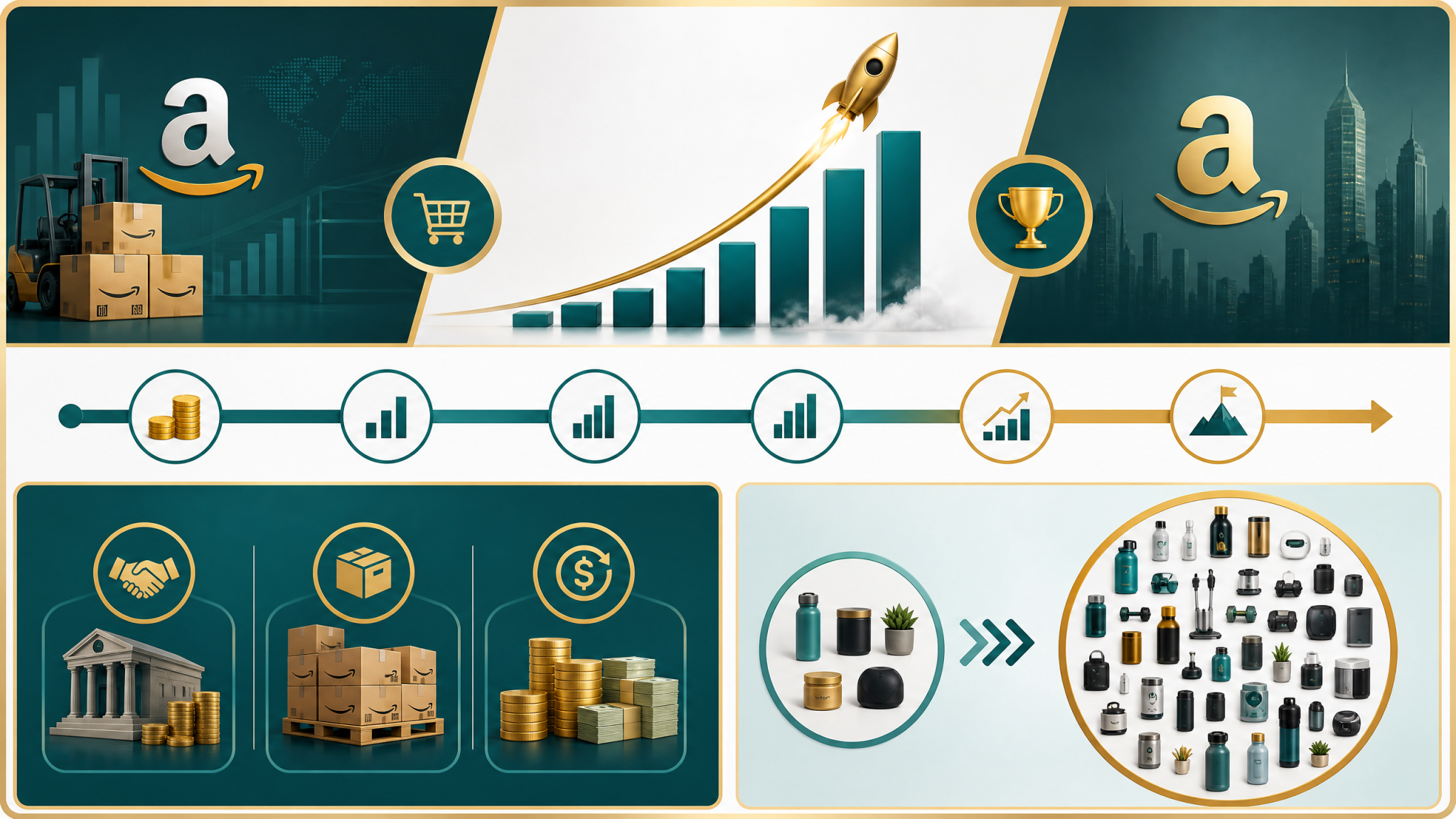
For many Amazon FBA sellers, reaching the six-figure mark feels like a monumental achievement. It signifies a successful product, a solid market fit, and effective operational processes. However, the journey from a 6-figure business to a 7-figure Amazon FBA business presents a unique set of challenges and opportunities. This transition isn’t merely about selling more products; it demands a fundamental shift in strategy, encompassing sophisticated financing, intelligent catalog expansion, and strategic diversification. This guide is designed for ambitious ecommerce entrepreneurs in 2026 ready to learn how to grow Amazon business beyond its current limits, providing actionable insights to scale Amazon FBA 6 to 7 figures financing diversification.
The path to €1 million (or $1 million) in annual revenue on Amazon is paved with strategic decisions that go beyond daily tactical operations. It requires foresight, a willingness to invest, and a clear understanding of market dynamics. We will delve into the critical pillars that support this growth: securing the right capital, expanding your product offerings wisely, and mitigating risk by exploring channels beyond Amazon. For more details, see our guide on winning the Buy Box with AI repricing.
The 6-Figure Plateau: Understanding the Growth Bottlenecks
Many FBA businesses hit a ceiling around the mid-six-figure mark. This plateau often stems from a combination of factors: For more details, see our guide on Amazon product rebranding registered trademark ASIN.
Cash Flow Constraints and Inventory Management
As sales increase, so does the demand for inventory. Without adequate capital, businesses can find themselves in a perpetual cycle of stockouts, missed sales opportunities, and stunted growth. Managing cash flow effectively becomes paramount, especially when dealing with long lead times for manufacturing and shipping.
Limited Product Portfolio
Relying on a handful of successful products, while profitable initially, creates vulnerability. Market shifts, increased competition, or changes in Amazon’s algorithm can severely impact revenue. A limited catalog also restricts the total addressable market and customer lifetime value.
Over-Reliance on a Single Platform
Exclusively selling on Amazon, despite its vast customer base, exposes a business to platform-specific risks. Policy changes, account suspensions, or increased advertising costs can drastically affect profitability and even threaten the business’s existence. Diversification is not just a growth strategy; it’s a resilience strategy.
Strategic Financing for Exponential Growth

To truly scale Amazon FBA 6 to 7 figures financing diversification, access to capital is non-negotiable. The right financing allows for larger inventory orders, investment in new product development, and scaling marketing efforts. Understanding your Amazon FBA financing options is crucial.
Amazon Lending and Other FBA-Specific Solutions
Amazon itself offers lending programs to eligible sellers, providing quick access to capital based on sales history. While convenient, it’s essential to understand the terms and interest rates. Beyond Amazon, several specialized lenders cater specifically to FBA businesses, offering:
- Revenue-Based Financing: Loans repaid as a percentage of daily or weekly sales, aligning repayment with cash flow.
- Inventory Financing: Capital specifically for purchasing inventory, often using the inventory itself as collateral.
- Merchant Cash Advances: A lump sum payment in exchange for a percentage of future sales.
When considering these options, evaluate the cost of capital, repayment terms, and how they align with your growth projections. A common mistake is taking on too much debt too early or not having a clear plan for how the capital will generate a return.
Traditional vs. Alternative Financing
While traditional bank loans might offer lower interest rates, they often come with stricter eligibility criteria and longer approval processes. For fast-growing FBA businesses, alternative financing solutions can provide the agility needed to seize opportunities quickly. Consider a mix of both, using traditional financing for long-term investments and alternative options for short-term inventory boosts.
Managing Cash Flow for Inventory and Marketing
Effective cash flow management is the bedrock of scaling. Implement robust forecasting models to predict inventory needs and sales cycles. Negotiate favorable payment terms with suppliers. Reinvest profits strategically, balancing immediate needs with long-term growth initiatives. Remember, every dollar invested in inventory or marketing should have a clear expected return. For more details, see our guide on highest CAGR niches on Amazon Europe.
Intelligent Catalog Expansion: Beyond More Products
Simply adding more products without a strategic approach can lead to increased complexity and diluted focus. Intelligent catalog expansion is about identifying high-potential opportunities that complement your existing offerings and resonate with your target audience, a key aspect of how to grow Amazon business effectively.
Product Research and Validation for New SKUs
Leverage data analytics tools to identify gaps in the market, trending products, and underserved niches. Look for products with high demand, low competition, and healthy profit margins. Before committing to large orders, validate new product ideas through small test batches, crowdfunding, or pre-orders. This minimizes risk and ensures resources are allocated to winning products. For more details, see our guide on international expansion for Amazon sellers.
Expanding Product Lines vs. New Niches
There are two primary strategies for catalog expansion:
- Deepening (Product Line Expansion): Introducing variations of existing successful products (e.g., new colors, sizes, bundles, or complementary accessories). This leverages existing customer bases and brand recognition.
- Broadening (New Niche Entry): Venturing into entirely new product categories. This requires more extensive market research but can unlock significant new revenue streams and reduce reliance on a single niche.
A balanced approach often works best, using deepening to solidify your market position and broadening to explore new growth frontiers. For more details, see our guide on advanced Amazon seller growth brand protection strategies. According to Eurostat logistics data, these strategies are increasingly important.
Supplier Relationships and Economies of Scale
As you scale, your relationship with suppliers becomes critical. Negotiate better pricing, payment terms, and production lead times based on increased order volumes. Building strong, long-term partnerships can lead to cost savings, improved product quality, and greater flexibility. Exploring multiple suppliers for critical components or products can also mitigate supply chain risks.
Diversification Beyond Amazon FBA: Building a Resilient Business
While Amazon remains a powerful sales channel, true resilience and long-term growth for a 7-figure Amazon FBA business come from diversifying your sales channels and building an owned audience. This is a crucial component of the scale Amazon FBA 6 to 7 figures financing diversification strategy.
Building an Owned Audience: The Power of Direct Connection
Relying solely on Amazon’s customer base means you don’t own the customer data or the direct relationship. Start building an owned audience through:
- Email Lists: Offer incentives (discounts, exclusive content) for customers to sign up for your email list. This provides a direct marketing channel independent of Amazon.
- Social Media Presence: Engage with your audience on platforms relevant to your niche. Build a community around your brand, driving traffic back to your products on and off Amazon.
- Content Marketing: Create valuable content (blog posts, videos, guides) that addresses your target audience’s pain points, establishing your brand as an authority.
Expanding to Other Marketplaces
Consider expanding your presence to other major online marketplaces. Each platform has its own audience and operational requirements, but they offer additional revenue streams and reduced platform risk:
- eBay: Still a massive marketplace, particularly for certain niches.
- Walmart Marketplace: Growing rapidly and attracting a different demographic than Amazon.
- Etsy: Ideal for handmade, vintage, or unique items.
- International Amazon Marketplaces: If you’re only selling in one country, expanding to Amazon UK, Germany, Canada, etc., can unlock significant growth.
Launching Your Own E-commerce Store
A dedicated e-commerce store (e.g., on Shopify, WooCommerce, or BigCommerce) provides ultimate control over your brand, customer experience, and data. While it requires investment in marketing and logistics, it offers higher profit margins and a direct relationship with your customers. Use your Amazon success to fund and drive traffic to your own store.
Wholesale and B2B Opportunities
Explore selling your products to other businesses (B2B) or through wholesale channels. This can involve supplying retailers, corporate clients, or even other Amazon sellers. This strategy can lead to larger order volumes and different sales cycles, further diversifying your revenue streams.
Operational Excellence and Team Building for Scale
Scaling to 7 figures isn’t just about sales; it’s about building a robust, efficient operation that can handle increased volume without breaking down. This is where the operational aspects of how to grow Amazon business become critical. For more details, see our guide on Amazon account suspension recovery plan of action.
Automating Processes and Systems
As your business grows, manual tasks become bottlenecks. Invest in automation tools for: For more details, see our guide on private label product launch Amazon 2026 beyond PPC.
- Inventory Management: Software that tracks stock levels, forecasts demand, and automates reordering.
- Customer Service: Chatbots, helpdesk software, and templated responses to handle common inquiries efficiently.
- Marketing and Advertising: Tools to automate ad campaigns, email sequences, and social media posting.
- Financial Reconciliation: Software to streamline accounting and bookkeeping.
Automation frees up your time and your team’s time to focus on strategic initiatives rather than repetitive tasks. For more details, see our guide on Amazon FBA automation software stack 1 million revenue.
Hiring and Delegating: Building a High-Performance Team
You cannot do everything yourself. To reach 7 figures, you need to build a capable team and master the art of delegation. Start by outsourcing tasks that are time-consuming but not core to your expertise (e.g., graphic design, virtual assistants for administrative tasks). As revenue grows, consider hiring full-time employees for key roles like operations, marketing, and product development. Clearly define roles, responsibilities, and performance metrics.
Data-Driven Decision Making
At this scale, gut feelings are not enough. Every major decision should be backed by data. Continuously analyze your sales data, advertising performance, customer feedback, and market trends. Use A/B testing for product listings, ad creatives, and pricing strategies. Data provides the insights needed to optimize performance, identify new opportunities, and mitigate risks. According to McKinsey operations research, these strategies are increasingly important.
Conclusion: Your Blueprint for a 7-Figure Amazon FBA Empire
The journey to scale Amazon FBA 6 to 7 figures financing diversification is challenging but immensely rewarding. It demands a strategic mindset, a willingness to adapt, and a relentless focus on growth. By mastering strategic financing, intelligently expanding your catalog, and diversifying your sales channels, you can build a resilient and highly profitable 7-figure Amazon FBA business. For more details, see our guide on Amazon Brand Registry eliminate counterfeits brand defense.
Remember, success at this level is not accidental. It’s the result of deliberate planning, continuous optimization, and the courage to invest in your vision. The ecommerce landscape of 2026 is dynamic, and those who embrace innovation and strategic expansion will be the ones to dominate. Start implementing these strategies today, and watch your Amazon FBA business transform into a true empire.