Oversize Products on Amazon FBA: Why Complex Logistics Create Profitable Barriers to Entry
Most sellers on Amazon FBA gravitate towards small, lightweight products. The reasons are obvious: lower storage fees, cheaper shipping, and simpler handling. However, this common aversion to oversize products Amazon FBA profitable creates a significant barrier to entry for competitors, which can translate into substantial profit margins for those willing to navigate the complexities. This article will delve into the intricacies of selling large-format items on Amazon FBA, exploring the fee structures, strategic logistics, and the immense margin potential that awaits savvy entrepreneurs.
Understanding Amazon FBA Fees for Oversize Products
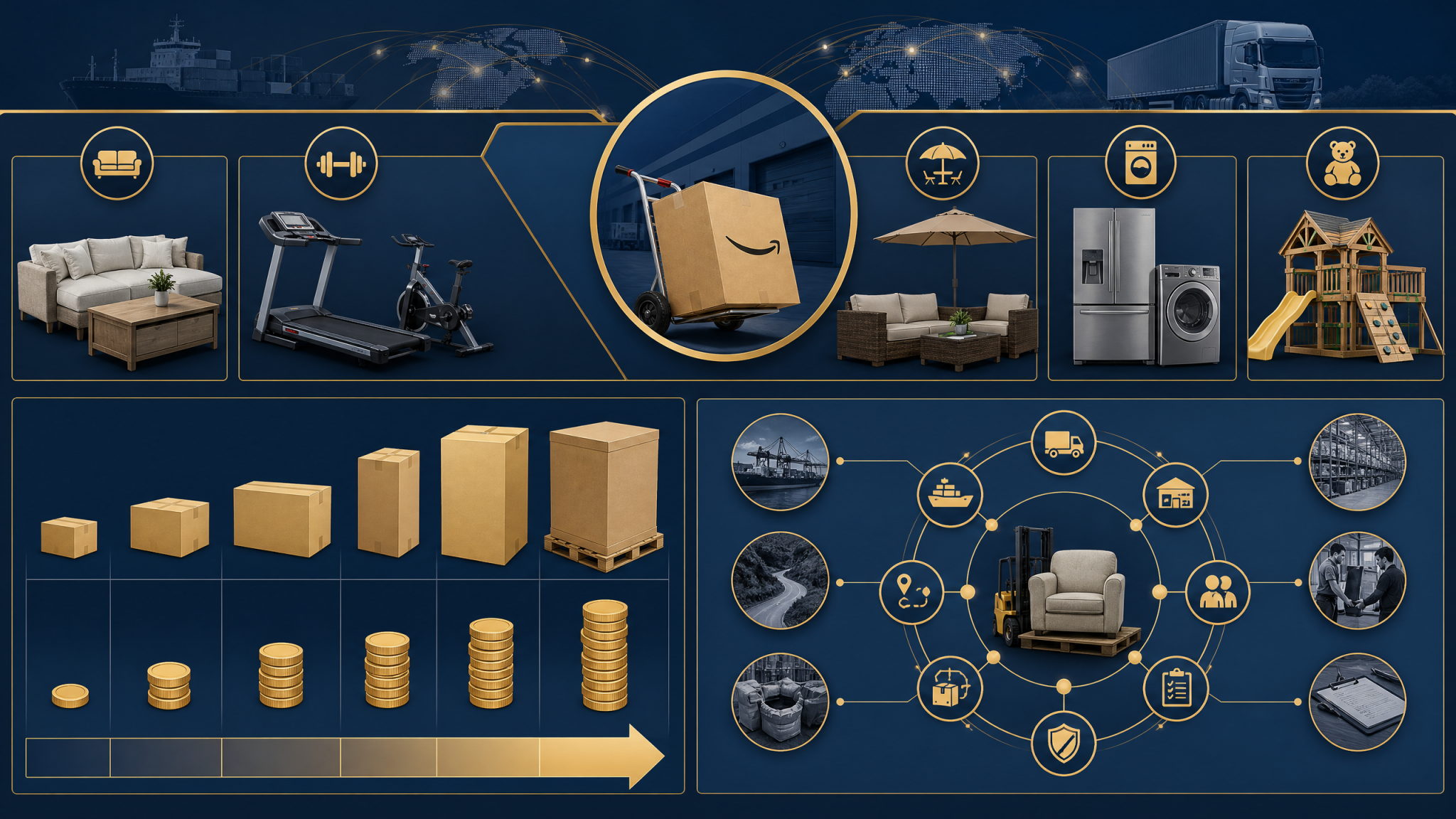
One of the primary concerns for sellers considering oversize products Amazon FBA profitable is the fee structure. Amazon’s FBA fees are calculated based on product size tiers and weight. Oversize items fall into specific categories: Small Oversize, Medium Oversize, Large Oversize, and Special Oversize. Each tier has a different fulfillment fee, which includes picking, packing, shipping, and customer service. Understanding these tiers and their associated costs is crucial for accurate profitability calculations.
For instance, large products Amazon FBA fees are significantly higher than standard-size products. This is due to the increased space they occupy in fulfillment centers and the additional resources required for their handling and transportation. Sellers must factor in not only the per-unit fulfillment fee but also monthly storage fees, which can accumulate quickly for slow-moving or seasonal oversize inventory. Utilizing Amazon’s FBA revenue calculator is an indispensable tool for estimating these costs and ensuring a clear understanding of potential expenses. According to Gartner supply chain insights, these strategies are increasingly important.
Strategic Logistics for Oversize FBA Success
Successfully selling oversize products Amazon FBA profitable requires a robust logistics strategy. This goes beyond simply sending products to Amazon’s fulfillment centers. It involves optimizing packaging, choosing the right shipping methods, and managing inventory effectively.
Packaging Optimization: Oversize items often require specialized packaging to prevent damage during transit. This can include custom-sized boxes, reinforced corners, and ample void fill. While these might add to per-unit costs, they are essential for minimizing returns and maintaining customer satisfaction. Efficient packaging also helps in reducing dimensional weight, which can impact shipping costs.
Shipping Methods: For large and bulky items, traditional small parcel shipping can become prohibitively expensive. Exploring Less Than Truckload (LTL) or Full Truckload (FTL) freight options for inbound shipments to Amazon’s fulfillment centers can significantly reduce costs. Partnering with reliable freight forwarders who specialize in Amazon FBA shipments is highly recommended.
Inventory Management: Due to higher storage fees, maintaining optimal inventory levels is paramount. Overstocking can quickly erode profits, while understocking can lead to lost sales. Implementing a just-in-time inventory system, where products are shipped to Amazon only as needed, can be highly effective. This requires accurate sales forecasting and a strong relationship with suppliers.
Expanding to Europe: Oversize FBA Strategy Europe
For entrepreneurs looking to expand their reach, understanding oversize FBA strategy Europe is a key consideration. The European market presents unique opportunities but also additional complexities. Each country within the EU has its own VAT regulations, and Amazon operates separate fulfillment networks across the continent.
Pan-European FBA: Amazon’s Pan-European FBA program can simplify logistics by allowing sellers to store inventory in fulfillment centers across Europe. However, this also means understanding the VAT implications in each country where inventory is stored. Consulting with a tax advisor specializing in e-commerce and international VAT is crucial to avoid compliance issues.
Localized Shipping and Returns: While Amazon handles the last-mile delivery, sellers must be aware of country-specific shipping nuances and return policies. Providing clear instructions
and support in local languages can significantly improve customer experience and reduce return rates for bulky products Amazon private label. According to McKinsey operations research, these strategies are increasingly important.
The Margin Potential of Bulky Products Amazon Private Label
Despite the logistical challenges, the profitability of bulky products Amazon private label can be exceptionally high. The very barriers that deter most sellers create a less saturated market, allowing for premium pricing and stronger brand positioning.
Reduced Competition: The higher entry barriers associated with oversize products mean fewer competitors. This reduced competition often translates into higher selling prices and better profit margins compared to highly competitive standard-size product categories.
Stronger Brand Building: Selling unique, high-value oversize items under a private label allows for greater brand differentiation. Customers are often willing to pay more for specialized or premium large-format products, fostering brand loyalty and repeat purchases. This is particularly true for items that solve a specific problem or offer a unique aesthetic.
Higher Average Order Value (AOV): Oversize products naturally have a higher selling price, leading to a higher Average Order Value. While the volume of sales might be lower than for small items, the increased revenue per sale can result in significant overall profitability.
Overcoming Challenges and Maximizing Profitability
To truly maximize the profitability of oversize products Amazon FBA profitable, sellers must proactively address potential challenges.
Supplier Relationships: Building strong relationships with manufacturers who can produce and package oversize items efficiently is vital. Negotiating favorable terms and ensuring consistent quality are key to long-term success.
Customer Service: Due to the nature of bulky items, customer service can be more complex. Clear communication regarding shipping times, assembly instructions, and return processes is essential. Proactive customer support can mitigate negative reviews and build trust.
Continuous Optimization: The Amazon FBA landscape is constantly evolving. Regularly reviewing fee structures, optimizing shipping strategies, and analyzing sales data are crucial for maintaining profitability. Staying informed about Amazon’s policy changes and adapting quickly will give sellers a competitive edge.
Conclusion
While the prospect of selling oversize products Amazon FBA profitable might seem daunting at first, the rewards for those who master the logistics are substantial. The inherent barriers to entry create a less crowded marketplace, allowing for higher margins and stronger brand development. By understanding the fee structures, implementing strategic logistics, and continuously optimizing operations, e-commerce entrepreneurs can unlock a highly lucrative niche within the Amazon FBA ecosystem. The future of e-commerce favors those willing to tackle complexity, and oversize products offer a clear path to significant success.