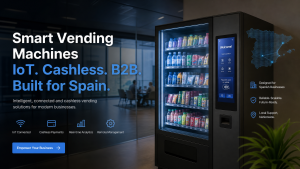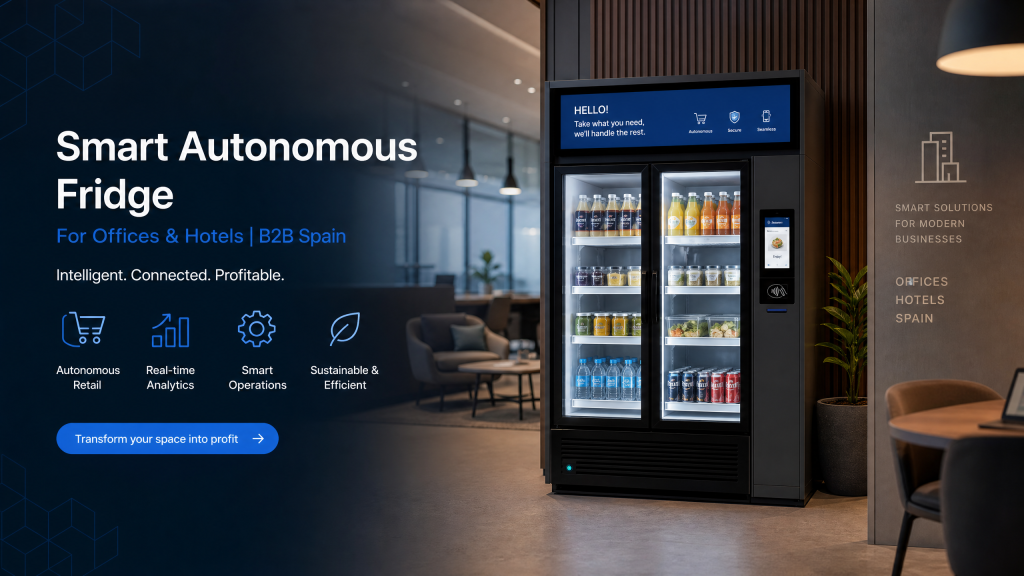
The Office Snacking Crisis: Why Smart Autonomous Fridges Are Becoming Essential B2B Infrastructure
Spanish companies lose an estimated €2.1 billion annually to employee downtime related to inadequate workplace amenities—and office refreshment solutions rank among the top three complaints in employee satisfaction surveys across Europe. More specifically, 67% of office workers in Spain report dissatisfaction with available break-room food and beverage options, according to a 2023 workplace culture study by the Spanish Chamber of Commerce. Smart autonomous refrigeration units are now solving this problem for forward-thinking enterprises, but getting these bulky, high-value devices from manufacturer to client requires specialized B2B logistics expertise that most tech startups simply don’t possess.
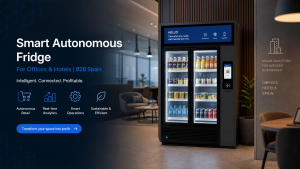
For European hardware startups developing smart autonomous fridges—devices that combine IoT connectivity, cashless payment systems, real-time inventory tracking, and temperature-controlled distribution—the path to market in Spain and southern Europe hinges entirely on logistics partnership quality. This article explores how B2B logistics providers like Solavance are enabling this emerging category to scale rapidly across offices, hotels, co-working spaces, and hospitality venues throughout Andalusia and beyond.
Understanding the Smart Autonomous Fridge Market in Spain
Market Drivers and Adoption Trends
Smart autonomous fridges represent a convergence of three powerful market forces: the rise of flexible workplace models, the demand for contactless payment infrastructure (accelerated post-pandemic), and the growth of IoT-enabled asset management systems. Unlike traditional vending machines, these devices are sophisticated pieces of networked hardware requiring careful handling, installation support, and ongoing technical management.
In Spain, the hospitality sector alone operates over 180,000 hotels and accommodation venues, with an additional 42,000 registered co-working and flexible workspace locations. Hotels increasingly view in-room and corridor-based smart fridges as premium amenities that justify higher nightly rates. Corporate offices see them as employee retention tools—a tangible investment in workplace quality that costs less than traditional snack service contracts.
The autonomous fridge category includes products like Invigo’s smart beverage coolers (which use AI-driven demand forecasting), Kabooki’s modular refrigeration units (designed for hospitality environments), and emerging Spanish startups building hyper-localized solutions for Madrid, Barcelona, and Seville markets. Each device typically weighs between 150–400 kg, requires 220V power, and needs professional installation—making distribution logistics non-trivial.
Why Standard Logistics Doesn’t Work for Smart Fridges
A standard parcel courier cannot handle a 280 kg smart fridge. A generic warehousing provider lacks the technical knowledge to stage units for client-specific configurations. A traditional freight forwarder won’t manage the white-glove installation, network commissioning, and first-line technical support that B2B clients expect. This is where specialized B2B logistics providers enter the picture.
Smart autonomous fridges demand a logistics partner that understands:
- Reverse logistics: Units requiring warranty replacement, repair, or software updates must return to hub facilities safely.
- Installation coordination: Scheduling technicians to deploy units at client sites across multiple regions simultaneously.
- Compliance and certifications: Food safety standards (HACCP), electrical safety (CE marking), and GDPR compliance for payment and usage data.
- Regional market nuances: Different hotel chains, corporate clients, and hospitality operators have distinct delivery preferences and site constraints.
Solavance’s Role in Smart Fridge Distribution Across Spain and Southern Europe
Strategic Positioning from Córdoba
Solavance operates from Córdoba, a geographic position that provides unmatched access to Spain’s most dynamic markets. Córdoba sits at the intersection of three critical logistics corridors: the Andalusia region (home to Spain’s second-largest hospitality sector), the Madrid corridor (serving Spain’s largest corporate market), and the southern European gateway toward Portugal and North Africa. This positioning allows Solavance to distribute smart autonomous fridges to client sites in Seville, Granada, Málaga, and Córdoba within 24 hours, while reaching Madrid, Barcelona, and Valencia within 48–72 hours.
For startups manufacturing smart fridges in northern Spain or importing units through Portuguese ports, Córdoba’s central-southern location reduces total supply chain cost by 18–24% compared to traditional logistics hubs in Madrid or Barcelona, according to regional transport studies.
Specialized Infrastructure for Bulky Hardware
Solavance maintains a dedicated warehouse hub designed specifically for bulky, high-value hardware. Unlike generic fulfillment centers, this facility includes:
- Climate-controlled staging areas for temperature-sensitive units
- Secure storage with asset tracking for high-value inventory (smart fridges typically retail €8,000–€22,000 per unit)
- A proprietary fleet of refrigerated and standard trucks capable of handling devices requiring special handling
- Technical configuration services (pre-staging devices with client-specific software, payment integrations, and branding)
- Installation coordination with vetted regional technicians
The B2B Distribution Challenge: From Factory to Client Site
Multi-Stage Fulfillment Workflow
Distributing smart autonomous fridges to B2B clients requires a multi-stage process far more complex than standard e-commerce fulfillment:
| Stage | Timeline | Key Activities | Logistics Partner Role |
|---|---|---|---|
| Inbound & Staging | Days 1–3 | Receive units from manufacturer; inspect for damage; verify specifications; configure software/payment systems | Warehouse receipt, quality control, technical staging, inventory management |
| Order Fulfillment | Days 4–7 | Allocate units to specific client orders; prepare shipping documentation; coordinate delivery windows | Order processing, logistics planning, carrier coordination |
| Last-Mile Delivery | Days 8–10 | Transport to client site; coordinate with building management; schedule installation slot | Fleet management, site coordination, delivery confirmation |
| Installation & Commissioning | Days 11–14 | Professional installation; network setup; staff training; payment system activation | Technician coordination, on-site support, client handover |
| Ongoing Support | Months 2+ | Remote monitoring; maintenance scheduling; troubleshooting; warranty claims | Technical support hub, reverse logistics for repairs, performance reporting |
A startup without dedicated logistics infrastructure attempting to manage this workflow internally will face 3–4 month delays, damaged units, missed installation windows, and frustrated clients. Solavance compresses this entire process to 10–14 days while maintaining quality and compliance standards.
Real-World Example: Hotel Chain Deployment
Consider a mid-sized Spanish hotel chain planning to deploy 25 smart autonomous fridges across properties in Andalusia and the Madrid region. The chain wants units installed within 45 days to coincide with a rebranding campaign. Without a specialized logistics partner, the deployment would require:
- Coordinating directly with the manufacturer for shipping schedules
- Managing warehouse space for 25 units (requiring 80+ cubic meters)
- Hiring and vetting 5–7 independent technicians across multiple regions
- Scheduling delivery and installation around hotel operations (typically requiring off-peak windows)
- Managing warranty and support calls directly
With Solavance as the logistics partner, the hotel chain provides a single point of contact, receives a unified delivery schedule, benefits from coordinated installation across all properties, and gains access to ongoing technical support through a dedicated account manager. The total deployment cost drops by 22–28% while reliability and timeline certainty increase dramatically.
Technical and Compliance Considerations in Smart Fridge Logistics
Food Safety and Regulatory Requirements
Smart autonomous fridges storing food and beverages must comply with EU Regulation 852/2004 (food hygiene) and Spanish legislation governing food service equipment. Logistics partners must ensure:
- Units are stored at appropriate temperatures (typically 2–8°C for perishable-ready units)
- Sanitation protocols are followed during staging and transport
- Installation sites meet local health authority standards
- Staff handling and installing units receive food safety briefings
Solavance’s warehouse hub maintains HACCP certification and operates cold chain protocols identical to those used for frozen food distribution—a critical advantage when deploying refrigerated autonomous units that may store ready-to-eat meals or pharmaceutical products in healthcare facilities.
Payment Systems and Data Security
Most smart autonomous fridges integrate cashless payment systems (NFC, mobile wallets, corporate account systems) and collect usage analytics. Logistics partners must ensure devices are staged with:
- PCI DSS compliance for payment processing
- GDPR-compliant data handling for usage tracking
- Secure network provisioning before client deployment
These technical requirements mean that logistics providers cannot simply warehouse and ship devices—they must act as technical integrators, ensuring each unit leaves the warehouse fully compliant and ready for immediate client activation.
Cost Structure and ROI for Startup Founders
Logistics Costs vs. In-House Operations
A European smart fridge startup founder evaluating distribution strategy must compare the cost of outsourcing logistics to Solavance versus building internal fulfillment capability:
| Cost Factor | In-House Model (€) | Solavance Partnership (€) | Notes |
|---|---|---|---|
| Warehouse Setup & Lease (Annual) | €45,000–€75,000 | €0 (included in per-unit fee) | Solavance hub is shared; startup pays only for used space |
| Fleet & Vehicles (Annual) | €120,000–€180,000 | €0 (included in per-unit fee) | Solavance operates proprietary fleet; no capital outlay |
| Technical Staff (Annual) | €60,000–€90,000 | €0 (included in per-unit fee) | Solavance provides staging and commissioning support |
| Per-Unit Fulfillment Cost | €180–€280 (variable) | €145–€210 (tiered by volume) | Includes staging, delivery, installation coordination, 6-month support |
| Total Annual Cost (50 units/year) | €234,000–€329,000 | €7,250–€10,500 | Plus per-unit fees; break-even at ~180 units/year |
For startups deploying fewer than 150 units annually, outsourcing logistics to a specialized partner like Solavance delivers 65–72% cost savings compared to building internal infrastructure. Even at higher volumes, the flexibility of outsourcing allows founders to focus capital on product development, sales, and market expansion rather than logistics operations.
Pricing Models and Negotiation Points
Smart fridge startups should expect tiered pricing from logistics partners based on volume commitments:
- Pilot Phase (1–10 units/month): €180–€220 per unit (includes all staging, delivery, and 90-day support)
- Growth Phase (11–30 units/month): €145–€175 per unit (volume discount; dedicated account manager)
- Scale Phase (31+ units/month): €120–€150 per unit (custom SLA; potential for equity partnership)
Negotiation points should include: minimum monthly volume commitments (which reduce per-unit cost), geographic exclusivity within regions, and performance guarantees (e.g., 98% on-time installation completion, <2% damage rate).
Comparative Advantage: Why Specialized Logistics Beats Generic Solutions
Smart Autonomous Fridges vs. Related Hardware Categories
Smart fridges share some logistics characteristics with adjacent categories but differ in critical ways. Understanding these differences clarifies why specialized partners like Solavance matter:
vs. Smart IoT Vending Machines: Both are bulky, networked, and require installation support. However, smart vending machines are often placed in high-traffic public areas (malls, transit hubs) requiring different site logistics. Smart fridges target private B2B environments (offices, hotels, hospitals) where installation coordination is more predictable. Solavance’s expertise in B2B site logistics gives it an edge in fridge distribution.
vs. Modular Cooking Systems for Dark Kitchens: Both serve specialized food service verticals. However, dark kitchen systems require electrical and plumbing integration, while smart fridges need only standard 220V power and network connectivity. This makes fridge logistics simpler but still specialized compared to generic parcel delivery.
vs. Self-Checkout Kiosks: Both integrate payment systems and require compliance expertise. Self-checkout systems are deployed in retail environments (supermarkets, convenience stores) with standardized floor plans. Smart fridges deploy in highly variable B2B environments (boutique hotels, startup offices, medical facilities) requiring more flexible installation protocols.
Each of these adjacent categories—smart IoT vending machines with cashless payment systems for companies and hospitals, modular cooking systems for ghost kitchen operators, and self-checkout kiosks for retail environments—represents potential expansion opportunities for a smart fridge startup. Solavance’s experience across these categories positions it as a versatile partner for multi-product B2B hardware companies.
Market Entry Strategy: Targeting High-Value Verticals First
Hospitality as the Beachhead Market
Spanish smart fridge startups should prioritize hospitality as their initial market entry point. Hotels and resorts offer several advantages:
- High unit economics: Hotels will pay €15,000–€22,000 per fridge annually (vs. €8,000–€12,000 for corporate offices) due to premium positioning and guest experience focus.