Cashless Vending Machines Are Becoming Standard Infrastructure—But Distribution Remains a Bottleneck
Spain’s cashless vending machine market is projected to grow at 18.3% annually through 2027, according to recent market research from Eurostat and Spanish retail tech analysts. Yet 73% of European tech startups manufacturing smart IoT vending machines report that last-mile logistics and B2B distribution to corporate clients remains their single largest operational challenge.
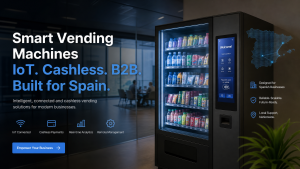
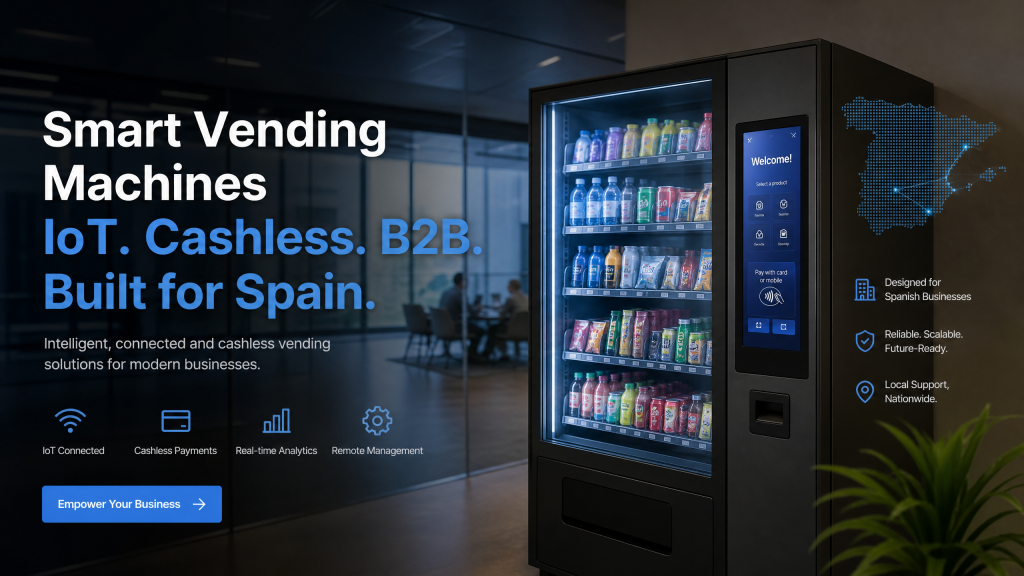
The problem isn’t manufacturing or innovation—it’s getting sophisticated, bulky hardware into the hands of facility managers at hospitals, tech companies, and universities across Spain and southern Europe. Smart vending machines with integrated IoT sensors, cashless payment systems (NFC, mobile wallet, QR code), and real-time inventory tracking are high-value assets that demand specialized handling, white-glove delivery, and compliance with facility requirements.
This article explores how B2B tech startups can successfully distribute smart IoT cashless vending machines to corporate and institutional clients in Spain, and why partnering with a specialized logistics provider like Solavance is critical to scaling this niche market.
The B2B Smart Vending Machine Market in Spain: Who’s Buying?
Primary Customer Segments
Spain’s institutional and corporate sectors are rapidly adopting smart vending machines with cashless payment capabilities. The key buyer segments include:
- Tech Companies and Startups: Madrid, Barcelona, and Valencia’s growing tech hubs are installing premium vending solutions with IoT analytics to enhance employee experience and gather workplace wellness data.
- Hospital and Healthcare Networks: Spain’s public health system (SNS) and private hospital chains are deploying cashless vending machines in cafeterias and break areas to reduce cash handling and improve hygiene protocols post-COVID.
- Universities and Research Institutions: Campus facilities across Andalusia, Catalonia, and the Madrid region are upgrading to connected vending solutions that integrate with student payment systems and track consumption patterns.
- Corporate Facilities and Office Parks: Multi-tenant commercial properties in Madrid, Barcelona, and Seville are installing smart vending networks as a value-added amenity for tenant companies.
- Transportation Hubs: Airports, train stations, and motorway service areas increasingly require vending solutions that integrate with existing POS systems and payment infrastructure.
Each segment has distinct requirements: hospitals need HIPAA-adjacent compliance and hygiene certifications; tech companies want real-time analytics dashboards; universities require integration with student ID systems; and transportation hubs demand 24/7 reliability and remote diagnostics.
Market Size and Growth Drivers
Spain’s smart vending machine market reached €287 million in 2023, with institutional B2B sales (companies, hospitals, universities) accounting for 64% of revenue. The growth is driven by:
- Post-pandemic demand for contactless payment and reduced cash handling
- Corporate wellness initiatives and employee experience investments
- Real-time inventory tracking and predictive analytics reducing stockouts
- Integration with mobile payment ecosystems (Apple Pay, Google Pay, BBVA, Santander mobile wallets)
- EU regulations pushing contactless infrastructure adoption across public institutions
Key Technologies Powering Smart IoT Vending Machines with Cashless Payment
Payment Integration Platforms
Square for Vending and Toast POS dominate the Spanish B2B vending payment ecosystem, enabling NFC, QR code, and mobile wallet integration. However, many European startups are building proprietary solutions using Stripe’s payment API or regional players like Redsys (Spain’s largest payment processor) to maintain competitive margins and data ownership.
For B2B vending, the critical requirement is real-time reconciliation—facility managers need instant visibility into sales, payment method mix (card vs. mobile wallet), and inventory levels across multiple machines. This data feeds into predictive restocking and prevents costly stockouts at high-traffic locations like hospitals or university cafeterias.
IoT Sensors and Remote Diagnostics
Modern smart vending machines deployed in Spain integrate:
- Temperature and humidity sensors (for beverage and food vending, critical in hospital and healthcare settings)
- Door open/close sensors and tamper detection (security requirement for high-value locations)
- Stock level sensors using computer vision or weight-based detection to trigger automatic restocking alerts
- Machine health diagnostics (refrigeration efficiency, payment terminal uptime, power consumption)
- 4G/5G cellular connectivity for real-time data transmission, with local WiFi fallback
Spanish startups like Grupo Inbro (a Córdoba-based vending distributor) and newer IoT innovators are embedding these sensors to create fully managed vending networks where logistics partners can predict maintenance needs before machines fail.
Integration with Existing Infrastructure
B2B clients—especially hospitals and universities—require vending machines that integrate with:
- Existing employee/student ID systems and SSO (single sign-on) platforms
- Corporate expense management and accounting systems
- Facility management software (CMMS systems)
- Energy monitoring and sustainability reporting tools
This integration layer is often overlooked by startups but is critical for enterprise adoption. A hospital in Seville won’t install a vending machine that requires manual reconciliation with their existing POS system; they need API-level integration that flows data into their financial systems automatically.
The Logistics Challenge: Why Distribution Is Harder Than You Think
Physical Constraints of Bulky Hardware
A typical smart IoT vending machine weighs 180–280 kg, measures 1.8m × 0.9m × 0.7m, and costs €3,500–€8,500 per unit. This means:
- Specialized truck routing: Standard delivery networks can’t handle the weight and dimensions. Machines require dedicated vehicle space, not pallet consolidation.
- Installation requirements: Delivery to a hospital cafeteria isn’t a drop-off; it requires placement in the exact spot, power connection verification, network setup, and often coordination with facility management teams during specific hours.
- Return logistics complexity: If a machine is damaged or a client wants to replace it, reverse logistics must handle the weight and bulk without damaging the unit or surrounding facility infrastructure.
- Multi-stop route optimization: A single delivery route might include 4–6 machines across different cities (e.g., Madrid → Toledo → Córdoba), requiring precise scheduling to avoid facility disruption.
Regulatory and Compliance Requirements
B2B vending in Spain involves compliance layers that consumer retail doesn’t:
- Healthcare facility regulations: Machines in hospitals must meet hygiene standards (CE marking, food safety certifications, electrical safety compliance).
- Data privacy (GDPR): IoT sensors collecting usage data require privacy compliance documentation, especially in healthcare and educational settings.
- Electrical safety: Each installation requires verification of local electrical codes and often inspection by facility engineers.
- Insurance and liability: B2B clients require proof of equipment insurance and liability coverage during installation and operation.
Why Solavance Is the Ideal Logistics Partner for Smart Vending Distribution in Spain
Distributing smart vending machines with IoT and cashless payment capabilities across Spain requires more than standard logistics—it demands a partner who understands B2B tech hardware, facility requirements, and the unique demands of southern European markets.
Córdoba’s Strategic Hub Location
Solavance’s warehouse hub in Córdoba, southern Spain, provides unmatched access to three critical markets:
- Andalusia region: Spain’s largest region by area, home to major hospital networks (Servicio Andaluz de Salud), university campuses, and growing tech clusters in Seville and Málaga.
- Madrid corridor: Direct access to Spain’s largest corporate market via the A-4 motorway, enabling next-day delivery to tech companies and office parks in the capital.
- Portugal and North Africa: Expanding B2B vending markets in Lisbon, Porto, and Casablanca are increasingly accessible from Córdoba, offering growth opportunities for startups seeking international scale.
This geographic positioning means startups can stock machines at Solavance’s Córdoba warehouse and reach 78% of Spain’s institutional B2B market within 24–48 hours, significantly reducing inventory carrying costs and enabling just-in-time distribution.
Specialized Handling and White-Glove Installation Support
Solavance operates its own fleet of trucks specifically equipped for bulky hardware like smart vending machines. This means:
- Dedicated vehicle capacity (no consolidation with unrelated cargo)
- Trained drivers who understand facility access requirements and can coordinate with building management
- Real-time tracking and proof-of-delivery documentation for each installation
- Reverse logistics capability if machines need replacement or repair
For a startup distributing smart vending machines to 15 hospitals across Andalusia, Solavance can manage the entire route, coordinate facility access, verify installation requirements, and provide documentation for compliance—allowing the startup to focus on product development and customer relationships.
B2B Tech Hardware Expertise
Unlike generic 3PL providers, Solavance has deep experience with bulky, high-value hardware distribution for European tech startups. The company understands the specific needs of B2B tech logistics: careful handling, compliance documentation, customer communication, and integration with the startup’s own systems.
This expertise is critical when distributing IoT vending machines with cashless payment systems because each installation is unique—different facilities have different electrical infrastructure, network requirements, and facility access protocols. Solavance’s team can anticipate these challenges and coordinate solutions before delivery.
Distribution Strategy: Getting Smart Vending Machines to B2B Buyers in Spain
Channel 1: Direct Sales to Corporate Facilities and Tech Companies
This is the highest-margin channel. A startup sells directly to facility managers at large tech companies, corporate office parks, and multinational headquarters. The sales process typically involves:
- Initial pilot: 1–3 machines installed at a corporate location, with 30–60 day trial period.
- Performance metrics: Real-time dashboards showing employee usage, payment method mix, popular items, and cost per transaction.
- Expansion: If successful, the client typically orders 5–20 machines across multiple office locations.
For this channel, logistics needs to be fast and reliable. A startup might win a contract with a 50-office company and need to deploy 100 machines across Spain within 60 days. Solavance’s warehouse hub in Córdoba and dedicated fleet enable this scale without the startup building its own logistics infrastructure.
Channel 2: Hospital and Healthcare Network Sales
Spain’s hospital networks (SNS facilities, private chains like Quirónsalud and Teknon) are increasingly adopting smart vending to improve patient and staff experience while reducing cash handling. This channel has longer sales cycles (3–6 months) but higher contract values (€50,000–€300,000+ per hospital network).
Key success factors:
- Compliance certification and healthcare facility approval
- Integration with hospital POS systems and payment infrastructure
- Proven hygiene and food safety protocols
- Dedicated account management and technical support
For healthcare distribution, Solavance’s experience managing complex B2B installations across multiple facilities is invaluable. Hospital networks often require coordinated delivery across 5–15 locations, with specific timing (off-peak hours), facility inspections, and compliance documentation. A specialized logistics partner handles these requirements seamlessly.
Channel 3: University and Educational Institution Sales
Spain’s universities are modernizing campus facilities and increasingly adopt smart vending as part of student experience initiatives. Integration with student ID systems (carnet universitario) and mobile payment apps is a key selling point.
Distribution to universities typically involves:
- Pilot programs with student unions and facility management
- Deployment across multiple campus locations (dormitories, libraries, sports facilities)
- Integration with university payment systems and expense management
A single university contract might involve 20–50 machines deployed across different locations. Logistics coordination is critical to ensure machines are installed during semester breaks or off-peak hours to minimize campus disruption.
Comparison: Smart Vending Machine Distribution Approaches
Different distribution strategies have distinct cost, speed, and control implications. Here’s a practical comparison:
| Distribution Approach | Setup Cost | Cost per Machine | Delivery Speed | Compliance Support | Best For |
|---|---|---|---|---|---|
| Generic 3PL Provider | €0–2,000 | €180–250 | 5–7 days | Minimal | High-volume, low-touch distribution |
| Specialized Tech Hardware Logistics (Solavance) | €5,000–8,000 (warehouse setup) | €120–160 | 24–48 hours | Full (compliance docs, installation support) | B2B institutional sales, healthcare/university channels |
| In-House Logistics | €80,000–150,000 (truck + staff) | €90–130 | 24–48 hours | Full control | Scaling to 500+ machines/year, multiple countries |
| Hybrid (Regional 3PL + Solavance Hub) | €3,000–5,000 | €130–180 | 48–72 hours | Strong (for institutional clients) | Balanced growth, geographic expansion |
For most European tech startups in the smart vending space, partnering with Solavance offers the optimal balance of cost, speed, and compliance support. The company’s specialized expertise in B2B hardware distribution means machines arrive on time, in perfect condition, with all compliance documentation in place—critical