How to Profitably Sell Products Under €10 on Amazon FBA Using Low-Price Fulfillment Fees
Introduction
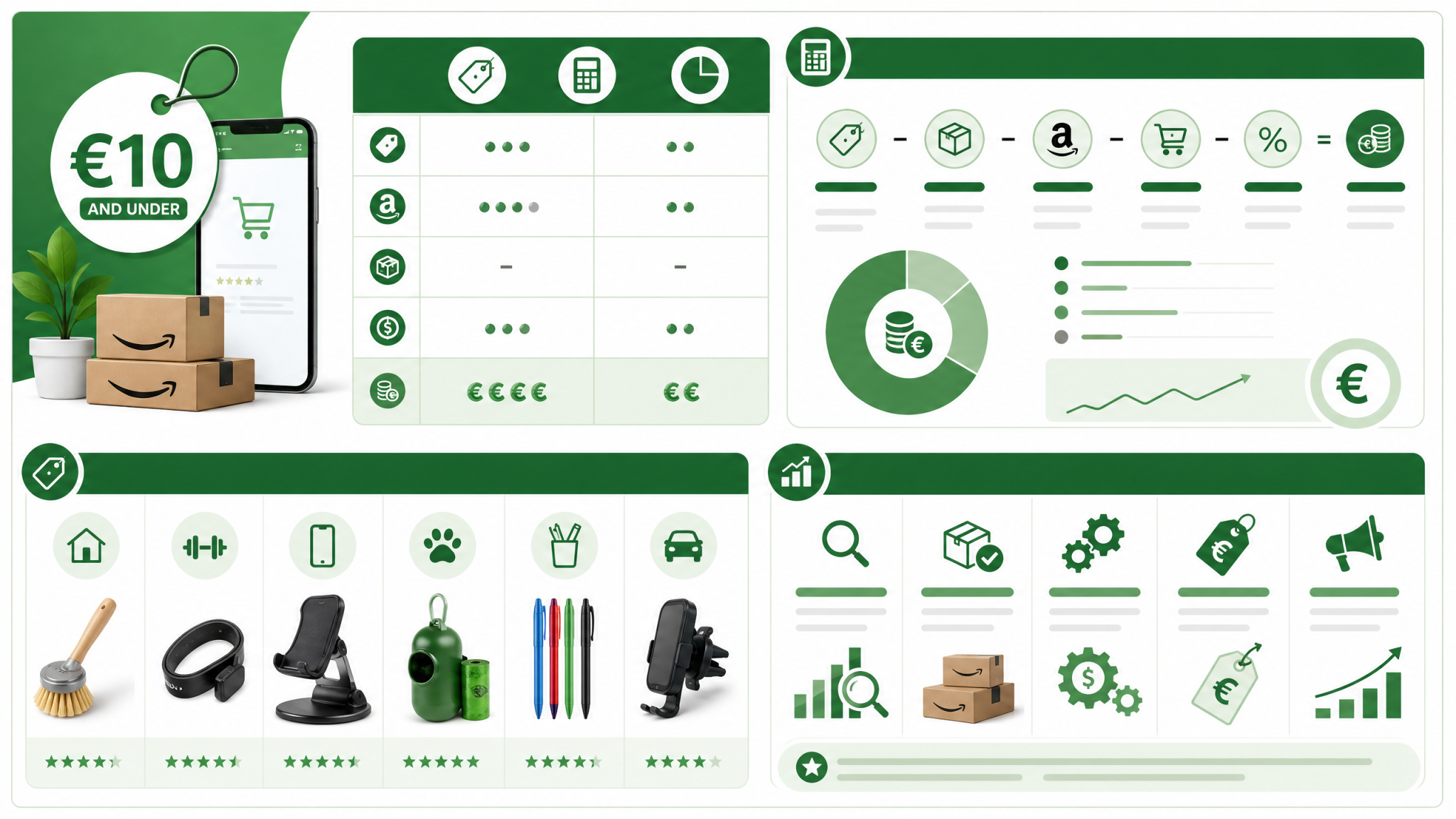
In the dynamic landscape of e-commerce, the allure of high-ticket items often overshadows the potential profitability of lower-priced products. However, for astute Amazon FBA sellers, mastering the art of selling items under €10 can unlock significant revenue streams, particularly when leveraging Amazon\’s specialized Low-Price FBA fee tier. This comprehensive guide is meticulously crafted for professional e-commerce entrepreneurs in 2026, aiming to demystify the strategies required to build a high-volume, profitable business by focusing on sell products under 10 euros Amazon FBA profitably. We will delve into the intricacies of Amazon\’s fee structure, explore effective product identification, sourcing, and marketing tactics, and ultimately equip you with the knowledge to thrive in this often-underestimated market segment.
Understanding Amazon\’s Low-Price FBA Fee Tier
Amazon\’s fulfillment network is a cornerstone of its marketplace, offering sellers unparalleled logistical support. To cater to the unique economics of smaller, less expensive items, Amazon introduced the Amazon low price FBA fees tier. This program is specifically designed to reduce fulfillment costs for eligible products, thereby making it more viable to sell products under 10 euros Amazon FBA profitably. Understanding its mechanics is paramount.
The Low-Price FBA fee tier applies to eligible products priced under a certain threshold, which, as of 2026, is typically around €10 in European marketplaces. The eligibility criteria extend beyond just price, encompassing product dimensions and weight. Generally, products must be small and lightweight to qualify, ensuring they can be efficiently processed and shipped within Amazon\’s automated systems. This tier offers significantly reduced per-unit fulfillment fees compared to standard FBA rates, directly impacting the profitability of low-cost items.
To illustrate the impact, consider a hypothetical product. Under standard FBA, a small, lightweight item might incur a fulfillment fee of €3.00. The same item, qualifying for the Low-Price F FBA tier, could see its fee drop to €1.50 or even less. This substantial reduction directly translates into improved margins, making it feasible to generate profit from cheap products Amazon FBA profitable. This fee structure encourages sellers to optimize their product selection and pricing strategies to meet these specific criteria, fostering a high-volume sales model where cumulative small profits lead to substantial overall earnings. For more details, see our guide on unit economics Amazon FBA real margin calculation.
Identifying Profitable Products Under €10
The success of selling low-priced items hinges on meticulous product research. It\’s not merely about finding cheap products Amazon FBA profitable, but identifying those with consistent demand, low competition, and favorable profit margins even after accounting for the reduced FBA fees. Several tools and techniques are indispensable for this phase.
Market research tools such as Jungle Scout, Helium 10, and Keepa provide invaluable data on product demand, sales velocity, competition levels, and historical pricing. When searching for products under €10, focus on categories with high search volume but relatively few highly-rated, established sellers. Look for items that solve a common problem, offer convenience, or serve as impulse purchases. Ideal characteristics include small size, light weight, durability, and a low likelihood of returns. Products that are easily damaged or require extensive customer support are best avoided, as they can quickly erode thin margins.
Consider niches such as small home organization items, stationery, pet accessories, beauty tools, or unique novelty gifts. For instance, a pack of reusable cable ties, a mini LED flashlight, or a stylish phone stand could all fit the bill. These items often have a broad appeal and can be sourced at a very low cost, allowing for a healthy markup even with a sub-€10 selling price. The key is to think about everyday items that consumers might add to their cart without much deliberation, especially if they qualify for free shipping through Amazon Prime. This approach aligns perfectly with an Amazon FBA low cost items strategy.
Sourcing and Manufacturing Strategies
Effective sourcing is the bedrock of profitability for low-priced FBA products. Securing a reliable supplier who can provide quality products at competitive prices is crucial. Platforms like Alibaba and Global Sources are primary avenues for connecting with manufacturers and wholesalers, particularly in Asia. When engaging with suppliers, transparency and clear communication are vital.
Negotiating prices is an art. For products under €10, even a few cents saved per unit can significantly impact overall profitability. Always request multiple quotes, compare minimum order quantities (MOQs), and inquire about potential discounts for larger orders. Building long-term relationships with suppliers can also lead to better pricing and preferential treatment. Beyond price, scrutinize product quality. Request samples to personally assess the item\’s durability, functionality, and aesthetic appeal. Inconsistent quality can lead to negative reviews and increased return rates, which are detrimental to a low-margin business model. For more details, see our guide on Amazon Buy Box AI dynamic repricing strategy.
Quality control should be an ongoing process. Consider third-party inspection services, especially for larger orders, to ensure that products meet your specifications before they leave the factory. Packaging and preparation for FBA are equally important. Products must be correctly labeled, barcoded, and packaged according to Amazon\’s strict guidelines to avoid delays and additional fees. Optimizing packaging to be as compact and lightweight as possible can further reduce shipping costs and potentially keep the product within the Low-Price FBA fee tier. This meticulous approach is essential for a successful Amazon FBA low cost items strategy.
Optimizing Product Listings for High-Volume Sales
A compelling product listing is your digital storefront on Amazon. For low-priced items, where purchase decisions are often made quickly, an optimized listing is even more critical. It must be informative, persuasive, and highly visible to attract the high volume of sales necessary to sell products under 10 euros Amazon FBA profitably.
Amazon SEO is the foundation. Your product title should be rich in relevant keywords, including your Focus Keyword: sell products under 10 euros Amazon FBA profitably and Secondary Keywords: Amazon low price FBA fees, cheap products Amazon FBA profitable, Amazon FBA low cost items strategy. Use bullet points to highlight key features and benefits concisely, making them easy for shoppers to scan. The product description should elaborate on these points, tell a story, and address potential customer pain points. Integrate keywords naturally throughout the text, avoiding keyword stuffing, which can harm your ranking.
High-quality product images are non-negotiable. For low-priced items, clear, professional photos from multiple angles, showcasing the product in use, can significantly boost conversion rates. Consider including lifestyle images that help customers visualize themselves using the product. Competitive pricing is also crucial. Monitor competitor pricing regularly and adjust your strategy as needed. Dynamic pricing tools can help automate this process, ensuring your product remains competitively priced while maximizing profit. Finally, actively manage customer reviews and ratings. Encourage satisfied customers to leave feedback, and promptly address any negative reviews to maintain a strong seller reputation. This holistic approach to listing optimization is key to making cheap products Amazon FBA profitable. For more details, see our guide on how US tariffs impact European Amazon sellers.
Marketing and Promotion for Low-Priced Products
Even with an optimized listing, low-priced products require strategic marketing to achieve the high sales velocity needed for profitability. Amazon offers a suite of advertising tools that can be particularly effective for this segment. According to Gartner supply chain insights, these strategies are increasingly important.
Amazon Advertising, including Sponsored Products and Sponsored Brands, allows you to place your products prominently in search results and on product pages. For items under €10, a well-managed Sponsored Products campaign with targeted keywords and a controlled ACoS (Advertising Cost of Sale) can drive significant traffic and sales. The goal is to achieve a high volume of sales, even if the profit margin per unit is small, as the cumulative effect can be substantial. Consider running promotions and coupons to entice buyers. A small percentage off or a buy-one-get-one-free offer can be very effective for impulse purchases. For more details, see our guide on how to cut Amazon FBA costs and hidden fees.
Beyond Amazon\’s internal advertising, leverage external marketing channels. Social media platforms like Instagram, TikTok, and Facebook can be pow

erful tools for showcasing cheap products Amazon FBA profitable. Collaborate with micro-influencers who align with your product niche. Their authentic recommendations can drive targeted traffic to your Amazon listing. Building an email list and offering exclusive discounts to subscribers can also foster customer loyalty and repeat purchases. The objective is to create a robust marketing funnel that consistently brings new customers to your low-priced offerings, reinforcing your Amazon FBA low cost items strategy. For more details, see our guide on VAT and cross-border tax risk for Amazon sellers.
Inventory Management and Logistics
Efficient inventory management is critical for maintaining profitability, especially with the high-volume nature of selling low-priced items. Stockouts mean lost sales, while overstocking can lead to costly storage fees.
Accurate demand forecasting is the cornerstone of effective inventory management. Analyze historical sales data, consider seasonality, and monitor market trends to predict future demand. Tools within Amazon Seller Central and third-party inventory management software can assist with this. The goal is to maintain optimal stock levels, ensuring you always have enough product to meet demand without incurring excessive storage costs. Implement a robust reorder strategy, factoring in lead times from your suppliers.
Amazon\’s FBA storage fees can quickly erode profits if not managed carefully. Avoid long-term storage fees by ensuring your inventory turns over regularly. Consider sending smaller, more frequent shipments to Amazon\’s fulfillment centers rather than large, infrequent ones. This minimizes the risk of accumulating excess inventory. Returns management and customer service are also vital. While low-priced items might have a lower return rate, each return still incurs costs. Streamline your return process and provide excellent customer service to mitigate negative impacts and maintain seller health. A well-executed Amazon FBA low cost items strategy demands precision in logistics.
Profitability Analysis and Scalability
To truly sell products under 10 euros Amazon FBA profitably, a continuous focus on profitability analysis and scalability is essential. This involves a detailed understanding of all costs associated with each product.
Calculate your profit margins meticulously. This includes the cost of goods sold (COGS), Amazon FBA fees (including the Low-Price tier benefits), referral fees, advertising costs, shipping from supplier to Amazon, and any other operational expenses. Tools like Amazon\’s FBA Revenue Calculator or specialized third-party software can help you model different scenarios and identify your true net profit per unit. Regularly review your key performance indicators (KPIs) such as Return on Investment (ROI), sales velocity, and profit margin percentage. Identify underperforming products or areas where costs can be reduced.
Scalability is the ultimate goal. Once you\’ve identified a profitable low-priced product, look for opportunities to expand. This could involve introducing variations of the product, bundling it with complementary items, or launching similar products in the same niche. Automate as many processes as possible, from inventory reordering to customer service responses, to free up your time for strategic growth initiatives. The cumulative effect of selling thousands of cheap products Amazon FBA profitable can lead to a highly successful and scalable business. Continuously refine your Amazon FBA low cost items strategy to unlock further growth.
Common Challenges and How to Overcome Them
While the potential for profitability is significant, selling low-priced items on Amazon FBA comes with its own set of challenges. Awareness and proactive strategies are key to overcoming them. For more details, see our guide on Amazon pricing strategies margin optimization 2026. For more details, see our guide on product bundling Amazon increase margins differentiate.
Intense Competition: The low barrier to entry for many sub-€10 products means competition can be fierce. Differentiate your product through superior quality, unique branding, excellent customer service, or value-added bundles. Focus on building a strong brand identity that resonates with your target audience. For more details, see our guide on importing Europe 2026 tariff increases protect margin.
Tight Margins: Even with the Low-Price FBA fee tier, margins can be slim. This necessitates extreme efficiency in sourcing, logistics, and marketing. Continuously seek ways to reduce COGS, optimize ad spend, and minimize operational overhead. Every cent counts when you sell products under 10 euros Amazon FBA profitably.
Price Fluctuations: The market for low-priced items can be highly sensitive to price changes. Be prepared to adjust your pricing dynamically in response to competitor actions and market demand. Use automated repricing tools to stay competitive without constantly monitoring prices manually.
Quality Issues and Customer Service: While less expensive, customers still expect quality. A batch of faulty products can quickly lead to negative reviews and account health issues. Implement stringent quality control measures with your suppliers. Provide prompt and helpful customer service to resolve issues quickly, turning potentially negative experiences into positive ones. This is crucial for maintaining a positive seller reputation and ensuring the long-term viability of your Amazon FBA low cost items strategy.
Conclusion
Selling products under €10 on Amazon FBA profitably is not merely a possibility; it\’s a strategic pathway to building a robust and scalable e-commerce business in 2026. By diligently understanding and leveraging Amazon\’s Low-Price FBA fee tier, meticulously identifying profitable products, optimizing sourcing and listings, and implementing targeted marketing and efficient inventory management, entrepreneurs can transform seemingly insignificant margins into substantial cumulative profits. The journey requires precision, persistence, and a keen eye for detail, but the rewards of mastering this niche are considerable. Embrace the challenge, refine your Amazon FBA low cost items strategy, and unlock the immense potential of the low-price market. The future of profitable FBA selling, even for items under €10, is bright for those willing to innovate and execute with excellence.