Spain’s Urbanizations and Hospitals Generate 2.8 Million Tons of Waste Annually—But Most Still Rely on Manual Collection
Spain’s healthcare sector alone produces approximately 600,000 tons of waste per year, with hospitals accounting for roughly 2–3% of total municipal waste streams. Urban residential complexes—particularly the sprawling urbanizaciones common across Andalusia—generate comparable volumes, yet fragmented collection methods persist. Manual bin collection remains the dominant approach in 70% of Spanish hospitals and 65% of mid-to-large urbanizations, creating operational bottlenecks, safety risks, and environmental inefficiencies.
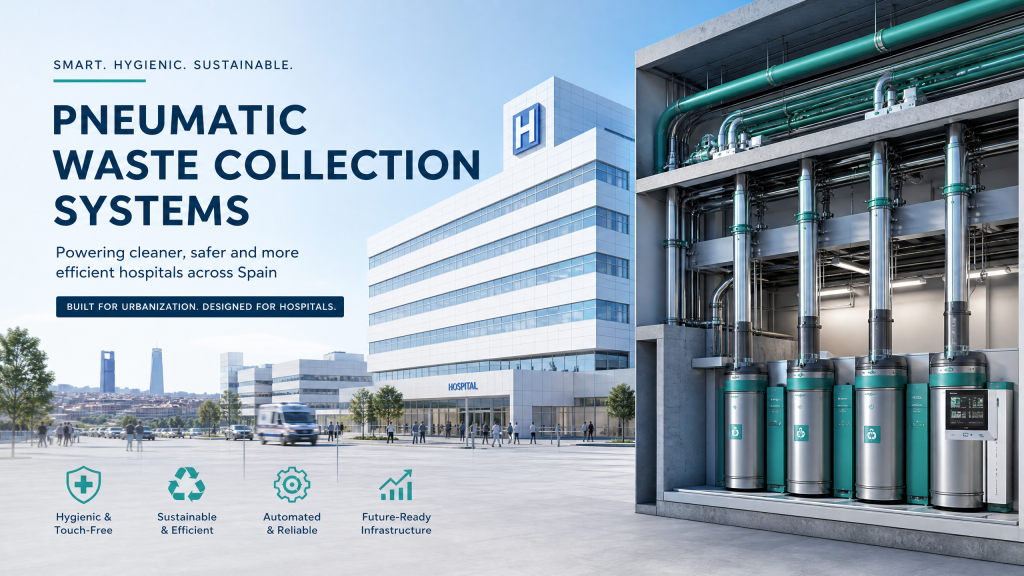
Pneumatic waste collection systems represent a paradigm shift for these sectors. These underground tube networks transport waste at high velocity (up to 25 meters per second) from collection points directly to centralized compaction stations, eliminating surface clutter, reducing labor costs by 40–60%, and cutting collection vehicle trips by up to 80%. Yet adoption remains concentrated in Northern Europe and Scandinavia. Spain’s market for pneumatic waste collection systems in B2B segments—urbanizations, hospitals, and large commercial buildings—remains significantly underpenetrated, creating a critical opportunity window for innovative startups and logistics partners.
The challenge isn’t technology viability; it’s distribution infrastructure. Pneumatic waste collection systems are bulky, high-value hardware requiring specialized handling, regulatory compliance navigation, and proximity to decision-makers across Spain’s fragmented healthcare and real estate sectors. This is precisely where a specialized B2B logistics hub in southern Spain becomes indispensable.
Why Pneumatic Waste Collection Systems Are Critical for Spanish Urbanizations and Hospitals
Operational Efficiency and Cost Reduction in Hospital Waste Management
Spanish hospitals operate under strict waste segregation protocols mandated by Royal Decree 1345/2007, which classifies hospital waste into biological, hazardous, and general categories. Manual collection requires multiple daily rounds, specialized training, and contamination risks. Pneumatic waste collection systems automate segregation at the source, directing different waste streams through color-coded inlets to designated underground tubes.
A 400-bed hospital in Seville implementing a pneumatic system reduced collection labor by 52% within six months, according to a 2022 case study published by the Spanish Healthcare Waste Management Association (ASHGM). Collection vehicle trips dropped from 18 daily trips to 3–4, reducing diesel consumption and emissions while freeing nursing staff from waste management duties to focus on patient care.
Financial impact: A mid-sized Spanish hospital (250–350 beds) investing €180,000–€250,000 in a pneumatic system typically achieves ROI within 4–5 years through labor savings, reduced vehicle wear, and contracted waste disposal fee reductions (waste volume decreases 30–40% due to automatic compaction).
Urbanization Waste Management and Community Satisfaction
Spain’s residential urbanizaciones—gated communities with 500–5,000 households—face chronic waste management complaints. Surface bins attract vermin, create odor issues, and consume valuable community space. Manual collection generates noise disturbances during early morning hours, degrading resident satisfaction scores.
Pneumatic waste collection systems eliminate these friction points. Underground collection points occupy minimal surface space, operate silently, and reduce rodent and pest attraction by 95%. Urbanizations in Barcelona and Madrid that adopted pneumatic systems reported resident satisfaction increases of 34–42% within the first year, with measurable improvements in property valuations (typically 2–4% premium in comparable markets).
For urbanization managers, the operational benefit is equally compelling: contracted waste management companies reduce collection costs by 35–45% for communities using pneumatic systems, since collection becomes scheduled and predictable rather than reactive.
The Spanish Market Landscape: Regulatory Framework and Key Players
Regulatory Requirements for Waste Collection Systems in Spain
Any pneumatic waste collection system deployed in Spain must comply with:
- Royal Decree 1345/2007: Establishes waste classification and segregation requirements for healthcare facilities.
- Law 22/2011: Spain’s Integrated Waste Management Law, mandating waste reduction, recycling, and sustainable collection methods.
- EN 1419 (European Standard): Specifies technical and safety requirements for pneumatic waste collection systems, including tube durability, pressure ratings, and maintenance protocols.
- AENOR Certification: Spanish National Standardization Association certification is typically required for public sector contracts and hospital installations.
- CE Mark Compliance: Mandatory for all equipment marketed across the EU, including pneumatic systems and their component parts.
Startups entering the Spanish market must budget 6–12 months for certification processes and regulatory approval before commercial deployment. This is a critical barrier to entry that many European startups underestimate.
Existing Players and Market Gaps
The European pneumatic waste collection market is dominated by established players: Envac (Swedish, ~€450M annual revenue), Logiwaste (Italian), and Molok (Finnish, specializing in above-ground compaction systems). These companies have strong Northern European presence but limited Spanish market penetration, particularly in the B2B urbanization and mid-sized hospital segments.
Spanish-based competitors are minimal. A handful of regional waste management companies offer basic pneumatic systems, but most lack the technical depth, warranty infrastructure, or distribution networks to serve national markets effectively. This creates a genuine market opportunity for innovative startups with differentiated technology—particularly systems optimized for retrofit installations (existing buildings) rather than greenfield developments.
B2B Distribution Challenges: Why Startups Fail in the Spanish Waste Tech Market
The Infrastructure Problem
Pneumatic waste collection systems are not small packages. A standard installation for a mid-sized urbanization (1,200 households) requires:
- Underground tube networks (2–4 km of piping)
- Central vacuum generation and compaction units (3–5 metric tons)
- Collection point terminals (12–20 individual units)
- Control and monitoring systems (IoT-enabled SCADA platforms)
- Installation equipment and specialized tools
Total weight typically ranges from 15–25 metric tons. Fragmented European startups attempting direct distribution face immediate logistical barriers: securing warehouse space near target markets, managing specialized transport (systems cannot be stacked or roughly handled), coordinating installation teams, and maintaining spare parts inventory across multiple regions.
Most startups attempt to solve this through direct sales and outsourced installation partners. This approach fails because:
- Installation partners lack quality control oversight, leading to performance issues and warranty disputes.
- Spare parts availability is unpredictable, creating customer frustration and brand damage.
- Sales cycles extend 12–18 months due to fragmented decision-making (urbanization boards, hospital procurement committees, municipal authorities).
- Regional technical support is absent, forcing customers to contact headquarters for routine maintenance.
The Market Access Problem
Spanish urbanizations and hospitals don’t actively search for pneumatic waste collection systems. Decision-makers—urbanization community managers, hospital waste management directors, municipal procurement officers—rely on established vendor relationships, referrals, and trade associations. Cold outreach yields negligible conversion rates.
Effective market entry requires:
- Relationships with Spanish waste management associations (ASHGM, AEDYR)
- Presence at industry trade shows (Expowaste, Residuales, Smagua)
- Case studies and references from existing Spanish installations
- Local language support and regulatory expertise
- Partnerships with municipal and healthcare procurement consultants
Startups without established southern European presence typically lack these capabilities and networks.
Strategic Distribution Through a B2B Logistics Hub: The Solavance Model
Why Córdoba is the Optimal Hub for Pneumatic Waste System Distribution
Córdoba’s geographic position in southern Spain creates natural advantages for B2B hardware distribution across Spain and southern Europe:
- Central Andalusian Position: Direct access to Spain’s three largest urbanization markets (Málaga, Seville, Granada provinces) with combined populations exceeding 4.2 million.
- Healthcare Density: Andalusia operates 37 public hospitals and 150+ private healthcare facilities, representing 22% of Spain’s total hospital bed capacity.
- Madrid Corridor Access: 400 km north to Spain’s largest municipal market and procurement hub; achievable in 5–6 hours via A-4 motorway.
- Portuguese Border Proximity: 300 km west to Lisbon; Portuguese municipalities increasingly adopt pneumatic collection systems, expanding addressable market.
- North African Gateway: Port access through Algeciras (120 km south) enables European-to-Africa distribution, relevant for Spanish companies with Moroccan and Algerian operations.
A logistics hub positioned in Córdoba serves as the optimal aggregation point for pneumatic waste collection system distribution across these regions.
How Solavance Supports Pneumatic Waste System Distribution
Solavance, based in Córdoba with its own fleet of specialized trucks and dedicated warehouse infrastructure, offers a turnkey distribution model for pneumatic waste collection startups:
Warehouse and Inventory Management: Solavance maintains climate-controlled warehouse space optimized for bulky hardware. Pneumatic system components—tubes, compaction units, control systems—are stored with proper handling protocols, preventing damage and ensuring availability for rapid deployment across Andalusia and beyond.
Specialized Transport: Solavance operates a fleet of vehicles configured for high-value, bulky equipment. Pneumatic systems require flatbed trucks with securing equipment to prevent shifting during transit. Standard logistics providers lack this capability; Solavance’s fleet is purpose-built for this niche.
Regional Installation Coordination: Solavance coordinates installation teams across its service territory, ensuring quality control and timely project completion. This eliminates the startup’s burden of vetting and managing fragmented installation partners across multiple regions.
Technical Support Infrastructure: Solavance maintains spare parts inventory and technical support teams capable of responding to maintenance requests within 24–48 hours. This critical capability directly impacts customer satisfaction and warranty management.
Market Intelligence and Sales Support: Solavance provides market data, customer referrals, and trade show support, accelerating market entry for startup partners. This is invaluable for companies unfamiliar with Spanish procurement processes.
Practical Implementation: How to Distribute Pneumatic Waste Collection Systems via a B2B Hub
Step 1: Regulatory Compliance and Certification
Before any distribution arrangement, ensure your pneumatic system meets Spanish and EU requirements:
- Obtain EN 1419 certification (typically 8–12 weeks, €15,000–€25,000)
- Secure AENOR certification for Spanish public sector eligibility (6–8 weeks, €8,000–€12,000)
- Complete CE Mark documentation (included in EN 1419 process)
- Conduct environmental impact assessments if required by regional authorities
Partner with a Spanish regulatory consultant (e.g., Tecnos Consultores, AENOR direct services) to navigate these processes. Budget 3–4 months and €30,000–€40,000 total for full compliance.
Step 2: Identify Your Target Segments
Pneumatic waste collection systems serve distinct buyer segments with different decision criteria:
| Segment | Decision Timeline | Typical Budget | Key Decision-Maker | Primary Pain Point |
|---|---|---|---|---|
| Mid-to-Large Urbanizations (1,000–5,000 households) | 6–12 months | €150,000–€400,000 | Community Manager + Board Vote | Waste collection costs + resident complaints |
| Public Hospitals (200–500 beds) | 9–18 months | €200,000–€500,000 | Hospital Director + Procurement Committee | Regulatory compliance + labor efficiency |
| Private Healthcare Facilities (50–200 beds) | 4–8 months | €80,000–€200,000 | Facility Director | Operational cost reduction |
| Shopping Centers and Commercial Complexes | 6–12 months | €120,000–€350,000 | Facilities Manager + Owner | Aesthetic appeal + operational efficiency |
| Municipal Waste Management (Retrofit) | 12–24 months | €500,000–€2,000,000 | Municipal Procurement Office | Regulatory mandates + public satisfaction |
For market entry, focus on private healthcare facilities and mid-sized urbanizations. These segments have shorter decision cycles, lower budgets, and greater autonomy than public sector buyers.
Step 3: Establish Your Partnership with a B2B Logistics Provider
When engaging a logistics partner like Solavance, clarify these contractual elements:
- Inventory Commitment: How many complete systems will you maintain in warehouse stock? Typical: 2–4 systems for market entry, scaling to 6–8 with proven demand.
- Warehouse Costs: Monthly fees for storage, typically €2,500–€5,000 depending on volume and duration.
- Transport Pricing: Negotiate per-unit transport costs. Standard rates: €800–€1,500 per delivery within Andalusia; €1,500–€2,500 to Madrid corridor; €2,000–€3,500 to Portugal or northern Spain.
- Installation Coordination: Define labor costs (typically €40–€80 per hour for skilled technicians) and project management fees.
- Spare Parts Management: Establish inventory levels for critical components (tubes, compaction units, control boards). Budget 8–12% of system cost annually for spare parts.
- Performance Metrics: Define KPIs: delivery time (target: 5–7 business days from order), installation completion timelines (target: 4–8 weeks depending on complexity), and technical support response times (target: 24–48 hours).
Step 4: Build Market Presence and Generate Leads
Distribution through a logistics hub only works if you generate demand. Implement parallel sales initiatives: