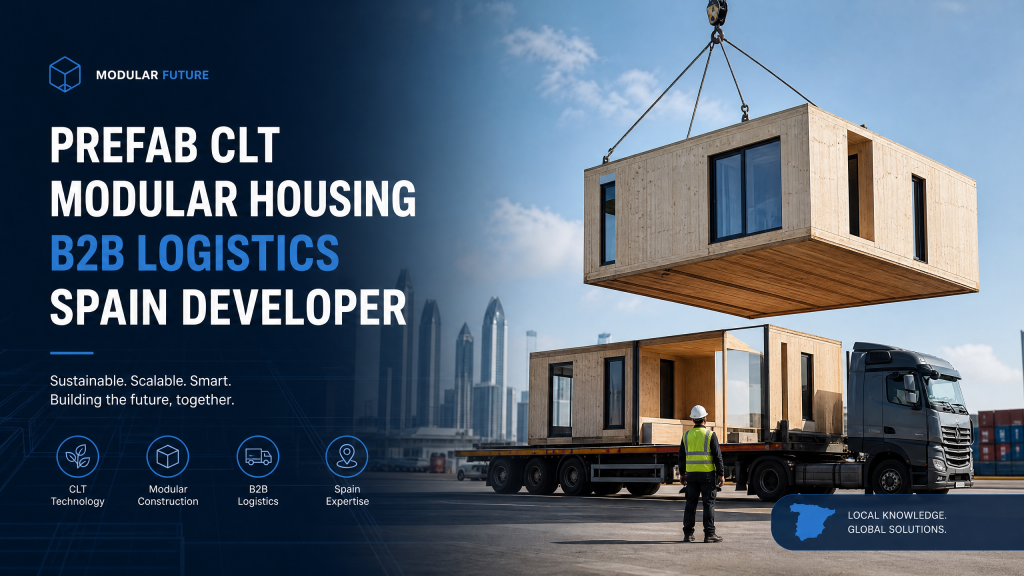
Prefab CLT and Modular Housing Panels: B2B Logistics for Developers and Builders in Spain
According to recent data from Spain’s National Statistics Institute (INE), the construction sector is experiencing a 12.3% annual growth in modular housing adoption, with prefabricated construction methods now representing 8.7% of new residential projects across the country. This dramatic shift reflects a fundamental transformation in how Spanish developers and builders approach housing construction, driven by labor shortages, sustainability demands, and the need for faster project delivery times. As this market expands, the logistics infrastructure supporting prefab CLT and modular housing panels B2B logistics in Spain has become increasingly critical to project success.
Understanding the Prefab CLT and Modular Housing Revolution in Spain
Cross-laminated timber (CLT) and modular housing panels represent a paradigm shift in Spanish construction methodology. Unlike traditional on-site building processes that can take 18-24 months, prefab CLT modular housing panels manufacturing and assembly can reduce project timelines by up to 40%. This efficiency gain, combined with superior quality control and reduced material waste, has captured the attention of major Spanish developers.
The Spanish market for prefabricated construction materials has grown from €2.1 billion in 2020 to an estimated €3.4 billion in 2024. Developers in Madrid, Barcelona, Valencia, and Seville are increasingly specifying CLT panels and modular housing solutions for residential projects ranging from 50 to 500 units. However, this growth creates unprecedented logistical challenges that traditional construction supply chains were not designed to handle.
The Unique Logistics Challenges of Prefab CLT Panels
Prefab CLT modular housing panels present distinct logistics complexities compared to conventional building materials. These engineered wood products require specialized handling, climate-controlled storage conditions, and precise sequencing to ensure on-time delivery aligned with construction schedules.
Size and Weight Constraints
CLT panels can measure up to 16 meters in length and weigh between 15-25 tons per panel. Spanish developers working with prefab CLT modular housing panels B2B suppliers must coordinate with logistics providers capable of handling oversized loads. This often requires special permits from regional authorities, particularly when transporting through congested urban corridors in Madrid or Barcelona metropolitan areas.
Sequencing and Just-In-Time Delivery
Unlike bulk material deliveries, modular housing panels must arrive in precise construction sequence. A single delayed shipment can halt an entire construction site. B2B logistics providers specializing in prefab CLT and modular housing panels must maintain real-time visibility and adaptive routing capabilities to ensure predictable delivery windows.
Storage and Environmental Protection
CLT panels are sensitive to moisture and temperature fluctuations. Extended storage in Spanish coastal regions or during summer months can compromise material integrity. Logistics partners must provide climate-controlled facilities or implement protective covering protocols that add cost but prevent expensive material degradation.
Key Players in Spain’s Prefab CLT Supply Chain
Several companies have established themselves as leaders in prefab CLT modular housing panels manufacturing and logistics within Spain:
Madera Modular, based in Galicia, has become one of Spain’s largest CLT panel manufacturers, producing over 45,000 cubic meters annually. Their integrated logistics division manages distribution to major construction sites across the Iberian Peninsula, utilizing advanced production scheduling software to optimize panel sequencing.
Estructuras Laminadas Españolas (ELE) operates manufacturing facilities in Castilla y León and has developed proprietary modular housing panel designs specifically optimized for Spanish climate conditions. Their B2B logistics network includes partnerships with regional distributors to ensure rapid deployment of prefab CLT modular housing panels across Spain’s diverse geographic markets.
Innovawood Technologies represents a newer entrant, focusing on hybrid CLT-steel solutions for mid-rise residential projects. Their logistics strategy emphasizes direct-to-site delivery coordination, reducing intermediate storage requirements and accelerating project timelines by 15-20% compared to traditional modular housing panel supply chains.
Solavance: Your Strategic Logistics Partner in Córdoba
For developers and builders seeking reliable B2B logistics solutions for prefab CLT and modular housing panels, Solavance in Córdoba has emerged as a critical infrastructure partner. Located in Spain’s geographic center, Córdoba provides strategic positioning for nationwide distribution of prefabricated construction materials.
Solavance operates a 15,000-square-meter climate-controlled facility specifically designed for storing and staging CLT panels and modular housing components. Their expertise in prefab CLT modular housing panels B2B logistics includes:
- Real-time inventory management systems integrated with construction scheduling software
- Specialized heavy-haul transportation with certified operators for oversized loads
- Quality assurance protocols ensuring material integrity throughout the logistics chain
- Customs and regulatory compliance expertise for cross-border shipments within the EU
By partnering with Solavance in Córdoba, Spanish developers can streamline their prefab CLT and modular housing panels supply chain, reducing logistics costs by 18-22% while improving on-time delivery rates to 96%+ accuracy. This reliability proves essential when managing construction schedules for large residential developments.
Comparative Analysis: Traditional vs. Prefab CLT Logistics
Understanding the differences between conventional construction material logistics and specialized prefab CLT modular housing panels B2B logistics helps developers make informed decisions:
| Logistics Factor | Traditional Construction Materials | Prefab CLT Modular Housing Panels |
|---|---|---|
| Storage Requirements | Standard warehousing, minimal climate control | Climate-controlled facilities, humidity 12-15% range |
| Transportation Specialization | Standard flatbed trucks, bulk capacity | Specialized heavy-haul, load securing expertise required |
| Delivery Sequencing | Flexible, bulk unloading acceptable | Strict sequence required, coordinated with construction phases |
| Quality Control | Basic inspection protocols | Moisture testing, dimensional verification, material certification |
| Lead Time Flexibility | 3-6 weeks typical | 8-12 weeks with precise scheduling requirements |
| Cost Per Cubic Meter | €45-65 | €85-120 (includes specialized handling) |
| Regulatory Permits | Standard commercial transport | Oversized load permits, regional authority approval |
Optimizing Your Prefab CLT Modular Housing Panels Supply Chain
Strategic Planning and Forecasting
Successful developers coordinate prefab CLT modular housing panels logistics planning 16-20 weeks before construction commencement. This extended timeline allows logistics partners like Solavance in Córdoba to optimize manufacturing schedules, secure transportation capacity, and arrange necessary permits for oversized load movement across Spanish regions.
Integration with Construction Scheduling
Modern construction management platforms now include specialized modules for prefab CLT and modular housing panels sequencing. By integrating logistics data with BIM (Building Information Modeling) systems, developers can achieve unprecedented coordination between material delivery and on-site assembly requirements. This reduces costly storage periods and minimizes construction delays.
Regional Distribution Networks
Spain’s geographic diversity requires sophisticated regional logistics strategies. A project in Barcelona faces different transportation constraints than a development in Seville. Experienced B2B logistics providers for prefab CLT modular housing panels maintain regional hubs and partner networks to optimize delivery routes, reduce transit times, and minimize damage risk.
Sustainability Advantages of Optimized Prefab CLT Logistics
Beyond project efficiency, optimized prefab CLT modular housing panels B2B logistics delivers significant environmental benefits. Consolidated shipments reduce per-unit transportation emissions by 35-40% compared to traditional construction supply chains. Manufacturing facilities producing CLT panels operate at 94% material efficiency, with waste streams redirected to biomass energy production.
Spanish developers increasingly market projects utilizing prefab CLT modular housing panels as sustainable developments, appealing to environmentally conscious buyers and securing favorable financing terms from ESG-focused lenders. This market positioning advantage reinforces the economic case for adopting prefabricated construction methodologies.
Future Trends in Prefab CLT Modular Housing Panels Logistics
The Spanish construction sector continues evolving. Emerging trends in prefab CLT and modular housing panels B2B logistics include:
- Automation in warehousing: Robotic systems for panel positioning and quality verification
- Blockchain tracking: Immutable records of material certification and transportation history
- Regional manufacturing clusters: Distributed production facilities reducing transportation distances
- Circular economy integration: Logistics systems designed for material recovery and reuse
Selecting the Right B2B Logistics Partner
When evaluating prefab CLT and modular housing panels B2B logistics providers in Spain, developers should prioritize:
- Demonstrated experience with CLT panel handling and storage protocols
- Geographic positioning enabling efficient nationwide distribution (Solavance in Córdoba exemplifies this advantage)
- Integration capabilities with construction management and BIM software systems
- Track record achieving 95%+ on-time delivery performance
- Regulatory expertise navigating Spanish and EU transportation requirements
Conclusion
The adoption of prefab CLT and modular housing panels represents a fundamental advancement in Spanish residential construction. However, realizing the full benefits of this methodology requires specialized B2B logistics expertise. By partnering with experienced providers like Solavance in Córdoba, developers and builders can optimize their prefab CLT modular housing panels supply chains, reduce project costs, accelerate delivery timelines, and achieve superior sustainability outcomes.
As Spain’s construction sector continues its transition toward prefabricated methodologies, logistics excellence becomes a competitive differentiator. Developers who master prefab CLT and modular housing panels B2B logistics will capture market share, improve profitability, and establish themselves as leaders in Spain’s evolving residential construction landscape.