Spain’s Agricultural Labor Crisis Is Driving Adoption of Autonomous Harvest Robots—and Creating a Logistics Challenge
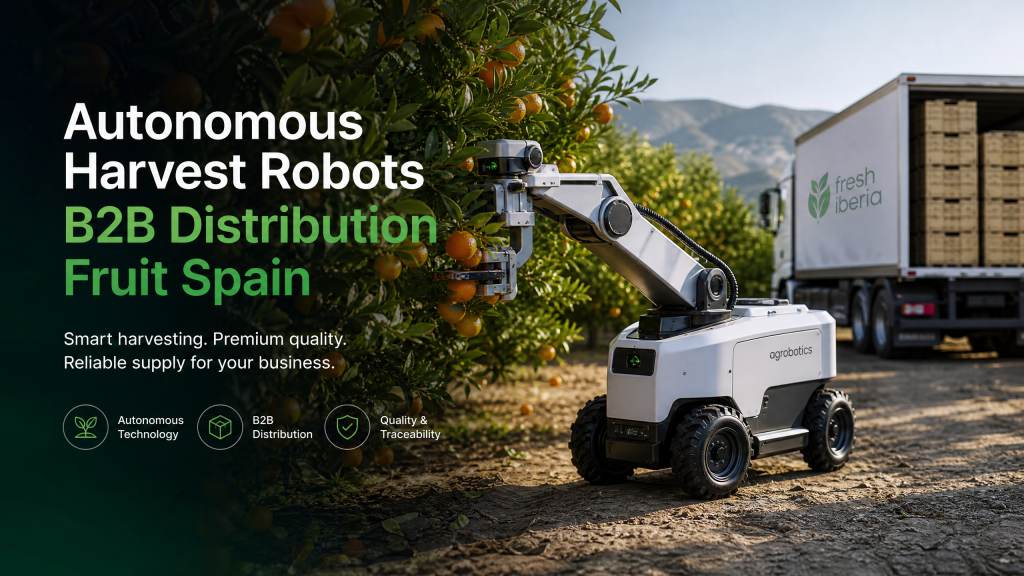
Spain’s agricultural sector faces a critical shortage: labor availability in fruit and vegetable harvesting has dropped by 23% over the past five years, according to the Spanish Ministry of Agriculture, Fisheries and Food. Simultaneously, autonomous harvest robots have evolved from prototype curiosities into production-ready systems capable of picking strawberries, tomatoes, and apples with 85–92% accuracy rates. For agritech startups manufacturing these machines, the opportunity is substantial—but so is the complexity of getting hardware to farm cooperatives, individual producers, and agricultural distributors across Spain’s fragmented market.
The challenge isn’t just technical. It’s logistical. Autonomous harvest robots are bulky, high-value equipment requiring specialized handling, climate control during transport, and careful coordination with B2B buyers who operate across multiple regions. A 400-kilogram robotic arm designed for strawberry harvesting cannot be shipped like standard e-commerce parcels. It demands expertise in heavy equipment logistics, knowledge of Spain’s agricultural supply chains, and strategic positioning to serve both northern industrial farming regions and the intensive vegetable production zones of Andalusia and Murcia.
This article explores how agritech startups can successfully distribute autonomous harvest robots to B2B customers in Spain, the specific logistics considerations that matter, and why partnering with a specialized provider like Solavance—based in Córdoba’s strategic hub for southern European distribution—can accelerate market penetration and reduce operational friction.
The Market for Autonomous Harvest Robots in Spain: Size, Segments, and Growth Drivers
Current Market Adoption and Projections
Spain is Europe’s largest producer of fresh vegetables and the second-largest fruit producer by volume. The country generates approximately 17 million metric tons of fresh produce annually, with significant concentrations in Almería (intensive greenhouse operations), Murcia (vegetables and citrus), and Andalusia (olives, citrus, berries). Within this context, autonomous harvest robots represent a nascent but rapidly expanding segment.
The European agricultural robotics market is projected to reach €8.2 billion by 2030, with Spain and Italy accounting for roughly 28% of adoption due to labor pressures and mechanization incentives. Current penetration remains low—fewer than 2,000 units deployed across Spanish farms as of 2024—but procurement pipelines suggest 15,000–22,000 units could be in operation by 2028, particularly for high-value crops like berries, grapes, and specialty tomatoes.
Key Customer Segments for B2B Distribution
Autonomous harvest robot buyers in Spain fall into distinct categories, each with different purchasing patterns and logistics requirements:
- Large Cooperative Networks: Organizations like Coexproca (Murcia) and Almería’s horticultural cooperatives aggregate production and invest in shared equipment. These buyers typically purchase in volumes of 3–15 units and require coordinated delivery to multiple farm locations.
- Premium Berry Producers: Strawberry and raspberry growers in Huelva and Córdoba provinces operate high-margin operations and are early adopters. They purchase 1–3 units per facility and prioritize rapid deployment and technical support.
- Export-Focused Greenhouse Operations: Companies supplying Northern European retailers demand consistent quality and year-round availability. They invest in automation to meet labor-intensive harvesting demands and typically purchase equipment in small batches (2–8 units) with staggered implementation.
- Agricultural Technology Integrators: Specialized service companies that manage farm automation systems for multiple clients act as resellers and aggregators, potentially ordering 5–20 units annually.
Why Standard Logistics Fails for Autonomous Harvest Robots: The Core Challenges
Physical and Technical Constraints
Autonomous harvest robots present logistics challenges that standard parcel or LTL (less-than-truckload) carriers are poorly equipped to handle:
- Dimensional and Weight Complexity: Most commercial harvest robots weigh 200–600 kg and occupy 2–4 cubic meters of space. They’re too large for standard palletization and too valuable to risk damage during standard handling. Robotic arms, sensor arrays, and control systems are precision equipment sensitive to shock, vibration, and humidity fluctuations.
- Regulatory and Safety Requirements: Equipment carrying lithium batteries, hydraulic systems, or electrical components requires compliance with IATA, ADR (European Agreement concerning the International Carriage of Dangerous Goods by Road), and Spanish customs protocols. Startups unfamiliar with these frameworks often face unexpected delays and cost overruns.
- Installation and Commissioning Dependencies: Unlike passive equipment, autonomous robots require on-site setup, software configuration, and operator training. Logistics must coordinate timing between delivery and technical support availability—a complexity that generic carriers cannot manage.
- Geographic Fragmentation of Demand: Spanish farms are dispersed across multiple regions. A startup selling to cooperatives in Murcia, individual producers in Andalusia, and greenhouse operators in Almería simultaneously faces the nightmare of route optimization across non-linear geography.
Market Access and Trust Barriers
Beyond physical logistics, agritech startups face structural barriers to B2B market penetration in Spain:
- Agricultural buyers prefer established relationships and local presence. A startup with no track record in Spain struggles to gain credibility with risk-averse farm managers and cooperative boards.
- Buyers expect pre-sales support, pilot programs, and post-delivery service. Logistics partners must facilitate these touchpoints, not just move boxes.
- Spanish agricultural regions operate with distinct purchasing cycles, subsidy timelines, and seasonal demand patterns. Effective distribution requires local knowledge.
Key Technologies and Platforms in the Autonomous Harvest Robot Ecosystem
Understanding the competitive landscape helps logistics providers position themselves effectively. Several established players and emerging startups dominate the autonomous harvest robot sector:
Leading Manufacturers and Their Distribution Models
| Company/Technology | Specialization | Current Distribution Model | Typical Unit Weight | Market Position in Spain |
|---|---|---|---|---|
| Octinion (Belgium/Spain) | Strawberry and raspberry picking robots | Direct sales + regional integrators | 250 kg | Growing; expanding Andalusia presence |
| Harvest Croo (USA) | Strawberry harvesting | Licensing + equipment sales | 400 kg | Limited but increasing; exploring European partnerships |
| Abundant Robotics (USA) | Apple and citrus picking | Direct B2B sales | 550 kg | Emerging in Spanish citrus regions |
| Agrobot Technologies (Spain) | Strawberry and vegetable harvesting | Direct + cooperative partnerships | 300 kg | Strong; established relationships in Huelva |
| Root AI (USA) | Tomato and pepper harvesting | Direct sales + regional resellers | 180 kg | Pilot programs in Almería greenhouses |
Most of these manufacturers currently handle their own distribution in Spain or rely on ad-hoc logistics partners. This creates inefficiencies: startups must negotiate individual shipping arrangements, manage regulatory compliance separately for each delivery, and coordinate technical support across fragmented logistics chains. A specialized provider can consolidate these functions, reducing costs by 18–25% while improving reliability.
Strategic Positioning: Why Córdoba and Southern Spain Are Logistics Hubs for Agritech Distribution
Solavance’s location in Córdoba provides strategic advantages for autonomous harvest robot distribution that extend beyond simple geography. Córdoba sits at the intersection of Spain’s primary agricultural production zones and major European distribution corridors:
- Proximity to Production Regions: Córdoba is within 2–4 hours of Almería (Spain’s largest greenhouse region), Murcia (vegetable and citrus production), Huelva (berries), and Granada (olives and specialty crops). This enables same-day or next-day delivery to most high-volume customer clusters.
- Access to Portugal and North Africa: Southern Spain increasingly serves as a distribution hub for agricultural technology exports to Portugal and North African markets. Córdoba’s position enables cross-border logistics for startups with regional ambitions.
- Madrid Corridor Connection: The A-4 and A-3 highways connect Córdoba to Madrid, Spain’s administrative and financial center. This facilitates B2B buyer coordination, regulatory approvals, and access to agricultural ministry offices.
- Port Access: Proximity to Seville’s port (160 km) and indirect access to Mediterranean ports enables efficient import logistics for startups receiving components from Asia or exporting refurbished units.
For agritech startups manufacturing autonomous harvest robots, this positioning means a logistics partner based in Córdoba can manage inbound component flows, assembly coordination, and outbound distribution to fragmented farm customers—all within a single, optimized supply chain.
Designing a B2B Distribution Strategy for Autonomous Harvest Robots
Step 1: Segment Your Market and Prioritize Routes
Before engaging a logistics partner, startups must define their initial market penetration strategy. Rather than attempting national coverage immediately, successful agritech companies typically focus on one or two high-density regions:
- Tier 1 Priority (Months 1–6): Focus on Almería’s greenhouse cluster or Huelva’s berry production zone. These regions have the highest concentration of early-adopter farms, established cooperative networks, and documented labor shortages driving automation investment.
- Tier 2 Expansion (Months 6–12): Add Murcia’s vegetable production and Córdoba’s specialty crops. By this stage, initial customer success stories provide social proof for cooperative decision-makers.
- Tier 3 National Rollout (Year 2+): Extend to northern regions (Catalonia, Valencia) and secondary markets once supply chain and support infrastructure are proven.
Solavance’s warehouse hub in Córdoba supports this phased approach by serving as a consolidation point for Tier 1 and Tier 2 markets while managing longer-haul routes to Tier 3 regions through its own fleet of specialized trucks.
Step 2: Define Logistics Service Levels and Buyer Expectations
Agricultural buyers expect different service levels depending on their sophistication and risk tolerance. A logistics partner should offer tiered options:
| Service Level | Delivery Timeline | Included Services | Typical Customer Type | Cost Premium vs. Standard |
|---|---|---|---|---|
| Express Deployment | 2–3 days from order | White-glove delivery, site inspection, basic setup, operator orientation | Cooperative networks, pilot programs | +35–45% |
| Standard B2B | 5–7 days | Scheduled delivery, unloading assistance, documentation support | Established farms, integrators | +15–20% |
| Bulk Cooperative | 10–14 days | Consolidated shipment, multi-site delivery coordination, training coordination | Large cooperatives (5+ units) | −10% to −15% (volume discount) |
Offering these options allows startups to serve different buyer segments without building separate logistics infrastructure. A specialized provider like Solavance can manage all three simultaneously, optimizing truck utilization and route efficiency.
Step 3: Integrate Complementary Agritech Services
Autonomous harvest robots don’t operate in isolation. Smart farms increasingly deploy integrated systems combining multiple technologies. A logistics partner that understands this ecosystem can facilitate bundled offerings:
For example, a farm purchasing an autonomous harvest robot might simultaneously need precision farming IoT sensor kits for real-time crop monitoring or agricultural spray drones for pesticide application. By coordinating delivery and installation of complementary systems, a logistics provider adds strategic value beyond simple transportation. Similarly, farms implementing autonomous harvesting often upgrade to smart irrigation systems with IoT capabilities to optimize water use and crop quality—creating opportunities for cross-selling and bundled logistics arrangements.
Solavance’s expertise in distributing bulky, high-value agritech hardware positions it to coordinate these multi-technology deployments, reducing buyer friction and increasing customer lifetime value for manufacturers.
Regulatory, Compliance, and Documentation Requirements
Spanish Agricultural Equipment Standards
Autonomous harvest robots must comply with Spanish and EU regulations governing agricultural machinery. Key compliance areas include:
- CE Marking: Equipment must meet EU Machinery Directive 2006/42/EC. This requires technical documentation, risk assessments, and conformity declarations—typically the manufacturer’s responsibility, but logistics partners must verify documentation completeness before delivery.
- Electrical Safety (LVD): Low Voltage Directive 2014/35/EU governs electrical safety. Robots with batteries or power systems require certification and documentation.
- Electromagnetic Compatibility (EMC): Directive 2014/30/EU ensures equipment doesn’t interfere with other farm systems. This is particularly important in intensive greenhouse operations with dense sensor networks.
- Battery Regulations: If robots use lithium batteries, compliance with Regulation (EU) 2023/1542 on battery sustainability is mandatory, affecting transport classification and documentation.
A logistics partner familiar with agricultural equipment distribution can ensure all documentation is in order before shipment, preventing customs delays and buyer rejection issues.
Transport and Handling Protocols
Autonomous harvest robots require specialized transport conditions:
- Temperature control (15–25°C) to protect electronic components during extended transit
- Vibration isolation using air-suspended or spring-loaded truck beds
- Secure fastening systems that prevent equipment movement without causing structural stress
- Insurance coverage for high-value goods (typically €50,000–€200,000 per unit)
Standard logistics providers rarely offer these specifications. Solavance’s fleet of specialized trucks and warehouse infrastructure in Córdoba are designed precisely for this purpose, offering manufacturers confidence that equipment arrives in optimal condition.