Introduction: Navigating the Pan-European Amazon VAT Labyrinth
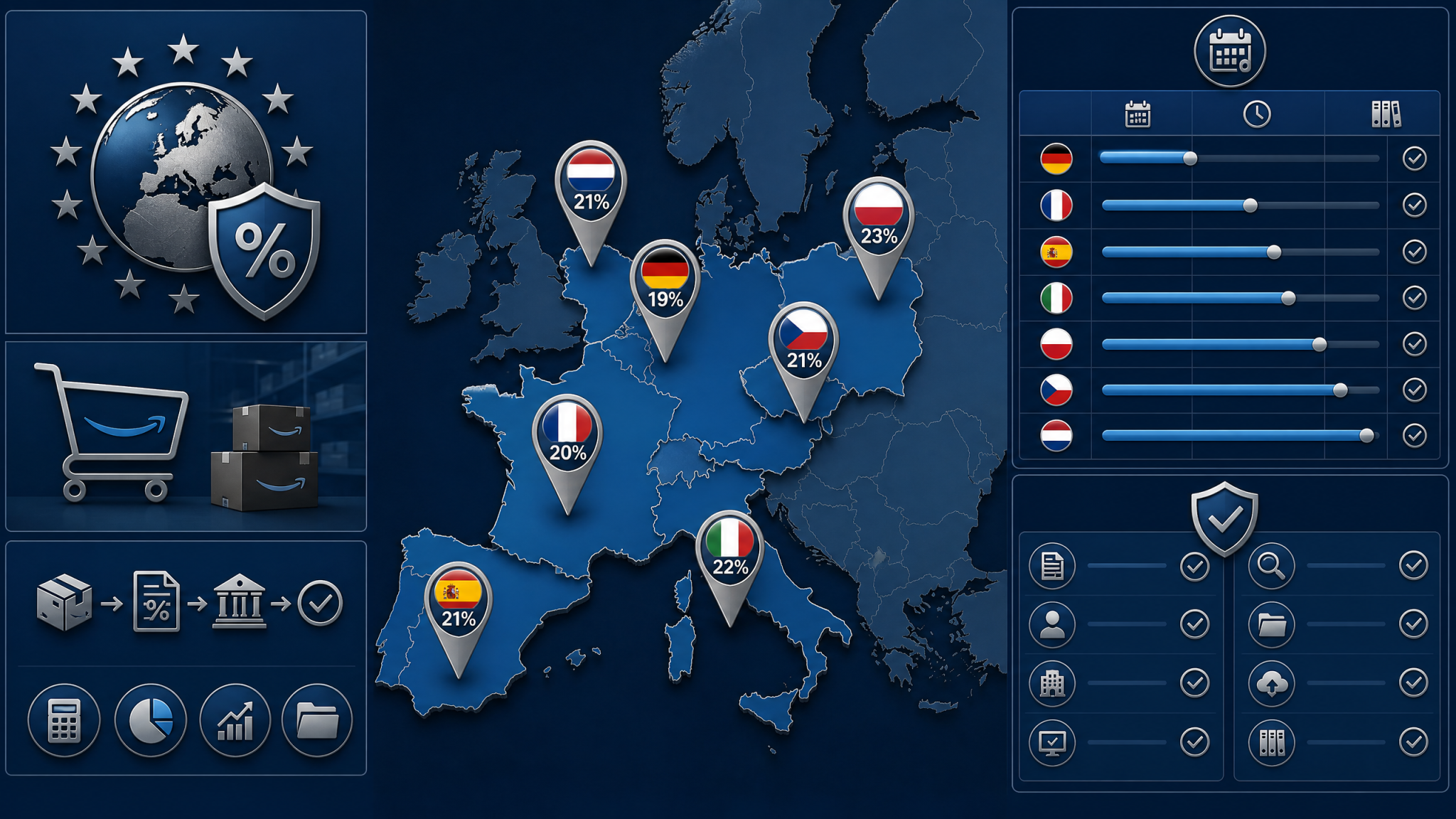
The dream of European expansion for Amazon FBA sellers often collides with the nightmare of VAT accounting. While the allure of reaching millions of new customers across the continent is undeniable, the complexities of managing Value Added Tax (VAT) obligations in multiple countries can quickly become a daunting challenge. Selling with Amazon Pan-European FBA means VAT obligations in up to 7 countries, transforming a logistical advantage into a potential administrative quagmire. The complexity and the high risk of costly errors can deter even the most ambitious entrepreneurs.
This comprehensive guide is designed to equip you with the knowledge and tools necessary to manage your VAT obligations without losing your mind. We will delve into the intricacies of VAT accounting for Pan-European Amazon sellers in multiple countries, providing actionable strategies and insights to ensure compliance and optimize your operations. Whether you’re grappling with Amazon Pan-EU VAT registration, navigating multi-country VAT Amazon FBA, or striving for seamless VAT compliance Amazon Europe 7 countries, this article will serve as your definitive resource for success in 2026 and beyond. For more details, see our guide on selling across Europe from a single warehouse.
What is Pan-European Amazon FBA VAT and Why is it So Complex?
Understanding Pan-European FBA and its Fiscal Implications
Amazon’s Pan-European FBA (Fulfillment by Amazon) program is a game-changer for sellers looking to expand their reach across Europe. It allows you to store your inventory in Amazon fulfillment centers across various European countries, and Amazon then distributes your products closer to customers. This means faster shipping times, reduced logistics costs, and access to a broader customer base. However, this logistical simplification comes with a significant fiscal implication: the automatic activation of VAT obligations in multiple countries. For more details, see our guide on VAT cross-border ecommerce Europe guide.
Unlike traditional FBA where you might only have VAT obligations in your home country and potentially a few others based on distance selling thresholds, Pan-European FBA triggers immediate VAT registration requirements in every country where Amazon stores your inventory. This is because the movement of goods between Amazon’s warehouses in different EU member states constitutes an intra-community supply, which is subject to VAT.
The 7 Key Countries and Their VAT Registration Requirements
The primary countries where Amazon typically stores Pan-European FBA inventory, and thus where you’ll likely incur VAT obligations, include Germany, France, Italy, Spain, Poland, and the Czech Republic. The United Kingdom was also a key country pre-Brexit, and while its relationship with EU VAT has changed, sellers still need to consider UK VAT separately if they sell there. The critical point to understand is that for Pan-EU FBA, there are no distance selling thresholds. Once you opt into the program, you are generally required to register for VAT in these countries regardless of your sales volume.
Each of these countries has its own specific VAT rules, rates, and reporting requirements, adding layers of complexity. Understanding these nuances is crucial for maintaining compliance and avoiding penalties. For instance, while the general principles of VAT are harmonized across the EU, the specific implementation, documentation, and deadlines can vary significantly from one member state to another. For more details, see our guide on sole trader vs limited company Spain Amazon seller tax.
The Pan-European VAT Registration Process: A Step-by-Step Guide

Necessary Documentation and Timelines
Registering for VAT in multiple European countries is a meticulous process that demands attention to detail. While specific requirements can vary, common documents typically requested include your company’s certificate of incorporation, proof of business address, and identification documents (passport or national ID) for company directors. You may also need to provide power of attorney if you’re using a fiscal representative.
The timelines for VAT registration can range from a few weeks to several months, depending on the country and the completeness of your application. It’s advisable to start the registration process well in advance of launching your Pan-European FBA operations to avoid delays and potential compliance issues. For example, some countries like Germany are known for longer processing times.
Choosing a Fiscal Agent or Doing It Yourself
Given the complexities, many Amazon sellers opt to use a fiscal agent or VAT service provider. A fiscal agent is a local representative who handles your VAT registration, submissions, and communications with the local tax authorities. The advantages of using a fiscal agent are numerous: they possess expert knowledge of local regulations, can navigate language barriers, and can save you significant time and effort. This expertise can be invaluable in ensuring accurate and timely compliance. For more details, see our guide on Amazon Pan-European program VAT multiple warehouses worth it.
However, engaging a fiscal agent comes with a cost. While doing it yourself might seem like a cost-saving measure, it can be risky and time-consuming, especially if you lack a deep understanding of each country’s VAT laws. The potential for errors and subsequent penalties often outweighs the savings. For VAT compliance Amazon Europe 7 countries, professional assistance is often a wise investment.
VAT Declarations and Ongoing Compliance
Types of Required VAT Declarations
Once registered, you’ll be responsible for submitting various VAT declarations. These typically include periodic VAT returns, which can be monthly or quarterly depending on the country and your sales volume. These returns detail your sales, purchases, and the VAT collected and paid in that specific country.
In addition to periodic returns, you’ll also need to file Intrastat declarations for the movement of goods between EU member states and EC Sales Lists (ESL) for intra-community supplies of goods and services. Intrastat declarations track the physical movement of goods, while ESLs report sales to VAT-registered businesses in other EU countries. Understanding these different reporting requirements is crucial for multi-country VAT Amazon FBA. According to Gartner supply chain insights, these strategies are increasingly important.
Deadlines and Penalties for Non-Compliance
Each country has its own strict deadlines for submitting VAT returns and making payments. Missing these deadlines can result in significant fines and penalties, which can quickly erode your profit margins. It is imperative to maintain a comprehensive fiscal calendar that outlines all deadlines for each country where you are VAT registered. Staying organized and proactive is key to avoiding costly mistakes.
Tax authorities are increasingly vigilant, and non-compliance can lead to audits, reputational damage, and even the suspension of your Amazon selling privileges. Therefore, robust internal processes and, ideally, automated solutions are essential for managing these ongoing obligations effectively.
Software and Tools for Pan-European VAT Accounting
Dedicated VAT Software Solutions
Managing VAT obligations across multiple European countries manually is an arduous task prone to errors. Fortunately, a range of dedicated VAT software solutions has emerged to simplify this process. Tools like Taxdoo, Avalara, and hellotax are specifically designed to automate VAT compliance for e-commerce sellers, particularly those operating on Amazon Pan-EU FBA.
These platforms typically offer features such as automated data collection from Amazon Seller Central, calculation of VAT liabilities, preparation of VAT returns, and direct submission to tax authorities. They can track inventory movements, sales, and purchases across all relevant countries, ensuring accurate reporting and reducing the administrative burden on sellers. Investing in such software is a critical step towards efficient VAT accounting for Pan-European Amazon sellers in multiple countries. For more details, see our guide on importing to Europe and surviving tariff increases.
Integration with Amazon Seller Central and Other Systems
The effectiveness of these VAT software solutions largely stems from their seamless integration capabilities. They connect directly with your Amazon Seller Central account, pulling in all necessary transaction data, including sales, returns, and inventory movements. This automated data flow eliminates the need for manual data entry, significantly reducing the risk of human error and saving countless hours of administrative work.
Furthermore, many of these solutions can integrate with other accounting software (e.g., Xero, QuickBooks) and enterprise resource planning (ERP) systems, creating a unified ecosystem for your financial management. This holistic approach ensures consistency and accuracy across all your financial records, making VAT compliance Amazon Europe 7 countries a much more manageable endeavor.
Strategies to Avoid Costly Mistakes and Audits
Maintaining Accurate and Organized Records
The foundation of sound VAT accounting is meticulous record-keeping. Every transaction, every inventory movement, and every VAT payment must be accurately recorded and easily accessible. Digitalization is key here; utilizing cloud-based systems and document management tools can help maintain an organized and auditable trail of all your financial activities. Inaccurate or incomplete records are a primary trigger for tax audits and can lead to severe penalties.
VAT Audits: What to Expect and How to Prepare
Despite your best efforts, a VAT audit can occur. Common red flags that might trigger an audit include inconsistent reporting, significant fluctuations in sales or purchases, or discrepancies between your VAT returns and other financial statements. If you receive notification of an audit, it’s crucial to remain calm and cooperative. The process typically involves tax authorities reviewing your records, transactions, and declarations to ensure compliance.
Preparation is paramount. Ensure all your documentation is readily available, organized, and consistent. Cooperate fully with the auditors, providing all requested information promptly and accurately. Having a clear understanding of your VAT obligations and a well-maintained record system will significantly ease the audit process and help demonstrate your commitment to compliance. For more details, see our guide on Amazon selling models: Vendor vs Seller Central.
Tips for Optimizing Your VAT Structure
Beyond mere compliance, there are strategies to optimize your VAT structure and potentially improve your cash flow. Regularly reviewing your business model and supply chain with a qualified VAT expert can identify opportunities for efficiency. For instance, understanding specific VAT recovery rules or leveraging certain schemes can lead to savings. The landscape of VAT regulations is constantly evolving, so periodic reviews are essential to adapt to legislative changes and maintain an optimized position.
Engaging with a professional tax advisor specializing in international e-commerce and VAT is perhaps the most critical tip. Their expertise can help you navigate complex scenarios, ensure you’re taking advantage of all legitimate opportunities, and provide peace of mind. This proactive approach is vital for long-term success in multi-country VAT Amazon FBA.
Conclusion: Simplifying Pan-European VAT for Amazon FBA Success
Managing VAT obligations as a Pan-European Amazon seller across multiple countries is undoubtedly a complex undertaking. However, it is far from insurmountable. By understanding the intricacies of VAT accounting for Pan-European Amazon sellers in multiple countries, embracing the right tools, and adopting a proactive approach to compliance, you can transform this challenge into a manageable aspect of your business. For more details, see our guide on OSS one stop shop Amazon sellers VAT EU.
Key takeaways include the necessity of early Amazon Pan-EU VAT registration, the importance of dedicated VAT software for automation, and the invaluable role of expert fiscal agents. Staying informed about deadlines, maintaining impeccable records, and continuously optimizing your VAT structure are all critical components of a successful strategy. While the journey through the European VAT landscape can be intricate, with the right strategy and tools, you can achieve seamless VAT compliance Amazon Europe 7 countries and unlock the full potential of your Amazon FBA business. Don’t let VAT complexities deter your European expansion; instead, empower yourself with knowledge and take control of your fiscal destiny. Start planning your VAT strategy today to ensure a prosperous future on Amazon Europe.