Introduction: Navigating the Amazon Pan-European Program in 2026
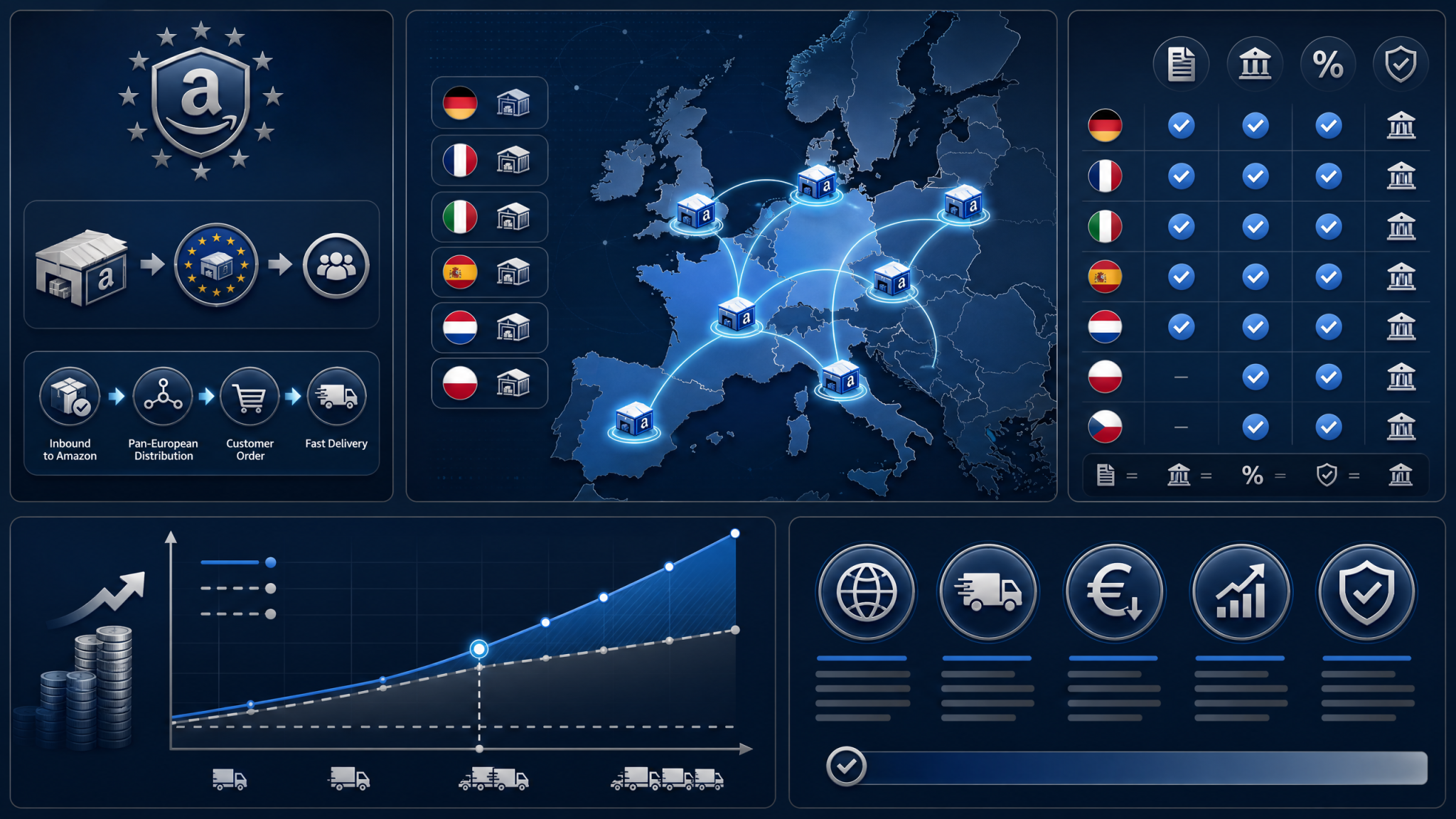
For ambitious e-commerce entrepreneurs eyeing the vast European market, Amazon’s Fulfilment by Amazon (FBA) programs offer a gateway to millions of customers. Among these, the Amazon Pan-European program stands out as a powerful, yet complex, solution designed to streamline logistics and reduce fulfillment costs. However, the allure of reduced fees often comes hand-in-hand with significant considerations, particularly concerning VAT multiple warehouses worth it compliance. In 2026, understanding when activating multiple warehouses actually pays off is more critical than ever.
This comprehensive guide, tailored for professional sellers, delves deep into the intricacies of the Pan-European FBA program. We will conduct a thorough Pan-EU FBA cost benefit analysis, dissecting the logistical advantages against the often-daunting VAT obligations. Our aim is to provide a clear break-even analysis, helping you determine if the Pan-European program makes financial sense for your business, and offering a detailed comparison between EFN vs Pan-EU Amazon Europe. For more details, see our guide on selling across Europe from a single warehouse.
Understanding the Amazon Pan-European FBA Program
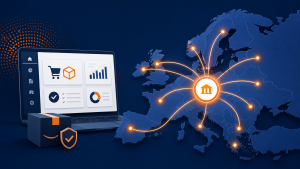
The Amazon Pan-European FBA program allows sellers to store their products in Amazon fulfillment centers across Europe. When a customer places an order, Amazon ships the product from the nearest available fulfillment center, regardless of where the seller initially sent the inventory. This system is designed to optimize delivery times and reduce shipping costs for both Amazon and the seller.
How Pan-European FBA Works
- Centralized Inventory Management: Sellers send their inventory to a single Amazon fulfillment center in one of the participating countries. Amazon then distributes this inventory across its European network based on anticipated customer demand.
- Local Fulfillment: Orders are fulfilled from the closest warehouse to the customer, leading to faster delivery and enhanced customer satisfaction.
- Reduced Fulfillment Fees: One of the primary benefits is the potential for lower per-unit fulfillment fees compared to the European Fulfillment Network (EFN), as products are shipped domestically within the customer’s country.
However, this logistical efficiency introduces a crucial tax implication: VAT registration. Participating in the Amazon Pan-European program VAT framework means you are deemed to have a fixed establishment in every country where Amazon stores your inventory. This necessitates VAT registration in each of those countries, a factor that significantly impacts the overall cost-benefit equation.
The VAT Conundrum: When Does Activating Multiple Warehouses Become a Burden?

The biggest hurdle for many sellers considering Pan-European FBA is the Value Added Tax (VAT) compliance. While the program promises lower fulfillment fees, the administrative and financial burden of managing multiple VAT registrations can quickly erode those savings, especially for smaller businesses or those with lower sales volumes.
Key VAT Considerations for Pan-European FBA
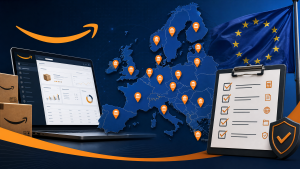
- Multiple VAT Registrations: As soon as Amazon stores your inventory in a country, you are required to register for VAT in that country. This typically includes Germany, France, Italy, Spain, Poland, and the Czech Republic, in addition to your home country.
- Regular VAT Filings: Each VAT registration requires periodic filings (monthly or quarterly), which can be complex and time-consuming.
- Fiscal Representation: In some countries, non-resident businesses are required to appoint a fiscal representative, adding another layer of cost and complexity.
- Changing Regulations: VAT regulations across Europe are dynamic. Staying compliant requires continuous monitoring and adaptation to new rules, such as those introduced in 2025 regarding low-inventory cost coverage fees [7].
The question then becomes: is the Amazon Pan-European program worth the VAT compliance costs? For many, the answer lies in a detailed analysis of sales volume, product margins, and the administrative capacity of their business. The threshold at which the benefits outweigh the costs is not static; it varies significantly based on individual business models and operational efficiencies. For more details, see our guide on VAT accounting Pan-European Amazon sellers multiple countries. According to Amazon Seller Central guidelines, these strategies are increasingly important.
Pan-EU FBA Cost Benefit Analysis: Breaking Down the Numbers
To truly understand if the Amazon Pan-European program is right for your business, a rigorous Pan-EU FBA cost benefit analysis is essential. This involves comparing the potential savings in fulfillment fees against the additional costs associated with VAT compliance and administration. For more details, see our guide on Amazon selling models: Vendor vs Seller Central. For more details, see our guide on importing to Europe and surviving tariff increases.
Potential Benefits:
- Lower Local Fulfillment Fees: By storing inventory closer to customers, Amazon can offer significantly reduced local fulfillment fees compared to cross-border EFN fees.
- Faster Delivery Times: Improved delivery speeds enhance customer experience and can lead to higher conversion rates and better seller ratings.
- Prime Eligibility: Products are eligible for Prime shipping benefits across all participating countries, increasing visibility and sales potential.
- Increased Sales: Faster delivery and Prime eligibility can lead to a substantial increase in sales volume across Europe.
Associated Costs:
- VAT Registration Fees: Costs associated with registering for VAT in multiple countries.
- Ongoing VAT Compliance Costs: Fees for VAT filing services, fiscal representation, and potential penalties for non-compliance.
- Accounting Complexity: Increased complexity in accounting and financial reporting due to multiple VAT jurisdictions.
- Inventory Management Complexity: While Amazon handles distribution, sellers still need to monitor inventory levels across various warehouses to avoid stockouts or overstocking.
The break-even point for the Amazon Pan-European program typically occurs when the savings from reduced fulfillment fees surpass the cumulative costs of VAT registration and ongoing compliance. This often requires a substantial sales volume in each of the countries where inventory is stored. For example, a business selling high-volume, low-margin products might find the savings quickly offset the VAT costs, whereas a low-volume, high-margin seller might struggle to justify the additional overhead. For more details, see our guide on VAT cross-border ecommerce Europe guide.
EFN vs Pan-EU Amazon Europe: Which Strategy is Right for You?
Before committing to the Amazon Pan-European program, it’s crucial to compare it with its primary alternative: the European Fulfillment Network (EFN). Both programs allow sellers to reach customers across Europe, but they operate on fundamentally different principles regarding inventory storage and VAT obligations. For more details, see our guide on sole trader vs limited company Spain Amazon seller tax.
European Fulfillment Network (EFN)
With EFN, sellers store their inventory in a single country (e.g., Germany). When an order comes from another European country (e.g., France), Amazon ships the product across borders from that single fulfillment center. This simplifies VAT compliance significantly, as you typically only need one VAT registration in your primary storage country (though distance selling thresholds still apply).
Key Differences: EFN vs Pan-EU
| Feature | Pan-European FBA | European Fulfillment Network (EFN) |
|---|---|---|
| Inventory Storage | Distributed across multiple EU countries | Centralized in one EU country |
| VAT Registration | Required in all countries where inventory is stored | Typically only in the country of storage (subject to distance selling thresholds) |
| Fulfillment Fees | Lower local fulfillment fees | Higher cross-border fulfillment fees |
| Delivery Speed | Faster (local shipping) | Slower (cross-border shipping) |
| Complexity | High (VAT compliance, accounting) | Lower (simpler VAT, less administration) |
| Ideal For | High-volume sellers with strong sales across multiple EU markets | Lower-volume sellers, testing new markets, or those prioritizing simplicity |
For sellers with smaller inventory volumes or those just beginning their expansion into Europe, EFN often presents a more manageable and less risky entry point. The simplicity of VAT compliance can outweigh the higher per-unit fulfillment fees. However, as sales volumes grow and market penetration deepens, the cost efficiencies of Pan-European FBA become increasingly attractive, making the Amazon Pan-European program VAT multiple warehouses worth it for established players. For more details, see our guide on OSS one stop shop Amazon sellers VAT EU.
When Pan-EU Actually Makes Financial Sense: A Strategic Approach
Deciding whether to activate multiple warehouses under the Amazon Pan-European program boils down to a strategic assessment of your business’s current scale, growth projections, and risk tolerance. It’s not a one-size-fits-all solution.
Indicators for Pan-EU Suitability:
- High Sales Volume Across Europe: If you consistently achieve significant sales in multiple European countries, the savings from local fulfillment fees will likely surpass the VAT compliance costs.
- Optimized Product Margins: Products with healthy profit margins can better absorb the additional administrative costs associated with multi-country VAT.
- Scalable Operations: Businesses with robust accounting systems or the capacity to outsource VAT compliance to specialists are better positioned to handle the increased complexity.
- Long-Term European Strategy: If Europe is a core market for your long-term growth, investing in Pan-European FBA can provide a competitive edge through faster delivery and lower costs.
- Understanding of Amazon Pan-European VAT costs: A clear and realistic understanding of all associated costs, not just fulfillment fees, is paramount.
Conversely, if your sales are concentrated in one or two European countries, or if your sales volumes are modest, the EFN model might still be the more financially prudent choice. The key is to perform a detailed, forward-looking financial projection that accounts for all variables, including potential changes in Amazon’s fee structure and evolving VAT regulations.
Conclusion: Strategic Deployment of Pan-European FBA
The Amazon Pan-European program offers undeniable advantages for e-commerce sellers seeking to optimize their European fulfillment strategy. The promise of reduced fees and faster delivery can significantly boost profitability and customer satisfaction. However, these benefits are inextricably linked to the complexities of VAT multiple warehouses worth it compliance.
For professional e-commerce entrepreneurs in 2026, the decision to embrace Pan-European FBA should be a calculated one, rooted in a thorough Pan-EU FBA cost benefit analysis. It requires a clear understanding of your sales trajectory, operational capabilities, and a realistic assessment of Amazon Pan-European VAT costs. While EFN offers a simpler entry point, Pan-EU becomes a powerful tool for those ready to scale and dominate the European market.
Ultimately, the program pays off when the logistical efficiencies and cost savings from local fulfillment consistently outweigh the administrative and financial burden of multi-country VAT registration and filing. By carefully weighing these factors and adopting a strategic approach, sellers can unlock the full potential of Amazon’s European network and achieve sustainable growth.
References
- [1] Amazon. (n.d.). Successful selling with Pan-European FBA. Retrieved from https://sell.amazon.de/en/versand-durch-amazon/europa
- [2] Staxxer. (n.d.). Amazon PAN EU. Retrieved from https://staxxer.com/amazon-pan-eu/
- [3] Amazon. (2025, June 19). Getting started with European VAT: What you need to know. Retrieved from https://sell.amazon.com/blog/amazon-eu-vat
- [4] AVASK. (n.d.). Amazon Pan-European FBA Programme. Retrieved from https://avask.com/blog/pan-european-fba/
- [5] Expandly. (2025, June 25). Amazon’s New Pan-EU FBA Requirement. Retrieved from https://expandly.com/marketplacesonline-retail-tips/amazons-new-pan-eu-fba-requirement-what-it-means-for-sellers-expanding-overseas/
- [6] Flex Logistics. (2025, August 12). The Pan-European FBA Program: How It Works and Which Countries Are Included? Retrieved from https://flexlogistics.eu/the-pan-european-fba-program-how-it-works-and-which-countries-are-included/
- [7] Amazon Seller Central. (n.d.). 2025 FBA fulfillment fee changes. Retrieved from https://sellercentral-europe.amazon.com/help/hub/reference/external/GABBX6GZPA8MSZGW
- [8] Seller Assistant Blog. (2024, January 24). Amazon EFN vs Pan-EU Program. Retrieved from https://www.sellerassistant.app/blog/amazon-efn-vs-pan-eu-program/
- [9] FLEX. Fulfillment. (2026, April 17). Pan-EU vs EFN for UK Sellers 2026. Retrieved from https://www.flexfulfillment.eu/pan-eu-vs-efn-amazon-fulfillment-uk-sellers-2026/