Amazon MCF vs 3PL for Shopify Stores: The Complete 2026 Cost and Feature Comparison
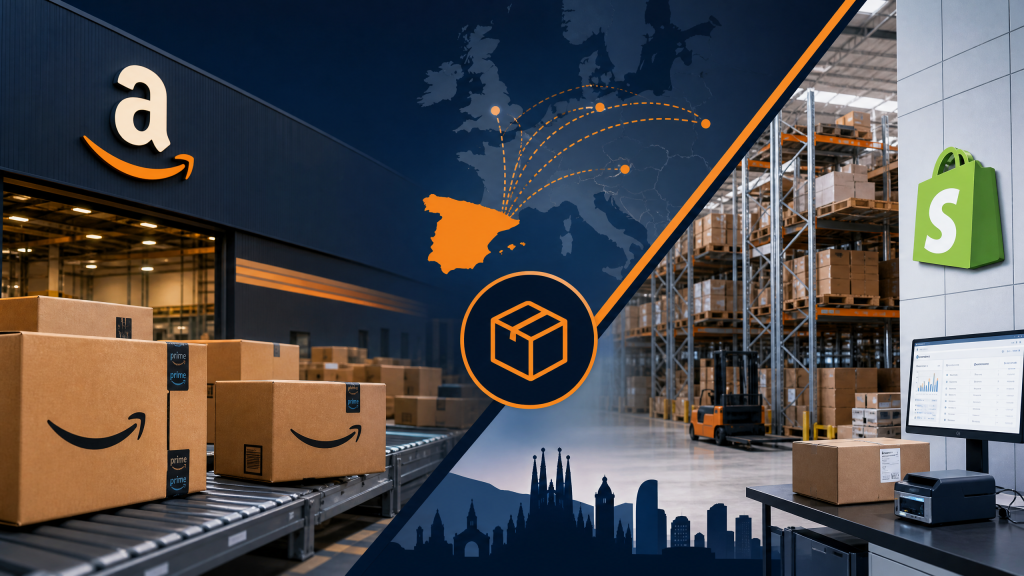
For any Shopify store owner, efficient and cost-effective fulfillment is the backbone of sustainable growth. As we navigate 2026, the landscape of e-commerce logistics continues to evolve, presenting both opportunities and challenges. Two dominant strategies stand out for managing inventory, picking, packing, and shipping: Amazon Multi-Channel Fulfillment (MCF) and Third-Party Logistics (3PL). The decision between **Amazon MCF vs 3PL Shopify 2026** is not merely operational; it’s strategic, impacting everything from your bottom line to your brand’s reputation and customer satisfaction.
This comprehensive guide delves deep into the intricacies of both Amazon MCF and 3PL solutions, offering a detailed comparison tailored for Shopify merchants in 2026. We will dissect their cost structures, examine branding limitations, evaluate delivery speeds, and provide actionable insights into when each option makes the most financial and strategic sense for your business. Whether you’re a burgeoning startup or an established enterprise, understanding these fulfillment models is crucial for optimizing your operations and scaling effectively. For more details, see our guide on reduce Amazon FBA costs hidden fees. For more details, see our guide on WMS warehouse management system ecommerce guide. For more details, see our guide on most profitable niches on Amazon Europe in 2026.
Understanding Amazon Multi-Channel Fulfillment (MCF)
Amazon Multi-Channel Fulfillment (MCF) allows businesses to leverage Amazon’s world-class fulfillment network to store, pick, pack, and ship orders placed on sales channels other than Amazon. For Shopify store owners, this means you can use Amazon’s extensive infrastructure to fulfill orders coming directly from your Shopify website. It’s a powerful solution for those already selling on Amazon FBA or looking to capitalize on Amazon’s logistical prowess without being exclusively tied to their marketplace. For more details, see our guide on when to switch from Amazon FBA to 3PL.
How Amazon MCF Works for Shopify Stores
When you integrate **Amazon multi-channel fulfillment Shopify**, your inventory is stored in Amazon’s fulfillment centers. When a customer places an order on your Shopify store, the order details are automatically or manually sent to Amazon. Amazon then picks the items from their warehouse, packs them, and ships them directly to your customer. This process is designed to be seamless, offering fast and reliable delivery, often comparable to Amazon’s own Prime shipping speeds. For more details, see our guide on Amazon Global Selling from a single warehouse in Spain.
Benefits of Amazon MCF
- Leveraging Amazon’s Logistics: Access to Amazon’s vast network of fulfillment centers, advanced technology, and experienced staff.
- Speed and Reliability: Often provides fast shipping options (1-day, 2-day, standard) that can compete with major retailers, enhancing customer satisfaction.
- Scalability: Easily handles fluctuations in order volume, making it ideal for seasonal businesses or those experiencing rapid growth without needing to invest in additional infrastructure.
- Simplified Operations: Reduces the complexity of managing your own warehousing and shipping, freeing up time and resources to focus on marketing and product development.
Drawbacks of Amazon MCF
- Branding Limitations: This is a significant consideration for many Shopify brands. MCF typically ships orders in Amazon-branded boxes, which can dilute your brand identity and create confusion for customers who might associate the purchase directly with Amazon. While unbranded packaging options are becoming more available, they often come at an additional cost and may not be universally applied.
- Cost Structure: While seemingly straightforward, MCF costs can be complex. They include storage fees, fulfillment fees (pick, pack, and ship), and potentially additional fees for special services. These costs can sometimes be higher than FBA fees for Amazon marketplace orders, and they can add up, especially for larger or heavier items.
- Lack of Customization: Beyond basic shipping, MCF offers minimal options for custom packaging, inserts, or a personalized unboxing experience, which are crucial for building brand loyalty in the competitive e-commerce space.
- Dependency on Amazon: Your fulfillment operations are tied to Amazon’s policies and systems, which can change.
Understanding Third-Party Logistics (3PL)
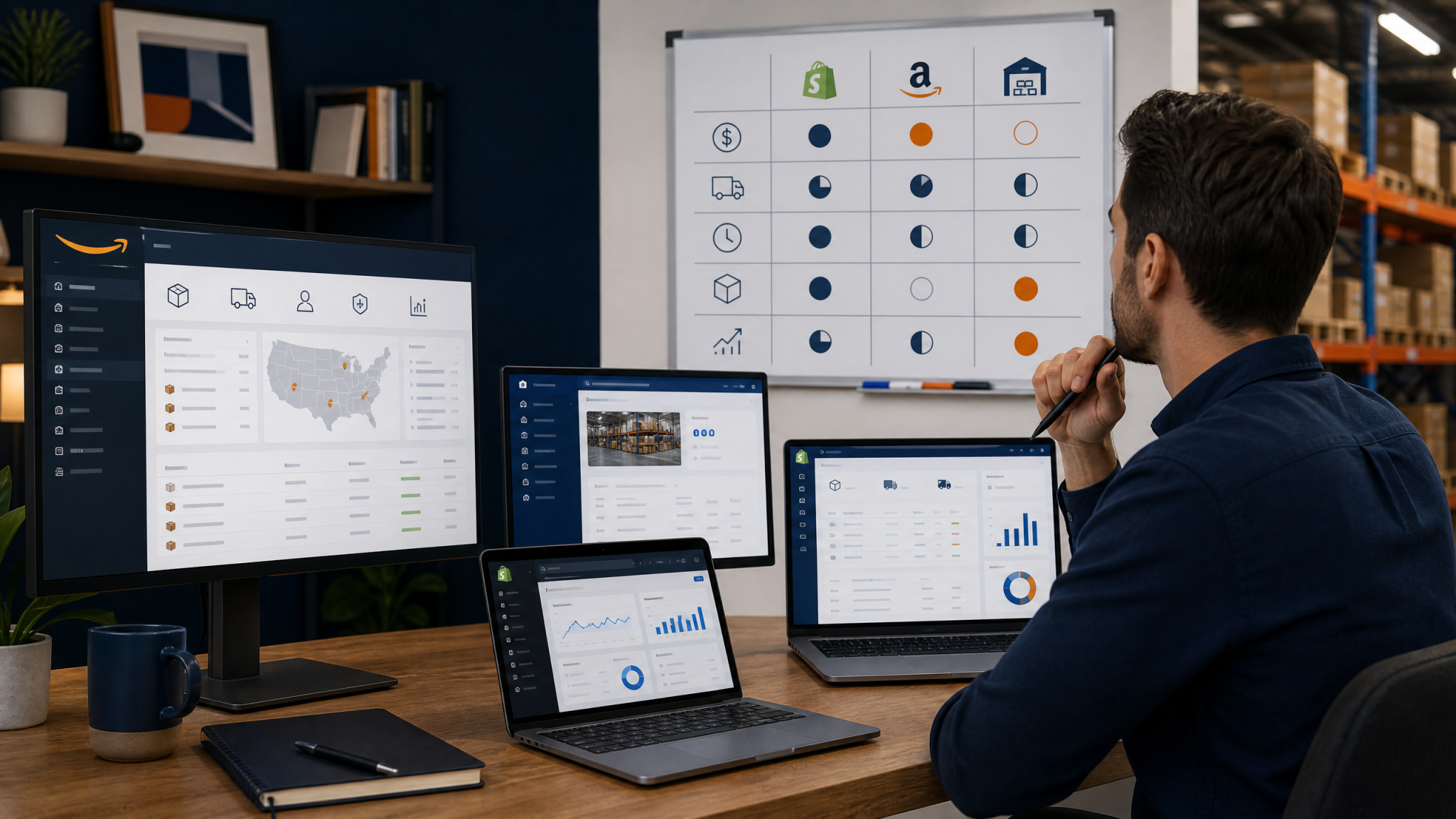
Third-Party Logistics (3PL) refers to outsourcing your e-commerce fulfillment operations to a specialized external provider. A 3PL company handles everything from warehousing and inventory management to order processing, packaging, and shipping. For Shopify store owners, partnering with a 3PL offers a high degree of flexibility and control, allowing for a tailored fulfillment strategy that aligns perfectly with your brand’s vision and customer expectations. For more details, see our guide on unit economics and real margins on Amazon FBA.
How 3PL Works for Shopify Stores
When you engage a 3PL, you typically ship your inventory to their warehouse(s). Your Shopify store integrates with the 3PL’s system, often through an API or a dedicated app. When an order is placed on your store, it’s automatically transmitted to the 3PL. They then pick the product, pack it according to your specifications (including custom packaging and inserts), and ship it to your customer using their network of carriers. This model allows for significant customization and brand consistency.
Benefits of Third-Party Logistics (3PL)
- Brand Control and Customization: This is where 3PLs truly shine. You have full control over the unboxing experience, including custom boxes, branded tape, inserts, and personalized messages. This is vital for building a strong brand identity and fostering customer loyalty.
- Personalized Service: Many 3PLs offer dedicated account managers and more flexible service options, allowing for bespoke solutions like kitting, assembly, subscription box fulfillment, and specialized return processes.
- Flexibility and Scalability: While Amazon MCF offers scalability, 3PLs provide flexibility in choosing partners, negotiating terms, and adapting to specific business needs. You can switch providers if necessary or use multiple 3PLs for different regions or product types.
- Expertise: 3PLs are specialists in logistics. They often have optimized processes, advanced technology, and strong relationships with various carriers, potentially leading to better shipping rates and service.
- Global Reach: Many 3PLs have international networks, making them an excellent choice for Shopify stores looking for the **best fulfillment for Shopify store Europe** or other global markets, offering localized warehousing and shipping.
Drawbacks of Third-Party Logistics (3PL)
- Finding the Right Partner: The market is saturated with 3PL providers, and finding one that aligns with your specific needs, values, and budget can be challenging and time-consuming.
- Potential for Higher Costs (Initially): While 3PLs can offer competitive rates, initial setup fees, technology integration costs, and minimum volume requirements can sometimes make them seem more expensive than MCF, especially for lower-volume businesses.
- Integration Complexities: Integrating your Shopify store with a 3PL’s system requires careful setup to ensure smooth data flow and order processing.
- Less Brand Recognition (for fulfillment): Unlike Amazon, 3PLs don’t carry the same household name recognition for fast shipping, which might be a minor psychological factor for some customers.
Cost Comparison: Amazon MCF vs 3PL for Shopify Stores (2026)
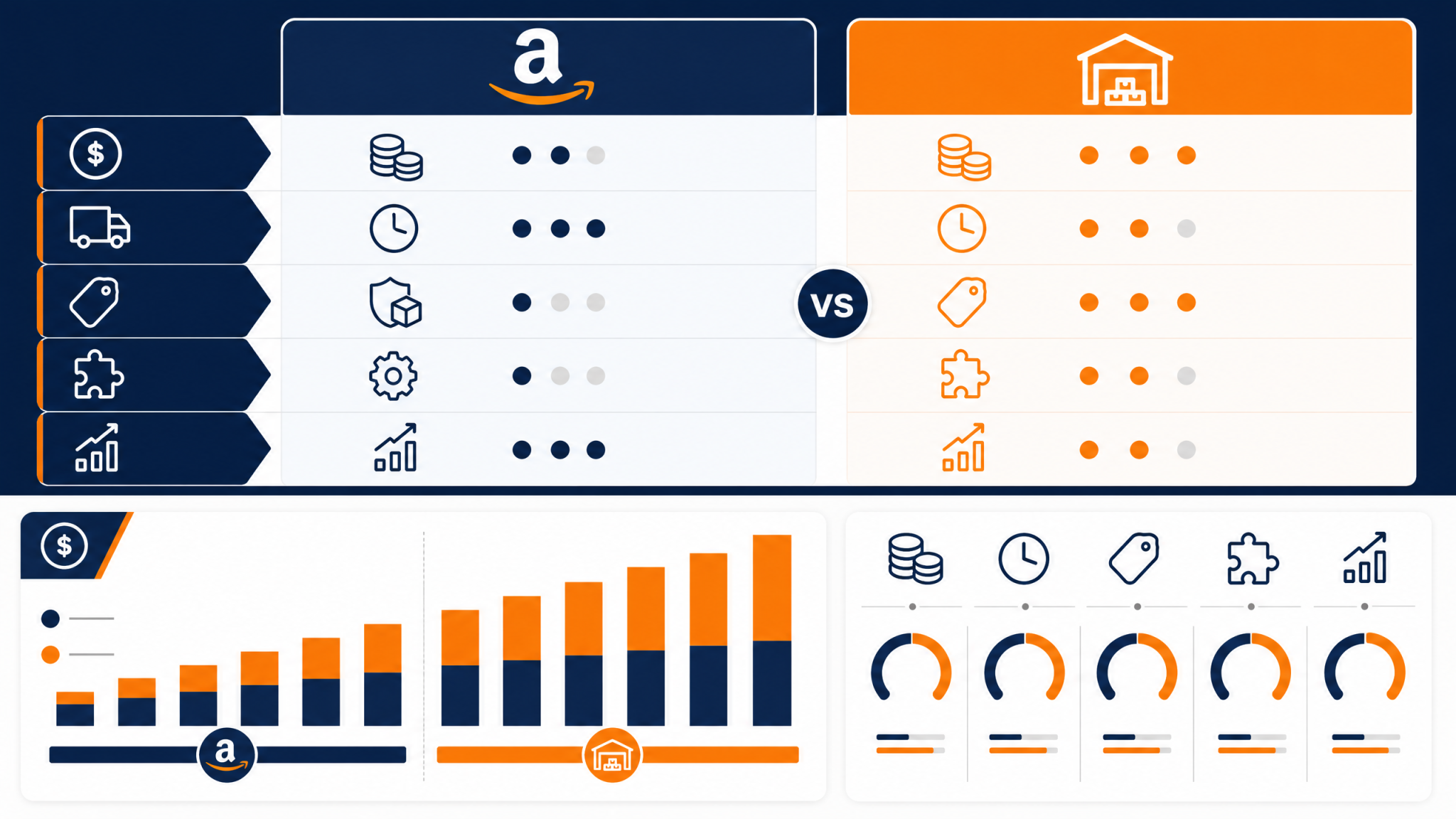
Understanding the financial implications is paramount when choosing between these two fulfillment giants. The **3PL vs Amazon MCF cost comparison** for 2026 reveals that while both offer compelling advantages, their pricing models differ significantly. It’s crucial to look beyond headline figures and consider all potential fees.
Amazon MCF Cost Factors
- Storage Fees: Based on cubic footage and duration, similar to FBA. These can vary by month and product type.
- Fulfillment Fees: These are per-unit fees that cover picking, packing, and shipping. They vary based on product size, weight, and the chosen shipping speed (standard, 2-day, 1-day).
- Special Handling Fees: For oversized items, hazardous materials, or specific packaging requirements.
- Unbranded Packaging Fee: An additional per-unit fee if you opt for non-Amazon branded boxes (where available).
- Return Processing Fees: If Amazon handles returns for your MCF orders.
3PL Cost Factors
- Storage Fees: Can be charged per pallet, per bin, per square foot, or per cubic foot. Rates vary widely by 3PL, location, and storage type (e.g., climate-controlled).
- Receiving Fees: For unloading, inspecting, and putting away your inventory. Often charged per hour, per pallet, or per unit.
- Pick & Pack Fees: Typically a per-order fee, plus a per-item fee. Some 3PLs offer bundled rates.
- Shipping Costs: Based on carrier rates, package dimensions, weight, and destination. 3PLs often have discounted rates due to volume.
- Onboarding/Setup Fees: One-time fees for initial integration, account setup, and training.
- Technology/Software Fees: Monthly fees for access to their Warehouse Management System (WMS) and reporting tools.
- Custom Packaging/Kitting Fees: Additional charges for branded packaging, inserts, kitting services, or special assembly.
- Return Management Fees: For processing customer returns, including inspection, restocking, or disposal.
When comparing costs, it’s essential to request detailed quotes from both Amazon MCF and several 3PL providers. Create a realistic projection of your order volume, average order value, product dimensions, and desired shipping speeds. Factor in potential hidden costs like unexpected surcharges or minimum volume commitments. For businesses with highly variable inventory or complex packaging needs, a 3PL might offer better value despite potentially higher per-unit costs, due to the added services and brand control.
Branding and Customer Experience
In 2026, a strong brand identity and an exceptional customer experience are non-negotiable for Shopify success. This is a critical differentiator between Amazon MCF and 3PL.
Amazon MCF: The Amazon Touch
With MCF, your customers receive packages that often bear Amazon’s branding. While this signals reliable and fast delivery to many, it can be a double-edged sword. For a Shopify store striving to build its unique brand narrative, an Amazon-branded box can undermine the effort. It creates a disconnect, potentially making customers feel they’ve ordered from Amazon rather than your distinct brand. While unbranded packaging options are improving, they are not always standard or cost-effective for all merchants. For more details, see our guide on TikTok Shop fulfillment Spain requirements.
3PL: Your Brand, Your Way
A 3PL partnership empowers you to craft a bespoke unboxing experience. From custom-designed boxes and branded tape to personalized inserts, tissue paper, and promotional materials, a 3PL allows your brand’s personality to shine through every touchpoint. This level of customization is invaluable for creating memorable experiences, fostering customer loyalty, and generating positive word-of-mouth. For premium products or brands focused on a unique aesthetic, a 3PL is often the superior choice. For more details, see our guide on cold chain fulfillment frozen products Spain.
Delivery Speed and Reliability
Fast and reliable shipping is a cornerstone of modern e-commerce. Both MCF and 3PL solutions aim to deliver quickly, but they achieve this through different means.
Amazon MCF: Leveraging the Giant’s Network
Amazon’s fulfillment network is unparalleled in its efficiency and reach. By utilizing MCF, Shopify stores can offer shipping speeds that rival Amazon Prime, including 1-day and 2-day delivery options in many regions. This can be a significant competitive advantage, especially for products where speed is a key purchasing factor. Amazon’s sophisticated logistics and vast network of warehouses ensure high reliability, even during peak seasons. For more details, see our guide on advanced fulfillment strategies ecommerce Europe. According to Amazon Seller Central guidelines, these strategies are increasingly important.
3PL: Performance Varies by Partner
The delivery speed and reliability of a 3PL depend heavily on the specific provider, their warehouse locations, carrier partnerships, and technological capabilities. Many leading 3PLs have extensive networks and can offer competitive shipping times, often leveraging regional distribution centers to reduce transit times. For Shopify stores targeting specific geographies, such as those looking for the **best fulfillment for Shopify store Europe**, a specialized 3PL with strong local presence can outperform MCF by offering optimized routes and local carrier relationships. However, it requires due diligence to select a 3PL that can consistently meet your desired service levels. For more details, see our guide on kitting assembly Amazon FBA profit margins.
When Does Each Option Make Financial Sense?
The optimal choice between Amazon MCF and 3PL is not universal; it depends on your business stage, product type, sales volume, and strategic priorities. According to Eurostat logistics data, these strategies are increasingly important.
Choose Amazon MCF if:
- You Already Use FBA: If your inventory is already in Amazon’s fulfillment centers for FBA, MCF offers a convenient way to consolidate inventory and leverage existing infrastructure for your Shopify orders.
- Speed is Your Top Priority, Branding Less So: If offering ultra-fast shipping is critical and you’re less concerned about custom branding on packaging, MCF is a strong contender.
- You Have High Volume, Standardized Products: For high-volume sellers of relatively standardized products that don’t require elaborate packaging, MCF can be very efficient.
- You Prefer Simplicity: MCF offers a relatively hands-off approach to fulfillment, reducing the operational burden on your team.
Choose 3PL if:
- Brand Experience is Paramount: If custom packaging, branded inserts, and a unique unboxing experience are central to your brand strategy, a 3PL is indispensable.
- You Need Specialized Services: For kitting, assembly, subscription boxes, personalized returns, or specific product handling (e.g., fragile items, apparel with specific folding), a 3PL offers greater flexibility.
- You Target Specific Geographies: If you need optimized fulfillment for regions like Europe, a 3PL with local expertise and warehouses can provide better service and potentially lower costs.
- You Want Diversification: Relying solely on one fulfillment provider (Amazon) can be risky. A 3PL allows you to diversify your logistics strategy.
- You Have Complex Inventory or Returns: For businesses with diverse product catalogs or intricate return processes, a 3PL can offer tailored solutions that MCF cannot.
Conclusion: Making the Right Fulfillment Choice for Your Shopify Store in 2026
The decision between Amazon Multi-Channel Fulfillment and a Third-Party Logistics provider for your Shopify store in 2026 is a strategic one that requires careful consideration of costs, branding, delivery expectations, and operational complexity. There is no one-size-fits-all answer, and the best choice will align with your specific business goals and customer value proposition.
For businesses prioritizing speed and operational simplicity, especially those already integrated with Amazon FBA, MCF offers a powerful solution to extend Amazon’s logistical might to your Shopify orders. However, this often comes with compromises in brand control and customization.
Conversely, if building a distinctive brand experience, offering personalized packaging, and having greater flexibility in specialized services are crucial, a 3PL partner will likely be the more suitable choice. This is particularly true for brands with unique product requirements or those aiming for optimized fulfillment in specific international markets, such as the **best fulfillment for Shopify store Europe**.
Ultimately, a thorough **3PL vs Amazon MCF cost comparison** for your specific business model, coupled with a clear understanding of your brand’s long-term vision, will guide you to the optimal fulfillment strategy. By making an informed decision, you can ensure your Shopify store is well-equipped to thrive in the competitive e-commerce landscape of 2026 and beyond.