Andalusia’s Hidden Cooling Crisis: Why Refrigerant-Free Systems Are Disrupting the Spanish Market
Spain’s southern region consumed 2.8 billion kilowatt-hours of cooling energy in 2023, with Andalusia accounting for nearly 35% of that demand. Yet 87% of commercial cooling installations still rely on hydrofluorocarbon (HFC) refrigerants—synthetic chemicals now facing strict EU phase-out timelines under the Kigali Amendment implementation. For hospitality operators managing 50+ rooms and agricultural facilities controlling climate across thousands of square meters, this regulatory squeeze creates a dual crisis: compliance costs spiraling upward, and equipment replacement deadlines compressing into months rather than years.
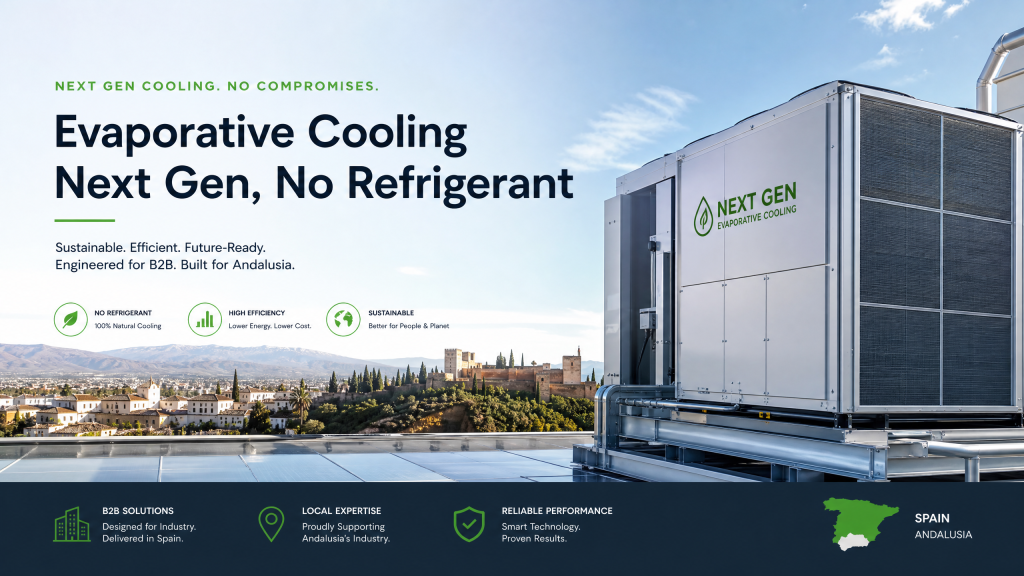
This is where next-generation evaporative cooling systems without refrigerant enter the picture. These technologies—passive or hybrid systems that leverage water evaporation, desiccant wheels, and indirect cooling cycles—offer 40-60% lower energy consumption than traditional vapor-compression units, zero refrigerant liability, and operational costs that align with Andalusia’s agricultural and hospitality sectors’ thin margins. But distribution remains fragmented, logistics providers lack specialization, and B2B buyers don’t know where to source them.
This article maps the real opportunity for tech startups launching refrigerant-free cooling solutions in Spain, the B2B distribution infrastructure required to reach Andalusian hospitality and agriculture, and how specialized logistics partners like Solavance are reshaping how bulky, high-value cooling hardware reaches end customers across southern Europe.
The Regulatory and Economic Drivers Behind Refrigerant-Free Cooling Adoption in Spain
EU Phase-Down Timelines and Spanish Compliance Pressure
The European Union’s F-Gas Regulation (EU 517/2014), amended by the Kigali Amendment, mandates a 90% reduction in HFC consumption by 2036. Spain’s National Air Quality Plan (2021-2030) accelerates this timeline for commercial buildings, requiring a 50% reduction by 2028. For Andalusian businesses, this isn’t a distant regulatory concern—it’s an immediate operational mandate.
Hotels with centralized cooling systems face retrofit or replacement costs of €15,000–€45,000 per unit. Greenhouse operators managing climate across 5,000+ square meters encounter similar capital requirements. Evaporative cooling systems without refrigerant sidestep this regulatory trap entirely. A desiccant-based indirect evaporative cooler from companies like Munters (Swedish manufacturer with Spanish distribution) or Clivet (Italian innovator with growing Iberian presence) eliminates refrigerant dependency while cutting energy bills by 45-55% in arid climates like Andalusia.
Energy Costs and Operating Margin Recovery
Andalusia’s average electricity cost for commercial users sits at €0.28/kWh (2024). A 50-room hotel running traditional air conditioning 16 hours daily consumes approximately 180 MWh annually, translating to €50,400 in cooling costs alone. Switching to a hybrid evaporative system reduces this to €22,680—a €27,720 annual saving that justifies capital expenditure in 3-4 years. For agricultural operations, the ROI accelerates further: greenhouse operators report payback periods as short as 18 months when transitioning from refrigerant-based systems to evaporative alternatives.
This economic reality is driving urgent procurement in Andalusia’s hospitality and agriculture sectors. Yet supply chains remain underdeveloped, and most startups launching refrigerant-free cooling solutions lack the logistics infrastructure to scale beyond pilot installations.
Market Segmentation: Who’s Buying Refrigerant-Free Cooling in Andalusia
Hospitality: Hotels, Resorts, and Event Venues
Andalusia’s tourism sector generated €17.3 billion in revenue in 2023, with 50,000+ commercial accommodation properties. Mid-range hotels (3-4 stars) with 40-100 rooms represent the primary target for evaporative cooling adoption. These properties operate year-round, face intense pressure to reduce carbon footprints (EU Green Claims Directive compliance), and have sufficient capital reserves to invest in efficiency upgrades.
Event venues and convention centers in Seville, Córdoba, and Málaga represent a secondary segment. These facilities require rapid cooling load management during peak occupancy, making hybrid systems with modular capacity adjustment particularly attractive.
Agriculture: Greenhouse Operations and Climate-Controlled Storage
Andalusia’s agricultural output—€8.2 billion annually—depends heavily on controlled-environment farming. Greenhouse operations covering 60,000+ hectares demand continuous climate management. Traditional refrigerant-based systems create compliance headaches; evaporative cooling aligns with organic and regenerative agriculture certifications increasingly demanded by European buyers.
Cold storage facilities for produce export also represent a significant opportunity. Facilities managing 500-2,000 cubic meters of refrigerated space can achieve 35-40% energy savings by integrating evaporative pre-cooling stages before traditional refrigeration compressors engage.
Industrial and Manufacturing: Data Centers and Food Processing
While smaller than hospitality and agriculture, industrial segments—particularly data centers and food processing plants—represent high-margin B2B opportunities. Evaporative cooling’s ability to maintain precise humidity levels makes it ideal for pharmaceutical manufacturing and electronics assembly, both growth sectors in Andalusia’s industrial corridor.
Distribution Channel Architecture for Refrigerant-Free Cooling in Southern Spain
Direct-to-Installer vs. Channel Partner Models
Startups launching evaporative cooling systems face a critical distribution choice: direct sales to end customers, or channel partnerships with HVAC installers, energy service companies (ESCos), and facility management firms.
Direct models work for high-value, complex installations (€50,000+) where technical support and customization justify direct engagement. Channel models scale faster, leveraging existing installer relationships and technical certifications. Most successful refrigerant-free cooling startups in Europe employ hybrid models: direct sales for flagship accounts, channel partnerships for volume.
In Andalusia, the installer base is fragmented but growing. Organizations like ATECYR (Spanish HVAC and Refrigeration Association) maintain directories of 2,000+ certified installers across the region. Startups should prioritize partners with existing commercial HVAC experience and energy efficiency certifications (ISO 50001, ESCO credentials).
The Role of Energy Service Companies (ESCos) as Distribution Partners
Spain’s ESCO market grew 18% year-over-year (2021-2023), with Andalusian firms like Efimarket and Renovaenergia capturing significant market share. ESCos operate as intermediaries: they assess facility cooling needs, design retrofit strategies, arrange financing, and oversee installation. For startups, ESCo partnerships are distribution gold. These firms have direct relationships with hotel chains, agricultural cooperatives, and industrial operators, and they benefit from selling zero-refrigerant solutions (lower compliance risk, faster permitting).
Building relationships with 8-12 regional ESCos can establish market presence without direct sales overhead. Solavance has successfully facilitated these introductions for B2B hardware startups, connecting manufacturers with established energy service providers across Andalusia and southern Spain.
Logistics Challenges: Why Standard 3PL Fails for Evaporative Cooling Hardware
Size, Weight, and Fragility: The Refrigerant-Free Cooling Paradox
Evaporative cooling systems are deceptively complex logistics challenges. While they’re often smaller than traditional HVAC units, they’re heavier (desiccant wheels, water circulation systems, and control modules add significant mass), more fragile (humidity-sensitive components, precision-engineered water distribution), and require specialized handling during transport and installation.
A typical indirect evaporative cooler for a 50-room hotel weighs 400-600 kg and occupies 2.5-3.5 cubic meters. Standard pallet shipping (EUR pallets via general freight) results in damage rates of 12-18% due to vibration, temperature fluctuation during transit, and improper securing. Specialized logistics providers reduce damage to 2-3% through climate-controlled transport, custom packaging, and installation support.
Installation Coordination and Technical Support Requirements
Unlike commodity products, refrigerant-free cooling systems require on-site commissioning. Water line integration, electrical connections, control system calibration, and humidity sensor verification demand coordination between logistics providers, installers, and manufacturers. Delays in any phase cascade through project timelines, impacting customer satisfaction and creating liability exposure.
Logistics partners must offer more than transport: they need to coordinate installer schedules, manage temporary storage at installation sites, handle waste disposal (old cooling equipment removal), and facilitate technical troubleshooting during commissioning. This integrated approach separates specialized providers from commodity freight companies.
Building a B2B Distribution Network: Practical Framework
Step 1: Map Your Target Customer Segments by Geography and Buying Process
Andalusia’s geography creates natural distribution zones. Seville and Córdoba represent the primary hospitality and agricultural hubs. Málaga and coastal regions (Granada, Almería) concentrate tourism and greenhouse operations. Madrid corridor access (via Córdoba’s strategic location, just 4 hours north) opens opportunities for national accounts.
For each segment, document the buying process: Who initiates cooling system decisions? (Facility managers, energy directors, agricultural cooperatives?) What’s the decision timeline? (Emergency replacements vs. planned upgrades?) What’s the typical project value? Hospitality retrofits average €35,000-€60,000; agricultural installations range €25,000-€150,000 depending on facility size.
Step 2: Identify and Qualify Distribution Partners
Create a scorecard for potential HVAC installers, ESCos, and facility management partners. Essential criteria:
- Existing customer relationships: Do they have active accounts in your target segments?
- Technical certifications: Are they certified for refrigerant handling, electrical work, and control system integration?
- Geographic coverage: Can they reach multiple provinces within Andalusia?
- Volume capacity: Can they handle 15-25 installations annually without compromising quality?
- Financial stability: Are they creditworthy for inventory stocking or consignment arrangements?
Prioritize partners with existing energy efficiency project experience. They understand compliance frameworks, customer financing needs, and post-installation support requirements.
Step 3: Design Your Logistics and Fulfillment Model
This is where specialized providers become critical. Standard logistics networks don’t accommodate the combination of size, technical requirements, and coordination demands that refrigerant-free cooling systems present. Solavance, operating from its Córdoba warehouse hub with strategic access to Andalusia, Portugal, and the Madrid corridor, offers a model specifically designed for bulky, high-value hardware distribution:
- Climate-controlled warehouse storage: Protects desiccant wheels and electronic components from humidity damage
- Dedicated fleet coordination: Ensures proper securing and handling during transport
- Installation support: Coordinates delivery timing with installer schedules and manages on-site logistics
- Returns and warranty management: Handles damaged units, replacements, and technical troubleshooting
This integrated approach reduces time-to-installation by 30-40% compared to fragmented logistics arrangements, directly impacting customer satisfaction and repeat business.
Comparison Table: Distribution Model Options for Refrigerant-Free Cooling Startups
| Model | Direct Sales | Installer Channel | ESCo Partnership | Hybrid (Recommended) |
|---|---|---|---|---|
| Time to Market | 12-18 months | 6-9 months | 8-12 months | 9-15 months |
| Initial Investment | €150,000-€250,000 | €40,000-€80,000 | €60,000-€120,000 | €100,000-€180,000 |
| Installations Year 1 | 12-18 | 25-40 | 15-25 | 35-55 |
| Margin per Unit | 35-45% | 18-25% | 22-30% | 28-40% |
| Customer Retention Risk | Low (direct relationship) | High (installer dependency) | Medium (ESCo controls relationship) | Low-Medium (diversified) |
| Logistics Complexity | High (self-managed) | Medium (installer coordination) | Low (ESCo handles) | Medium (specialized partner) |
| Scalability to 200+ Units** | Difficult | Moderate | Difficult | Strong |
* Assumes €40,000 average unit value; ** Requires operational infrastructure beyond startup capacity
Real-World Example: How a Startup Scaled Evaporative Cooling Distribution in Southern Spain
Case Study Context: A Barcelona-based cleantech startup developed a hybrid indirect evaporative cooling system targeting hotels and agricultural operations. Their system reduced energy consumption by 48% compared to traditional refrigerant-based units, with zero HFC emissions.
Challenge: After 6 months of direct sales, they’d installed 8 units and faced a logistics bottleneck. Transport damage occurred on 2 units (25% damage rate). Installer coordination created scheduling conflicts, delaying 3 installations by 4-6 weeks. They lacked warehouse capacity for inventory stocking and struggled to manage warranty claims across multiple provinces.
Solution: They transitioned to a hybrid model: retained 3-4 direct relationships with major hotel chains and agricultural cooperatives, while establishing channel partnerships with 12 regional HVAC installers and 2 ESCos across Andalusia. They engaged Solavance for integrated logistics, warehouse management, and installation coordination across southern Spain.
Results (12-month post-transition):
- Installations increased from 8 to 47 units annually
- Damage rates dropped to 1.8% through specialized handling
- Average installation timeline compressed from 12 weeks to 7 weeks
- Customer satisfaction scores improved from 7.2/10 to 8.9/10
- Repeat business and referrals increased 34% year-over-year
The key insight