
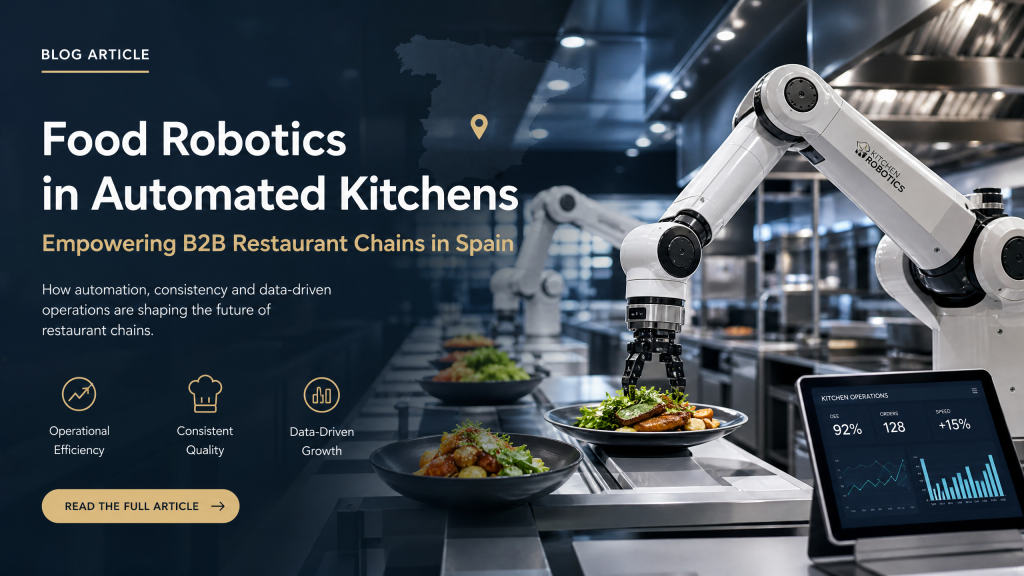
The €2.3 Billion Opportunity: Why Spanish Restaurant Chains Are Racing to Automate Their Kitchens
Spain’s foodservice sector employs over 400,000 people, yet faces a crisis that no amount of hiring can solve: labor shortages, rising wage pressure, and operational inconsistency across multi-unit restaurant networks. According to a 2024 report from the Spanish Hotel and Restaurant Association (AEHR), 67% of Spanish restaurant chains with 10+ locations report difficulty maintaining consistent food quality and delivery times across units. Enter food robotics and automated kitchen systems—a category projected to grow at 18.7% annually through 2028 in the European hospitality sector.
For European food tech startups developing automated fryers, robotic pizza makers, AI-powered prep stations, and autonomous cooking systems, Spain represents a high-value but logistically complex market. Restaurant chains, dark kitchen networks, and hotel groups across Andalusia, Catalonia, and the Madrid corridor need not just the technology—they need reliable, specialized B2B distribution partners who understand the weight, fragility, installation complexity, and regulatory requirements of food robotics equipment.
This is where strategic B2B logistics providers become essential. In this guide, we’ll explore how food robotics startups can successfully distribute automated kitchen systems to restaurant chains in Spain, the critical logistics and regulatory considerations, and how regional logistics hubs like Solavance in Córdoba enable efficient market penetration across southern Europe.
Understanding the Spanish Restaurant Automation Market
Current Adoption Drivers and Market Segments
Spain’s restaurant automation adoption is being driven by three converging factors: labor scarcity, rising minimum wages (currently €1,260/month and climbing), and the post-pandemic need for contactless, scalable operations. The market segments most receptive to food robotics include:
- Dark Kitchens and Cloud Restaurants: High-volume, low-overhead delivery-only operations with minimal front-of-house staffing. Companies like Glovo Kitchen and Deliveroo Editions operate dozens of locations across Madrid, Barcelona, and Seville.
- QSR and Fast-Casual Chains: Brands with 20+ locations seeking standardization and speed. Spanish chains like Telepizza, Viena, and regional burger concepts are early adopters.
- Hotel Groups and Institutional Catering: 4- and 5-star hotel chains, conference centers, and hospital cafeterias requiring high-volume, consistent meal preparation.
- Ghost Kitchens and Food Halls: Multi-brand kitchen facilities (common in Madrid and Barcelona) where space and labor efficiency directly impact profitability.
Unlike consumer-facing food tech (smart home appliances), B2B food robotics buyers are primarily concerned with ROI, integration with existing POS systems, maintenance and spare parts availability, and regulatory compliance with Spanish and EU food safety standards.
Key Decision-Makers and Sales Cycles
In a typical restaurant chain, the decision to adopt food robotics involves multiple stakeholders: the operations director (concerned with uptime and labor reduction), the kitchen manager (worried about training and workflow disruption), the CFO (focused on payback period and financing options), and increasingly, the sustainability officer (measuring carbon footprint and waste reduction). Sales cycles for food robotics in Spain typically run 4–8 months, with pilot programs in 1–2 locations before full rollout.
Food Robotics Technologies Gaining Traction in Spanish Kitchens
Several specific food robotics platforms and startups are already targeting the Spanish market or represent the type of systems that need B2B logistics support:
- Flippy (by Miso Robotics): An AI-powered robotic arm designed for automated frying and cooking. Flippy is already deployed in select European locations and represents the type of high-value, installation-intensive equipment requiring specialized logistics.
- Briggo Coffee Robots: Autonomous espresso and coffee systems gaining traction in Spanish hotels and fast-casual chains. These units weigh 300–500 kg and require careful handling, electrical integration, and water supply setup.
- Robotic Pizza Systems (e.g., Zume, now pivoting to B2B): Fully automated pizza assembly and cooking, with European pilot programs underway. These systems are bulky (often 2–3 meters long), require dedicated electrical infrastructure, and demand precision installation.
- AI-Powered Prep Stations (e.g., Karakuri, Vebu): Robotic systems for vegetable prep, portioning, and plating. These are gaining adoption in Michelin-starred restaurants and high-end hotel chains across Spain.
What these systems share is complexity: they are bulky, fragile, require specialized installation, integrate with existing kitchen infrastructure, and demand ongoing technical support and parts logistics. This is precisely where a B2B logistics partner with food industry expertise becomes invaluable.
The B2B Logistics Challenge for Food Robotics Distribution in Spain
Why Standard Logistics Doesn’t Work
Food robotics equipment is not a commodity. A typical robotic fryer or autonomous prep station weighs 400–800 kg, has a footprint of 1–2 square meters, contains sensitive electronics and pneumatic/hydraulic systems, and requires:
- White-glove delivery and installation: Unlike consumer electronics, food robotics cannot simply be unboxed and plugged in. Kitchen layouts vary, electrical systems differ, and integration with existing equipment (grills, fryers, prep tables) requires on-site technician expertise.
- Regulatory compliance: Spanish and EU food safety regulations (HACCP compliance, CE marking, electrical safety standards EN 60950 and EN 61010) require documentation, inspection, and certification at the point of installation.
- Temperature and humidity control: Many food robotics systems contain sensitive electronics and require stable environmental conditions during transport and storage. Kitchen environments (hot, humid, variable) demand equipment hardening and protective setup.
- Reverse logistics and spare parts: When a robotic system fails (and they do), replacement parts must be available within 24–48 hours in Spain’s competitive restaurant market. Standard logistics networks cannot guarantee this.
- Multi-location rollout coordination: Large restaurant chains need synchronized delivery, installation, and staff training across 10, 20, or 50 locations. This requires logistics coordination at a level beyond standard parcel delivery.
Standard courier services like DPD or Seur are simply not equipped for this. They lack the technical knowledge, the white-glove service capability, and the integration with food industry stakeholders (kitchen designers, electrical contractors, regulatory inspectors) that food robotics distribution demands.
Regional Logistics Complexity in Spain and Southern Europe
Spain’s geography and restaurant distribution create additional logistics challenges. Restaurant chains are concentrated in major urban centers (Madrid, Barcelona, Seville, Valencia), but expanding chains also operate across smaller cities and regional towns. A chain rolling out robotic systems across Andalusia, for example, might have locations in Córdoba, Seville, Cádiz, Granada, and Málaga—requiring a logistics network with strong regional presence and local installation expertise.
For food tech startups based in northern Europe (Germany, Netherlands) or even in Madrid, managing last-mile delivery and installation across these dispersed locations is operationally complex. This is where a strategically positioned B2B logistics hub becomes critical. Córdoba, for instance, sits at the intersection of major transport corridors: direct access to Andalusia (Seville, Granada, Málaga), connection to the Madrid corridor via the A-4 highway, proximity to Portugal (Lisbon is 5 hours away), and even gateway access to North Africa via southern ports. A logistics partner based in Córdoba can serve as the southern European hub for food robotics distribution, consolidating shipments, managing installations, and coordinating spare parts across the region.
Solavance’s Role in Food Robotics B2B Logistics
Why a Specialized B2B Logistics Partner Matters
Solavance, based in Córdoba with its own fleet of trucks and a strategic warehouse hub, is positioned to support food tech startups in distributing food robotics and automated kitchen systems across Spain and southern Europe. Unlike generic 3PL providers, Solavance specializes in bulky, high-value, innovative hardware products—exactly the profile of food robotics equipment.
For a food robotics startup, partnering with Solavance provides:
- Specialized handling expertise: Understanding the weight, fragility, and installation requirements of robotic kitchen equipment, including proper packing, transport temperature control, and damage prevention.
- Regional warehouse consolidation: Solavance’s Córdoba hub allows startups to ship food robotics equipment from Europe once, then manage regional distribution and installation coordination from a single southern Spain location.
- Installation and commissioning support: Coordination with local electricians, kitchen designers, and regulatory inspectors to ensure compliance and proper setup at each restaurant location.
- Reverse logistics and spare parts management: When equipment needs maintenance or replacement parts, Solavance can manage the return logistics and maintain a spare parts inventory for rapid deployment.
- Multi-location rollout coordination: For restaurant chains deploying robotic systems across 10+ locations, Solavance can coordinate synchronized delivery, installation, and staff training across the network.
This level of service is what separates successful food robotics adoption from failed pilots.
Regulatory and Compliance Considerations for Food Robotics in Spain
Spanish and EU Food Safety Standards
Any food robotics equipment distributed in Spain must comply with:
- HACCP (Hazard Analysis and Critical Control Points): Spanish food businesses must implement HACCP principles. Robotic systems must be designed and installed to prevent contamination and maintain food safety traceability.
- CE Marking and Machinery Directive (2006/42/EC): Food robotics must carry CE marking and include technical documentation proving compliance with EU machinery safety standards.
- EN 60950-1 and EN 61010-1: Electrical safety standards for equipment used in food preparation environments.
- Spanish Royal Decree 3484/2000: Specific requirements for food business operations, including hygiene, cleaning protocols, and equipment design for food contact surfaces.
- Local Health Department (Consejería de Salud) Approvals: Each autonomous community in Spain has its own health department that may require additional certifications or inspections before equipment is deployed in commercial kitchens.
A logistics partner like Solavance that has experience with food industry clients understands these regulatory requirements and can ensure that food robotics equipment arrives at its destination not just intact, but fully compliant and ready for immediate deployment.
Documentation and Certification at Point of Installation
When a robotic fryer or prep station is installed in a restaurant, the restaurant operator needs:
- Original CE marking documentation and technical files
- Electrical safety inspection certificate (signed by a qualified electrician)
- HACCP compliance statement from the equipment manufacturer
- Installation checklist signed by both the installer and the restaurant manager
- Training documentation confirming staff have received food safety and equipment operation training
Solavance, as the B2B logistics partner, can manage this documentation flow, ensuring that each installation location receives complete compliance packages and that records are maintained for regulatory audits.
Practical Distribution Models for Food Robotics Startups in Spain
Model 1: Direct-to-Chain Partnerships with Logistics Support
A food robotics startup signs a contract with a major Spanish restaurant chain (e.g., a 25-unit QSR brand) to supply robotic cooking systems. The startup manufactures equipment in Germany or the Netherlands, ships to Solavance’s Córdoba warehouse, and Solavance manages:
- Consolidated storage and inventory management
- Scheduled delivery to each of the 25 restaurant locations
- On-site installation and electrical integration
- Staff training coordination with the chain’s regional managers
- Compliance documentation and regulatory sign-off at each location
This model works best for startups with strong direct sales teams and established relationships with large chains. The startup handles sales and product support; Solavance handles logistics and installation coordination.
Model 2: Channel Distribution Through Kitchen Equipment Dealers
The startup partners with established Spanish kitchen equipment distributors (e.g., companies that sell commercial ranges, ovens, and prep equipment to restaurants). These dealers already have relationships with restaurant groups and kitchen designers. Solavance acts as the B2B fulfillment hub, receiving bulk shipments from the startup, warehousing, and fulfilling orders to the dealers’ customers on demand.
This model requires less direct sales effort from the startup but demands strong inventory management and rapid fulfillment from Solavance to keep dealers’ stock levels optimal.
Model 3: Dark Kitchen and Cloud Restaurant Networks
Dark kitchens and ghost kitchen operators are particularly receptive to food robotics because they prioritize efficiency and labor cost reduction. A startup could target platforms like Glovo Kitchen or regional dark kitchen operators with turnkey robotic system packages. Solavance would manage regional inventory, rapid deployment to new kitchen locations, and equipment swaps as the network expands.
Cost and Timeline Comparison: Food Robotics Distribution Approaches
Here’s a practical comparison of three distribution approaches for a food tech startup looking to deploy robotic systems to 50 Spanish restaurant locations over 12 months:
| Distribution Approach | Logistics Cost (50 units) | Installation Timeline | Regulatory Compliance | Best For |
|---|---|---|---|---|
| In-House Logistics + Startup Staff Installation | €8,000–€12,000 (transport only; no white-glove service) | 18–24 months (limited installation capacity) | Inconsistent; startup responsible for all compliance documentation | Startups with large teams and deep food industry expertise (rare) |
| Standard 3PL Fulfillment (e.g., generic warehouse + parcel delivery) | €5,000–€8,000 (lower cost, but no installation support) | 12–16 months (delivery only; restaurants handle installation) | Poor; restaurants often lack expertise to ensure compliance | Startups accepting higher failure rate and customer dissatisfaction |
| Specialized B2B Food Robotics Logistics Partner (Solavance model) | €15,000–€22,000 (includes white-glove delivery, installation, compliance
 Uncategorized
Rehabilitation Exoskeletons and Robotic Therapy Platforms: B2B Distribution to Clinics in SpainRehabilitation Exoskeletons and Robotic Therapy Platforms: B2B Distribution to Clinics in Spain Rehabilitation Exoskeletons and Robotic Therapy Platforms: B2B Distribution to Clinics in Spain According  Uncategorized
Prefab CLT and Modular Housing Panels: B2B Logistics for Developers and Builders in SpainPrefab CLT and Modular Housing Panels: B2B Logistics for Developers and Builders in Spain Prefab CLT and Modular Housing Panels: B2B Logistics for Developers and  Uncategorized
Shallow Geothermal Systems for Residential Use: B2B Distribution to Installers in SpainShallow Geothermal Systems for Residential Use: B2B Distribution to Installers in Spain Shallow Geothermal Systems for Residential Use: B2B Distribution to Installers in Spain Spain’s  Uncategorized
Smart Autonomous Fridges for Offices and Hotels: B2B Distribution and Fulfillment in SpainThe Office Snacking Crisis: Why Smart Autonomous Fridges Are Becoming Essential B2B Infrastructure Spanish companies lose an estimated €2.1 billion annually to employee downtime related 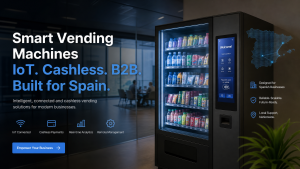 Uncategorized
Smart IoT Vending Machines with Cashless Payment: B2B Distribution to Companies and Hospitals in SpainCashless Vending Machines Are Becoming Standard Infrastructure—But Distribution Remains a Bottleneck Spain’s cashless vending machine market is projected to grow at 18.3% annually through 2027, 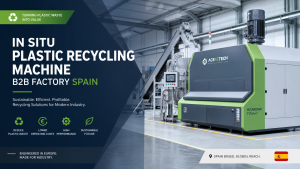 Uncategorized
In-Situ Plastic Recycling Machines for Factories: B2B Distribution in SpainSpain’s Factories Are Drowning in Plastic Waste—But Only 29% Recycle On-Site According to a 2023 report by Spain’s Ministry of Ecological Transition, industrial facilities across  |