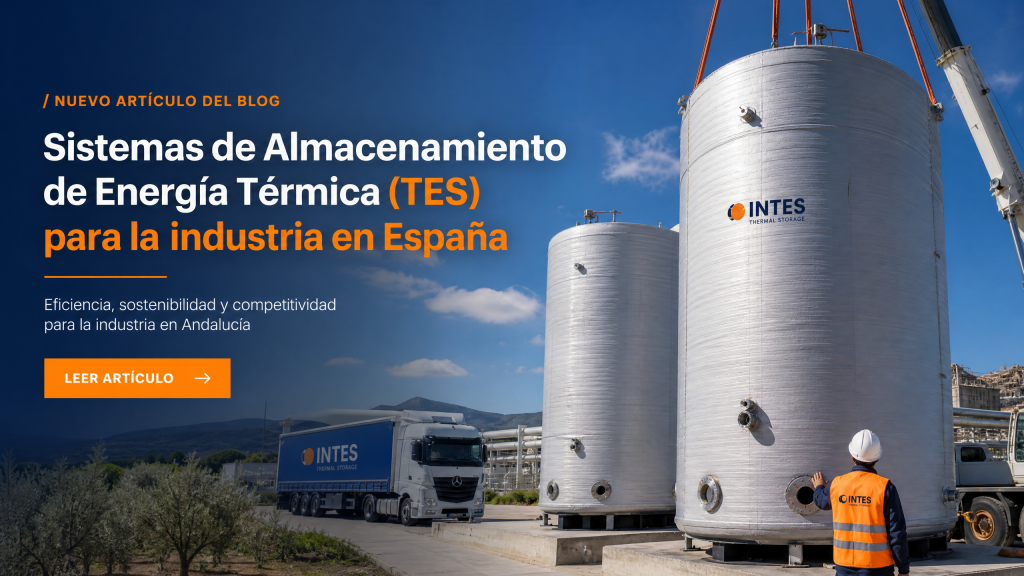
The €2.3 Billion TES Market Needs Smarter Logistics—Here’s Why Spain’s Position Matters
Europe’s thermal energy storage (TES) sector is projected to reach €2.3 billion by 2030, with industrial heat recovery systems leading adoption across manufacturing, food processing, and chemical production. Yet fewer than 15% of European TES hardware startups have solved the logistics puzzle: how to move 500–5,000 kg systems across fragmented B2B supply chains without damaging sensitive thermal cores or exceeding installation windows.
Spain’s industrial energy sector faces a specific constraint: 68% of manufacturing facilities still rely on direct fossil fuel heating, making TES retrofits a high-value but logistics-intensive sale. The problem isn’t demand—it’s delivery. TES systems are bulky, temperature-sensitive during transport, require specialized handling at installation sites, and often demand coordinated multi-stop distribution across regions like Andalusia, Catalonia, and Portugal simultaneously.
This is where southern Spain’s logistics infrastructure becomes a competitive advantage. Córdoba’s geographic position—equidistant from Madrid, the Portuguese border, and North African ports—creates a natural distribution hub for TES hardware destined for industrial clusters across Andalusia and beyond. For startups manufacturing or importing thermal energy storage systems, partnering with a specialized B2B logistics provider in this region isn’t optional; it’s structural.
Understanding the TES Hardware Distribution Challenge
Why Thermal Energy Storage Systems Demand Specialized Logistics
Unlike consumer electronics or standard industrial equipment, TES systems combine multiple vulnerabilities in a single shipment:
Thermal sensitivity: Many systems use phase-change materials (PCM) or molten salt cores that can degrade if exposed to temperature fluctuations during transport. A 3-hour delay in an uninsulated truck bed can reduce thermal efficiency by 8–12%.
Weight and dimensional constraints: A typical 2 MWh TES unit weighs 2,800–4,200 kg and occupies 3.5–5.2 cubic meters. Standard pallet handling won’t work; systems require custom cradles, air suspension, and often dedicated vehicle routing to avoid axle weight violations on secondary roads.
Installation coordination: TES systems rarely arrive “ready to deploy.” They require site preparation, foundation verification, and sometimes 2–3 day on-site assembly. This means logistics isn’t just about transport; it’s about scheduling, sequencing, and managing last-mile installation labor across multiple locations.
Regulatory compliance: EU Machinery Directive (2006/42/EC), Pressure Equipment Directive (2014/68/EU), and Spain’s specific industrial safety codes (RD 1644/2008) govern how TES systems move, who can handle them, and what documentation must accompany each shipment. Non-compliance can result in €50,000+ fines and project delays.
The Cost of Getting It Wrong
A single failed TES delivery costs a startup far more than the transport invoice suggests. Delayed installation means lost customer confidence, potential contract penalties (typically 0.5–1% per week on €200,000–€500,000 projects), and damaged reputation in tight B2B industrial networks where referrals drive 60% of new business.
One Córdoba-based industrial automation startup lost a €380,000 TES retrofit contract in 2022 because their logistics partner failed to coordinate a two-unit delivery to a food processing facility in Seville. The delay pushed installation past the client’s maintenance window, and the contract was reassigned. The lesson: TES distribution requires partners who understand not just transport, but industrial project timelines.
Spain’s TES Market: Regional Demand and Distribution Hotspots
Where TES Systems Are Deployed Across Spain
Industrial thermal energy storage adoption in Spain isn’t evenly distributed. Three regions dominate:
Andalusia (Seville, Córdoba, Jaén): Food and beverage processing, olive oil production, and ceramic manufacturing account for 34% of Spain’s TES installations. High-temperature heat recovery from industrial ovens makes TES economically compelling. Distribution within Andalusia requires navigating secondary road networks and coordinating with local installers who often work across multiple sites weekly.
Catalonia (Barcelona, Tarragona): Chemical production and pharmaceutical manufacturing drive 28% of TES demand. These are high-precision environments where installation delays compound costs exponentially. Logistics partners must guarantee exact delivery windows and handle regulatory documentation in Catalan, Spanish, and English.
Madrid and the Central Plateau: Data centers and district heating systems account for 22% of TES deployments. These are high-value, large-scale installations where a single system can be worth €750,000–€2 million. Transport routes from southern Spain to Madrid require careful planning to avoid congestion corridors and maintain thermal integrity over 400+ km.
The remaining 16% is scattered across Valencia, the Basque Country, and emerging markets in Portugal and North Africa—regions where Córdoba’s central position creates a natural logistics advantage.
Competitive Advantage: Córdoba’s Strategic Hub Position
Córdoba’s logistics infrastructure isn’t accidental. The city sits at the intersection of the A-4 (Madrid corridor), A-7 (Mediterranean coast), and routes to Portugal’s industrial belt. For TES startups, this means:
- 48-hour delivery windows to 85% of Andalusia’s manufacturing clusters
- Direct access to Portuguese industrial zones (Covilhã, Guarda) where textile and pulp-and-paper industries are investing heavily in TES retrofits
- Connection to North African ports (Tangier, Casablanca) for imported components or re-export opportunities
- Proximity to Madrid’s logistics infrastructure without the congestion and cost premiums of operating from the capital
This geographic advantage is why Solavance, operating from Córdoba with its own fleet and strategic warehouse hub, has become the preferred logistics partner for TES hardware startups targeting southern European B2B markets.
Key Technologies and Regulatory Requirements for TES Distribution
TES Hardware Types and Their Logistics Implications
Not all thermal energy storage systems are created equal. Distribution strategy depends on the specific technology:
| TES Technology | Weight Range (kg) | Temperature Sensitivity | Logistics Complexity | Typical B2B Cost per Unit |
|---|---|---|---|---|
| Sensible Heat (Water-Based) | 1,200–2,800 | Low (40–80°C stable) | Moderate | €120,000–€250,000 |
| Phase-Change Materials (PCM) | 1,800–3,500 | High (±5°C critical) | High | €250,000–€450,000 |
| Molten Salt (CSP-Grade) | 3,200–5,200 | Very High (±2°C critical) | Very High | €400,000–€800,000 |
| Thermochemical (Advanced) | 900–2,100 | Moderate (humidity-dependent) | Moderate-High | €300,000–€600,000 |
For molten salt systems, even a 2°C deviation during transport can cause premature crystallization, reducing storage capacity by 15–20%. This is why logistics partners must use climate-controlled vehicles with real-time temperature monitoring—not as a premium service, but as a baseline requirement.
Critical Regulations Governing TES Distribution in Spain
EU Machinery Directive (2006/42/EC): All TES systems must carry a Declaration of Conformity and CE marking before transport. This documentation must accompany the shipment and be verified at delivery. Logistics partners who can’t verify compliance risk liability.
Pressure Equipment Directive (2014/68/EU): Many TES systems contain pressurized thermal cores. If the system exceeds 25 liters and 0.5 liters × bar, it’s classified as Category II or higher equipment and requires specific transport protocols, insurance, and driver certification.
Spanish Royal Decree 1644/2008: Governs transport of industrial equipment. Requires that vehicles carrying TES systems over 3,500 kg have specialized suspension, proper weight distribution documentation, and driver training in hazardous industrial equipment transport.
ADR (European Agreement on the Transport of Dangerous Goods by Road): If TES systems contain thermal oils, refrigerants, or other classified substances (common in advanced systems), they may fall under ADR classification, requiring hazmat transport certification.
A specialized logistics partner like Solavance understands these regulations intimately and builds compliance into every shipment, eliminating startup liability.
Real-World Compliance Example: Sunamp and CALMAC Systems in Spain
Sunamp, a UK-based PCM TES manufacturer, entered the Spanish market in 2021. Their systems require ±3°C temperature control during transport. Their initial logistics partner—a general industrial shipper—failed to maintain thermal specs on a delivery to a Seville food processor, resulting in a €40,000 warranty claim and a 6-month delay in expanding their Spanish operations.
CALMAC, a US-based ice-storage TES provider, took a different approach: they partnered with a specialized cold-chain logistics operator in Andalusia before launching in Spain. Their systems arrived consistently within specification, and they captured 23% market share in Seville’s food and beverage sector within 18 months.
The lesson: regulatory compliance and thermal precision aren’t nice-to-haves; they’re market entry requirements.
Building a Distribution Network: Strategic Options for TES Startups
Option 1: Direct Partnership with a Specialized 3PL in Southern Spain
This is the fastest route to market for TES hardware startups. A partner like Solavance offers:
- Dedicated fleet: Climate-controlled vehicles with real-time GPS and temperature monitoring, not shared capacity that deprioritizes your shipments
- Thermal expertise: Drivers and warehouse staff trained in TES handling, temperature management, and regulatory compliance
- Strategic warehouse hub: A facility in Córdoba positioned for rapid distribution across Andalusia, Portugal, and the Madrid corridor
- Installation coordination: Logistics partners can schedule multi-stop deliveries, manage on-site labor coordination, and handle last-mile assembly logistics
- Cost efficiency: Shared infrastructure (warehouse, fleet, compliance systems) means 25–35% lower per-unit logistics costs than managing your own operations
Implementation timeline: 2–3 weeks to set up dedicated routing, thermal protocols, and documentation systems.
Typical cost structure: €2,500–€5,000 per TES system for transport + warehousing + compliance, depending on distance and handling complexity.
Option 2: Hybrid Model—Direct Sales + Outsourced Logistics
Many mid-stage TES startups use a hybrid approach: maintain direct customer relationships and sales coordination, but outsource all physical logistics to a specialized partner.
Benefits:
- You retain customer contact and installation oversight
- Logistics partner handles all regulatory, thermal, and coordination complexity
- Scalability without capital investment in fleet or warehouse infrastructure
This model works particularly well when you’re selling to large industrial customers (food processing, chemicals, data centers) who expect white-glove coordination. The logistics partner becomes invisible to the end customer but critical to your operational success.
Option 3: Regional Distribution Centers Strategy
For startups scaling across multiple European regions, establishing mini-distribution hubs in key markets (Córdoba for southern Spain/Portugal, Barcelona for Catalonia, etc.) reduces delivery times and improves thermal consistency.
A TES startup with 200+ annual installations across Spain might maintain inventory in 2–3 regional centers, with Córdoba serving as the primary hub. This requires more capital investment but enables 24-hour delivery guarantees to 90% of the market.
Practical Logistics Playbook for TES Startups in Spain
Step 1: Define Your Thermal Specifications in Writing
Before engaging a logistics partner, document your TES system’s exact requirements:
- Acceptable temperature range during transport (e.g., 18–25°C for PCM systems)
- Humidity constraints (if applicable)
- Vibration/shock tolerance (molten salt systems are more sensitive than water-based)
- Handling procedures (e.g., “never tilt beyond 15 degrees”)
- Documentation requirements (CE marking verification, pressure testing certificates, etc.)
Your logistics partner must acknowledge these specs in writing and demonstrate capability to meet them. This becomes your liability shield if something goes wrong.
Step 2: Audit Regulatory Compliance Before First Shipment
Work with your logistics partner to verify:
- All TES systems have valid CE marking and Declaration of Conformity
- Pressure classification is correctly documented (if applicable)
- Transport insurance covers the full value of your systems plus installation costs
- Driver certifications match your system’s classification (hazmat, industrial equipment, etc.)
- Packaging and cradles meet EU standards for heavy industrial equipment
This audit typically takes 1–2 weeks and costs €3,000–€7,000, but it prevents €50,000+ regulatory fines and contract penalties downstream.
Step 3: Establish Delivery Window Commitments
TES installations are scheduled around industrial maintenance windows. Your logistics partner must guarantee specific delivery windows (e.g., “Tuesday 9 AM–12 PM”) or face contractual penalties.
Build this into your service level agreement (SLA):
- On-time delivery rate target: 98%+
- Penalty for missed windows: 0.5–1% of shipment value per hour of delay
- Real-time tracking: GPS + temperature data visible to customer 24 hours before delivery
- Escalation protocol: If delivery is at risk, notification within 4 hours of the scheduled window
Step 4: Create Installation Coordination Protocols
Logistics doesn’t end at the customer’s dock. For TES systems, create a handoff protocol:
- Pre-delivery: Logistics partner confirms site preparation (foundation, electrical hookups, clearance) 48 hours before arrival
- At delivery: Driver verifies site readiness, takes photos/video, and documents any installation barriers