
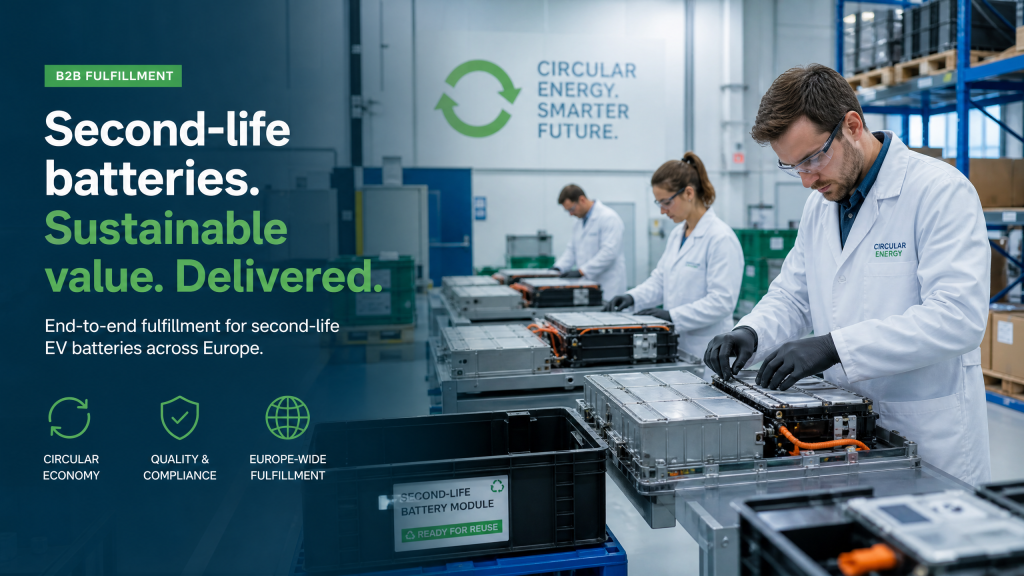
The Second-Life Battery Market Is Growing Faster Than Supply Chains Can Handle
By 2030, an estimated 14 million electric vehicle batteries will reach end-of-life in Europe alone. Rather than recycling them into raw materials, a growing cohort of circular economy startups is repurposing these batteries for stationary energy storage—a market projected to reach €8.2 billion by 2028. Yet 73% of these startups report that logistics and B2B fulfillment remain their single largest operational bottleneck.
The challenge isn’t moving batteries; it’s moving them safely, cost-effectively, and compliantly across fragmented European markets while maintaining the cold chain integrity and regulatory documentation that second-life batteries demand. Second-life battery B2B fulfillment in Europe requires a fundamentally different approach than traditional e-commerce or even standard industrial logistics.
This article explores how startups in the circular economy battery sector can architect resilient, scalable B2B distribution networks—and why partnering with specialized 3PL providers in strategic southern European hubs like Córdoba has become essential for competing across Spain and the broader Mediterranean region.
Why Second-Life Batteries Demand Specialized B2B Fulfillment Infrastructure
The Regulatory and Safety Complexity
Second-life batteries aren’t commodities. They’re classified as dangerous goods under the International Maritime Dangerous Goods (IMDG) Code, the International Air Transport Association (IATA) regulations, and the European Agreement Concerning the International Carriage of Dangerous Goods by Road (ADR). Each shipment requires:
- State of Health (SoH) certification and battery passport documentation (mandated under EU Battery Regulation 2023/1542)
- Thermal imaging reports confirming no internal defects
- Proof of testing compliance with IEC 62619 or equivalent standards
- Chain-of-custody records for traceability
- Insurance coverage specifically underwritten for second-life battery assets
A single missing document can halt an entire shipment at a border or warehouse. Generic 3PL providers simply don’t have the compliance infrastructure to manage this. Startups attempting to handle this in-house often discover they’ve spent six months and €40,000+ building systems that a specialized partner could have deployed in weeks.
The Physics Problem: Thermal Management During Transit
Second-life batteries retain residual charge and thermal risk. Unlike new batteries manufactured under controlled conditions, repurposed EV batteries have unknown operational histories. They require:
- Climate-controlled storage (15–25°C, 40–60% humidity)
- Segregation from incompatible cargo
- Real-time temperature and vibration monitoring during transport
- Rapid response protocols if thermal events occur
Standard warehousing won’t cut it. The logistics provider must have dedicated, monitored facilities and a fleet equipped with telematics systems capable of alerting operators to anomalies in real time.
The B2B Buyer Expectation: Just-in-Time Delivery at Scale
Unlike consumer e-commerce, B2B buyers of second-life batteries—typically energy storage system integrators, utilities, and industrial facilities—expect:
- Predictable delivery windows (not “2–5 business days”)
- Batch consolidation without mixing product types
- Direct coordination with installation teams
- Reverse logistics capability for failed units or returns
This requires a fulfillment partner with visibility into the entire supply chain and the operational flexibility to adapt to customer timelines, not the other way around.
The Current State of Second-Life Battery B2B Fulfillment in Europe
Who’s Winning in This Space?
Several startups have emerged as leaders in second-life battery repurposing, each with distinct logistics models:
Northvolt (Sweden) operates its own reverse logistics network, collecting batteries directly from OEMs and managing end-to-end fulfillment to industrial customers. This vertical integration works for Northvolt because it processes massive volumes, but it’s capital-intensive and inflexible for smaller entrants.
Eaton (via its Eaton Energy Transition division) has partnered with established industrial logistics providers, focusing on B2B distribution to utilities and data centers. Their model emphasizes long-term contracts and predictable volumes—a luxury most startups don’t have.
Saft Batteries (now part of TotalEnergies) uses a hybrid model: owned facilities for high-volume regions, contracted 3PLs for emerging markets. This is closer to what most mid-stage startups should emulate.
The common thread: successful second-life battery startups outsource fulfillment to partners who understand both the regulatory landscape and the technical requirements—not to generic logistics companies bidding on price alone.
The Gap in Southern Europe
While northern Europe (Netherlands, Germany, Sweden) has developed specialized battery logistics infrastructure, southern Europe remains underserved. Spain, Portugal, and southern France lack dedicated second-life battery fulfillment hubs, forcing startups to either:
- Ship through northern European gateways (adding 5–7 days and €800–1,200 per pallet)
- Build their own warehousing (€200,000–500,000 capex)
- Accept fragmented, unreliable service from generalist providers
This gap represents both a problem and an opportunity—and it’s precisely why specialized logistics providers operating from strategic southern European locations have become critical infrastructure for the region’s circular economy growth.
Building a Second-Life Battery B2B Fulfillment Network: The Framework
Step 1: Define Your Customer Segments and Their Logistics Requirements
Not all B2B buyers have identical needs. Segment your target market and map fulfillment requirements:
| Customer Segment | Typical Order Size | Delivery Frequency | Key Fulfillment Requirements | Estimated Logistics Cost (per unit) |
|---|---|---|---|---|
| Energy Storage Integrators (50–200 kWh systems) | 4–12 battery modules per order | Weekly to monthly | Scheduled delivery, installation support, reverse logistics | €150–300 |
| Utility-Scale BESS Projects (1–10 MWh) | 50–500 modules per order | Quarterly to annual | Site logistics coordination, compliance documentation, project management | €80–150 |
| Industrial Backup Power (50–500 kWh) | 2–8 modules per order | Episodic (project-based) | Just-in-time delivery, technical specs, warranty support | €200–400 |
| Rental/Leasing Platforms | 10–50 modules per shipment | Continuous (returns + restock) | Rapid turnaround, condition assessment, reverse logistics | €100–250 |
Each segment demands different warehouse configurations, transport modes, and staffing. A fulfillment partner must be able to scale across all four simultaneously.
Step 2: Select a 3PL Partner With Proven Battery Logistics Expertise
When evaluating potential partners, move beyond standard 3PL criteria. Ask for:
- Dangerous Goods Certification: ADR, IATA, IMDG compliance—verified by independent audit
- Temperature-Controlled Capacity: Dedicated climate-controlled warehouse space, not shared cold storage
- Telematics Integration: Real-time GPS, temperature, and vibration monitoring on all shipments
- Battery-Specific Insurance: Coverage for second-life battery assets, including thermal event liability
- Regulatory Documentation: Automated systems for battery passport, SoH certification, and chain-of-custody tracking
- Reverse Logistics Capability: Ability to assess returned batteries, manage warranty claims, and coordinate refurbishment
For startups operating in Spain and southern Europe, Solavance (based in Córdoba) has built exactly this infrastructure. Operating from a strategic location with direct access to Andalusia, Portugal, the Madrid corridor, and North Africa, Solavance operates a dedicated battery fulfillment hub with climate control, telematics monitoring, and compliance staff trained specifically in second-life battery handling. Their partnership with Spainbox provides additional distribution reach across Spain and southern Europe.
Step 3: Establish Batch Consolidation and Inventory Pooling Protocols
Second-life battery fulfillment economics only work at scale. A single pallet shipment to a regional integrator can cost €600–1,000 in transport alone. By consolidating orders from multiple customers into weekly or bi-weekly shipments, you can reduce per-unit logistics costs by 40–60%.
This requires:
- A fulfillment partner with visibility into demand forecasts from all customer segments
- Agreed-upon service level agreements (SLAs) that allow for batch consolidation without violating delivery commitments
- Inventory pooling agreements with customers (e.g., “we guarantee delivery within 5 business days of order confirmation, but may consolidate with other orders”)
- Dynamic routing software that optimizes shipment consolidation based on geography and customer priority
Companies like Project44 and FourKites offer visibility platforms that can integrate with your 3PL’s systems, enabling real-time transparency into consolidation decisions and delivery status. This visibility builds customer confidence and reduces the friction that often accompanies batch consolidation.
Step 4: Integrate Compliance Automation Into Your Fulfillment Workflow
Manual compliance tracking is a nightmare at scale. Every second-life battery shipment requires:
- Battery passport data (now mandatory under EU Battery Regulation 2023/1542)
- State of Health (SoH) test results
- Thermal imaging reports
- ADR/IATA shipping classification
- Insurance certificate
- Destination-specific customs documentation (for cross-border shipments)
A fulfillment partner should provide automated document generation and compliance checking. Everstream Analytics and similar supply chain compliance platforms can integrate with your ERP and your 3PL’s systems to flag missing documents before shipments leave the warehouse, preventing costly delays at borders or customer sites.
Strategic Location Matters: Why Córdoba Is Becoming a Hub for Second-Life Battery Fulfillment
Córdoba’s geographic position in southern Spain offers distinct advantages for second-life battery B2B fulfillment:
- Andalusia Access: Direct proximity to industrial hubs in Seville, Granada, and Málaga—key markets for renewable energy storage integration
- Portugal Gateway: 2–3 hour drive to the Portuguese border; direct access to Lisbon and Porto’s growing energy storage market
- North Africa Corridor: Strategic position for serving Morocco, Tunisia, and Algeria—emerging markets for second-life battery storage
- Madrid Connection: 4-hour drive to Spain’s largest industrial and utility market
- Port Access: 90 minutes to Málaga Port and 3 hours to Seville Port for European and international shipments
This means a fulfillment hub in Córdoba can serve Spain, Portugal, and North Africa from a single location without the premium costs of northern European gateways. For startups targeting the Mediterranean and Iberian markets, this is a material competitive advantage.
Practical Implementation: A Startup Founder’s Checklist
Month 1: Demand Forecasting and Partner Selection
- Map your target B2B customer segments and their order patterns (use the table above as a template)
- Request proposals from 3–5 specialized battery logistics providers, emphasizing second-life battery experience
- Request references from current customers in the battery storage sector (not just general industrial clients)
- Verify dangerous goods certifications and insurance coverage directly with regulatory bodies
- Negotiate pilot volume and pricing (typically 10–50 pallets per month to start)
Month 2: Systems Integration and Compliance Setup
- Integrate your ERP with your 3PL’s warehouse management system (WMS)
- Set up automated battery passport and SoH documentation workflows
- Establish customs and regulatory documentation templates for each target market
- Test end-to-end fulfillment with 2–3 pilot shipments to key customer segments
Month 3: Optimization and Scaling
- Analyze pilot shipment data: cost per unit, delivery time, customer satisfaction
- Adjust batch consolidation thresholds based on actual demand patterns
- Negotiate volume discounts with your 3PL based on three months of performance data
- Begin marketing your fulfillment capability to new customer segments
How Second-Life Battery Fulfillment Fits Into the Broader Circular Economy Logistics Picture
Second-life battery B2B fulfillment is part of a larger ecosystem of circular economy logistics challenges. Startups building business models around battery reuse, energy storage systems, and industrial refurbishment often face similar problems: how to move high-value, regulated, temperature-sensitive products efficiently across fragmented European markets.
If you’re working on how to ship and store BESS battery energy storage systems in Spain, you’re facing the same core challenge—just at a larger scale. Similarly, companies distributing redox flow batteries across Europe encounter identical regulatory and thermal management requirements.
The principles outlined in this article—specialized partner selection, compliance automation, batch consolidation, and geographic strategy—apply across the entire circular economy hardware sector. For example, fleet EV charging stations for hotels and businesses in Spain require similar fulfillment infrastructure, and even
Rehabilitation Exoskeletons and Robotic Therapy Platforms: B2B Distribution to Clinics in Spain Rehabilitation Exoskeletons and Robotic Therapy Platforms: B2B Distribution to Clinics in Spain According Prefab CLT and Modular Housing Panels: B2B Logistics for Developers and Builders in Spain Prefab CLT and Modular Housing Panels: B2B Logistics for Developers and Shallow Geothermal Systems for Residential Use: B2B Distribution to Installers in Spain Shallow Geothermal Systems for Residential Use: B2B Distribution to Installers in Spain Spain’s The Office Snacking Crisis: Why Smart Autonomous Fridges Are Becoming Essential B2B Infrastructure Spanish companies lose an estimated €2.1 billion annually to employee downtime related Cashless Vending Machines Are Becoming Standard Infrastructure—But Distribution Remains a Bottleneck Spain’s cashless vending machine market is projected to grow at 18.3% annually through 2027, Spain’s Factories Are Drowning in Plastic Waste—But Only 29% Recycle On-Site According to a 2023 report by Spain’s Ministry of Ecological Transition, industrial facilities across
Rehabilitation Exoskeletons and Robotic Therapy Platforms: B2B Distribution to Clinics in Spain

Prefab CLT and Modular Housing Panels: B2B Logistics for Developers and Builders in Spain
Shallow Geothermal Systems for Residential Use: B2B Distribution to Installers in Spain
Smart Autonomous Fridges for Offices and Hotels: B2B Distribution and Fulfillment in Spain
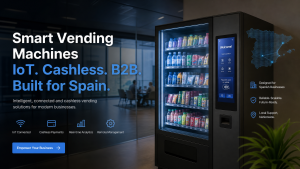
Smart IoT Vending Machines with Cashless Payment: B2B Distribution to Companies and Hospitals in Spain
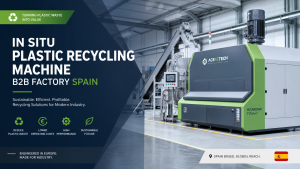
In-Situ Plastic Recycling Machines for Factories: B2B Distribution in Spain
