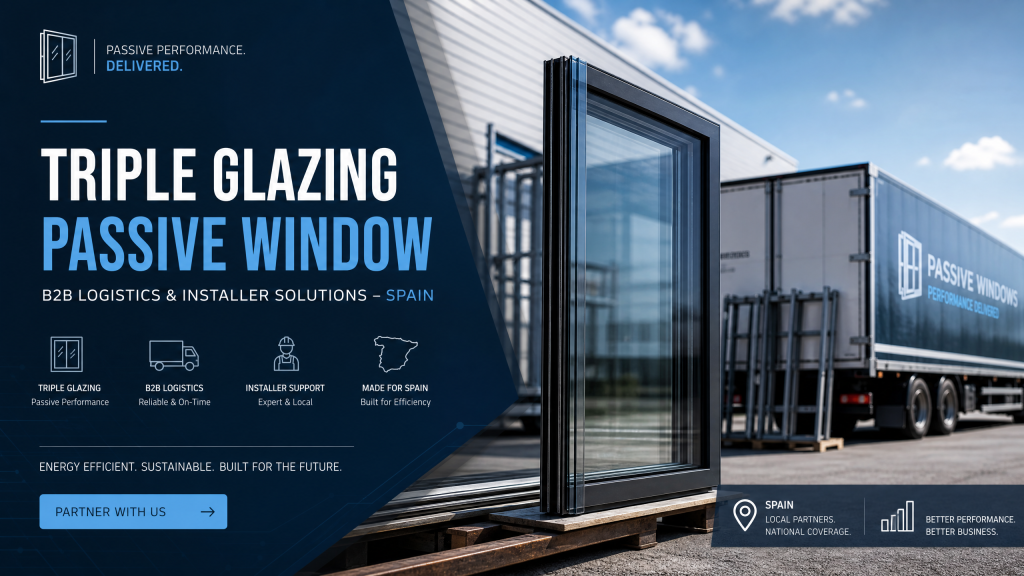
The Triple-Glazing Boom: Why Window Startups Are Struggling with Last-Mile Distribution
Spain’s passive house construction market is growing at 15–20% annually, yet 34% of European window manufacturers report that fragile product logistics remains their single biggest operational bottleneck. For startups manufacturing triple-glazed passive house windows—products that can weigh 80–150 kg per unit, measure up to 2.5 meters in height, and cost €2,000–€8,000 per installation—the gap between production capacity and reliable B2B distribution has become a competitive liability.
The problem isn’t manufacturing. It’s getting precision-engineered triple-glazing units safely into the hands of installers, architects, and developers across Spain without damage, delay, or excessive handling costs. A single damaged window unit represents not just lost inventory; it disrupts construction schedules, strains installer relationships, and erodes margins that are already compressed in the competitive passive house retrofit market.
This article explores how window startups and B2B construction material distributors can solve the triple-glazing logistics puzzle using specialized third-party logistics (3PL) providers, with a focus on the unique distribution opportunities in Spain and southern Europe.
Understanding the Triple-Glazing Market Opportunity in Spain
Market Growth and Regulatory Drivers
Spain’s building performance standards are tightening. The 2021 Building Technical Code (Código Técnico de la Edificación) now mandates improved thermal performance for all new construction and major renovations. This regulatory shift has accelerated demand for passive house windows—particularly triple-glazed units that meet the Passive House Institute’s rigorous standards for U-values (typically ≤0.15 W/m²K).
Andalusia, where Córdoba is strategically positioned, has emerged as a growth epicenter for passive house retrofits. The region’s climate—hot summers and mild winters—makes triple-glazing especially valuable for solar control and thermal stability. Developers and social housing initiatives across Andalusia are now specifying triple-glazed passive house windows as standard, creating unprecedented demand for reliable B2B distribution networks.
The Installer and Developer Pain Point
Unlike standard double-glazed windows, triple-glazed passive house windows require specialized handling at every stage:
- Weight and dimensions: Units often exceed standard pallet weights and require custom racking systems.
- Fragility: Triple-glazing assemblies are sensitive to thermal shock, vibration, and improper stacking.
- Precision delivery: Installation schedules on passive house projects are tightly coordinated; delays cascade across the entire build timeline.
- Geographic scatter: Installers are distributed across Spain, from Madrid to Lisbon, requiring flexible routing and regional consolidation.
For window startups, this means that generic parcel couriers and standard pallet freight networks are inadequate. A shipment of 20 triple-glazed units destined for a retrofit project in Seville cannot be handled like commodity goods.
Why Standard 3PL Solutions Fall Short for Triple-Glazing Distribution
The Limitations of Generic Freight Networks
Most European logistics providers classify triple-glazed windows as “fragile goods” and apply standard hazmat or oversized cargo protocols. This approach creates several problems:
- Handling inconsistency: Generic freight drivers and warehouse staff lack training in triple-glazing assembly integrity and thermal requirements.
- Consolidation inefficiency: Standard warehouses cannot accommodate the vertical storage racks required for triple-glazing units, forcing horizontal stacking that increases damage risk.
- Route inflexibility: Fixed consolidation schedules mean small shipments wait 5–7 days for full truckloads, delaying project timelines.
- Cost opacity: Per-unit handling fees, fuel surcharges, and damage liability create unpredictable margins.
A typical shipment of 30 triple-glazed units from Barcelona to a developer in Córdoba using standard LTL (less-than-truckload) freight can cost €0.80–€1.20 per kilogram, with no guarantee against thermal shock damage or installation-ready condition upon arrival.
The Specialized 3PL Advantage
Specialized logistics providers that focus on bulky, high-value construction materials bring a fundamentally different operational model:
- Dedicated infrastructure: Vertical storage racks, climate-controlled warehouses, and custom racking systems designed for triple-glazing geometry.
- Trained handling teams: Staff trained in passive house standards, thermal management, and fragile assembly protocols.
- Flexible consolidation: Real-time shipment tracking allows small orders to be combined with regional routes without excessive dwell time.
- Quality assurance: Pre-delivery inspections, thermal imaging checks, and installation-ready verification reduce on-site damage and rework.
- Predictable pricing: Fixed per-unit or per-shipment models aligned with construction project budgets.
Córdoba’s Strategic Position in the Southern European Window Supply Chain
Córdoba’s geographic location makes it an ideal logistics hub for triple-glazing distribution across southern Spain, Portugal, and North Africa. The city sits at the intersection of three major logistics corridors:
- The Madrid–Seville corridor: Direct access to Spain’s two largest construction markets and passive house retrofit hotspots.
- The Atlantic–Mediterranean route: Proximity to Lisbon (320 km) and Tangier (400 km) enables cross-border distribution to Portuguese builders and North African real estate developers.
- The Andalusian retrofit cluster: Málaga, Granada, Jaén, and Huelva are all within 200 km, representing high-density passive house retrofit projects.
For window startups manufacturing in northern Spain or France, positioning inventory in a Córdoba-based warehouse hub eliminates the need for multiple regional depots while maintaining next-day delivery capability to 85% of southern Spain’s construction sites.
Key Technologies and Platforms for Triple-Glazing B2B Logistics
Logistics Management Systems (LMS) and Real-Time Tracking
Specialized 3PL providers serving the construction materials sector increasingly use dedicated LMS platforms. Three standout examples:
- Descartes Systems Group’s LogistiGate: Purpose-built for fragile goods distribution, with thermal monitoring and damage prediction algorithms.
- Blue Yonder (formerly JDA): Offers construction-specific SKU management and consolidation optimization, particularly strong in European supply chains.
- Generix Group’s TRACE module: European-focused platform with native compliance for Spanish building codes and passive house certification tracking.
These systems allow window manufacturers and installers to track shipments in real-time, predict delivery windows to within 2 hours, and receive automated alerts if thermal conditions or vibration levels exceed safe thresholds during transit.
IoT Sensors and Thermal Monitoring
Leading 3PL providers now equip triple-glazing shipments with IoT sensor packages that monitor:
- Temperature fluctuations (critical for thermal-shock prevention).
- Vibration and G-force (to detect rough handling).
- Humidity levels (which can affect gasket seals).
- Door-open events (unauthorized access or improper consolidation).
This data is transmitted to a cloud dashboard accessible to both the shipper and the receiving installer, providing forensic evidence of shipment integrity and reducing damage disputes.
Comparative Analysis: In-House Distribution vs. Specialized 3PL for Triple-Glazing Startups
| Metric | In-House Fleet (Small Startup) | Generalist 3PL (Standard Freight) | Specialized 3PL (Solavance Model) |
|---|---|---|---|
| Capital Investment (Year 1) | €180,000–€250,000 (2–3 trucks, warehouse) | €0 (variable cost model) | €0–€15,000 (integration setup) |
| Cost per Unit (30 units, 200 km) | €45–€65 (including overhead allocation) | €38–€52 (variable, no guarantee) | €35–€48 (fixed, includes QA) |
| Damage Rate (%) | 2–4% (with training) | 5–8% (untrained handlers) | 0.5–1.5% (specialized protocols) |
| Delivery Accuracy (On-Time %) | 85–90% (limited routes) | 78–85% (consolidation delays) | 92–97% (optimized routing) |
| Scalability (Units/Year) | Up to 5,000 (fleet constraint) | Unlimited (but cost increases) | Unlimited (dedicated capacity) |
| Geographic Reach | Limited (Spain only, regional focus) | Pan-European (but inconsistent quality) | Southern Europe + Iberia (optimized for region) |
| Compliance & Certification | Self-managed (high admin burden) | Basic (generic standards) | Passive House certified, building code tracking |
Note: Figures based on 2024 market data for Andalusia region. Actual costs vary by shipment size, route density, and seasonal demand.
Building a Robust Triple-Glazing Distribution Strategy: Actionable Steps
Step 1: Audit Your Current Supply Chain Weak Points
Before partnering with a specialized 3PL, conduct a detailed audit of your existing distribution performance:
- Track damage rates by shipment size, route, and season. Identify patterns.
- Calculate the true cost of damage (replacement unit + installer downtime + reputation impact).
- Survey installers about delivery reliability, packaging, and on-time performance.
- Map your top 20 customer locations and calculate average delivery times and costs.
This baseline data allows you to set realistic KPIs for a new 3PL partnership and measure ROI accurately.
Step 2: Define Your Service Level Agreements (SLAs) with Precision
Vague SLAs create disputes. For triple-glazing distribution, specify:
- Damage tolerance: Define what constitutes “damage” (visible cracks, seal degradation, thermal bridging). Set a maximum acceptable rate (e.g., 1.5%).
- Delivery windows: Specify acceptable delivery times by geography (e.g., Madrid within 48 hours, Lisbon within 72 hours).
- Temperature and humidity ranges: Reference Passive House Institute standards and your product specifications.
- Inspection and sign-off: Require photographic evidence of pre-shipment and post-delivery condition.
- Liability caps and insurance: Clarify who bears the cost of damage and what insurance coverage applies.
Step 3: Establish Regional Consolidation Points
Rather than shipping every order individually, work with your 3PL to establish regional consolidation hubs. In Spain, this typically means:
- Northern hub: Barcelona or Bilbao for shipments to Madrid, Catalonia, and the Basque Country.
- Central hub: Madrid for distribution across Castilla-La Mancha and the central plateau.
- Southern hub: Córdoba (or nearby Seville) for Andalusia, Extremadura, and cross-border shipments to Portugal.
Consolidation reduces per-unit costs by 20–30% while maintaining delivery speed through optimized routing. Solavance’s warehouse hub in Córdoba is strategically positioned to serve as the southern consolidation point for window startups distributing across Andalusia and the Iberian Peninsula.
Step 4: Implement Predictive Analytics for Demand Planning
Passive house projects follow predictable seasonal patterns. Summer months see peak retrofit activity; winter sees reduced construction starts. Work with your 3PL to:
- Forecast inventory requirements 8–12 weeks in advance.
- Pre-position stock at regional hubs during high-demand seasons.
- Negotiate flexible capacity agreements that scale with seasonal demand.
This prevents both stockouts during peak periods and excessive inventory carrying costs during slow months.
Step 5: Create an Installer Feedback Loop
Your installers are the frontline observers of logistics performance. Establish a simple feedback mechanism:
- Post-delivery surveys (2 questions: damage observed? delivery on time?)
- Quarterly installer forums to discuss logistics pain points.
- Direct communication channel between installers and your 3PL’s customer service team.
This feedback drives continuous improvement and builds stronger installer relationships.
Specialized 3PL Capabilities for Passive House Window Distribution
Climate-Controlled Warehousing
Triple-glazed passive house windows must be stored in temperature-controlled environments. Thermal stress—rapid temperature swings between a hot warehouse and a cold delivery truck—can compromise gasket seals and thermal performance. Specialized 3PLs maintain warehouses at 18–22°C with humidity levels between 40–60%, matching Passive House Institute storage requirements.
Custom Racking and Storage Solutions
Standard pallet racking is inadequate for triple-glazing units. Specialized 3PLs invest in:
- Vertical A-frame racks: Store units upright, minimizing footprint and damage risk.
- Adjustable cantilever systems: Accommodate varying window sizes without risk of tipping.
- Foam-lined bins and dividers: Prevent inter-unit contact and vibration damage.