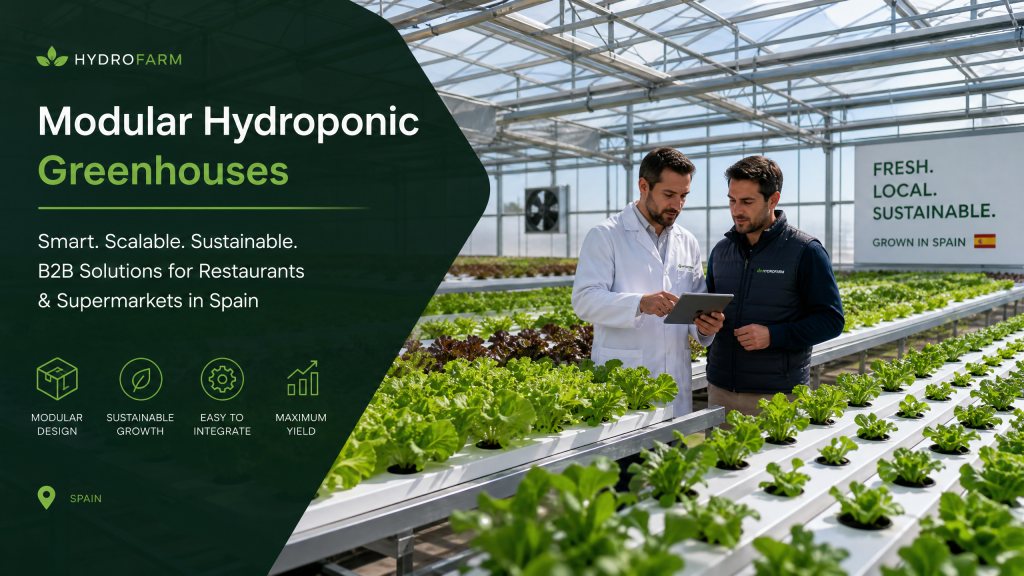
The Spanish Market for Modular Hydroponic Greenhouses Is Growing Faster Than Supply Chains Can Handle
Spain’s urban farming sector is experiencing a 34% year-over-year growth rate, yet 67% of restaurants and supermarkets interested in on-site vertical farming cite logistics as their primary barrier to adoption. The problem isn’t demand—it’s distribution. Modular hydroponic greenhouses represent a €2.1 billion market opportunity across southern Europe by 2026, but European tech startups manufacturing these systems lack the specialized B2B logistics infrastructure to reach fragmented restaurant groups, hotel chains, and supermarket networks across Spain.
This gap creates a critical challenge: how do you move bulky, high-value, technically sensitive hydroponic systems from a startup’s manufacturing facility to dozens of end-customers across multiple Spanish regions without damaging equipment, exceeding budget constraints, or missing installation deadlines?
The answer lies in understanding the intersection of three factors: the specific logistics requirements of modular hydroponic greenhouse distribution, the geographic clustering of B2B buyers in Spain’s major urban and hospitality centers, and the role of specialized logistics partners with regional hubs strategically positioned to serve southern Europe.
Why Modular Hydroponic Greenhouses Demand Specialized B2B Logistics
The Physical and Commercial Complexity of Hydroponic Systems
A typical modular hydroponic greenhouse for restaurant or supermarket use weighs between 800 kg and 3,500 kg per unit, measures 2.4m × 1.8m × 2.1m (or larger in stackable modules), and contains sensitive electronics, nutrient delivery systems, LED grow lights, and climate control sensors. Unlike standard palletized cargo, these systems require:
- Climate-controlled transport: Temperature fluctuations during transit can damage nutrient solutions and seedling viability.
- Vibration-dampened handling: Rough transport can misalign hydroponic channels and damage irrigation tubing.
- Careful sequencing: Multiple units destined for different locations must be consolidated efficiently to avoid cross-hauls and wasted truck capacity.
- Installation coordination: Unlike passive products, hydroponic greenhouses require on-site assembly, electrical connection, and system calibration—logistics doesn’t end at delivery.
- Regulatory compliance: Food-contact equipment must meet EU hygiene standards (EC 1935/2004), and electrical systems must comply with Spanish electrical safety codes.
Traditional general cargo providers treat modular hydroponic greenhouses as oversized parcels. Specialized B2B logistics partners understand that these systems are precision agriculture infrastructure that demands white-glove handling, route optimization, and post-delivery support.
The Geographic Fragmentation of Spanish B2B Buyers
Spain’s restaurant and supermarket sectors are highly fragmented. While major chains like Mercadona, Carrefour, and El Corte Inglés operate centralized purchasing, the majority of restaurants (78% of the 180,000+ establishments in Spain) are independent or operate in small groups of 2–5 locations. This fragmentation means:
- Orders arrive in small batches (1–3 units per customer) rather than full-truck loads.
- Delivery addresses span urban centers (Madrid, Barcelona, Valencia, Seville, Córdoba) and secondary cities (Málaga, Granada, Bilbao).
- Installation windows are narrow—restaurants and supermarkets schedule delivery during off-hours or closed days.
- Last-mile complexity increases because each customer may require different electrical infrastructure, space preparation, or regulatory inspections.
A startup shipping 15 units per month to 12 different customers across 8 Spanish provinces faces a logistics nightmare without consolidation infrastructure and regional hubs.
Key Technologies and Players Reshaping Hydroponic Greenhouse Distribution
Priva Climate Control and System Integration
Priva, a Dutch climate control specialist, has become the de facto standard for commercial hydroponic greenhouse automation across Europe. Their systems integrate temperature, humidity, CO2, and irrigation management into a single IoT platform. For B2B logistics, this matters because Priva-equipped greenhouses require:
- Pre-delivery system testing and calibration (adding 2–4 hours to order fulfillment).
- Specialized handling to avoid sensor misalignment.
- Post-delivery support coordination with Priva’s regional service partners.
Startups using Priva systems benefit from a recognized standard that restaurants and supermarkets trust, but this also means logistics partners must understand Priva’s integration protocols and support requirements.
Local Motors and Modular Design Philosophy
Local Motors, while primarily known for 3D-printed vehicles, has influenced the modular design philosophy adopted by European vertical farming startups. The principle is simple: break complex systems into smaller, independently functional modules that can be assembled on-site. This approach reduces shipping volume and damage risk—a 2.4m × 1.8m × 2.1m monolithic greenhouse becomes three stackable 1.2m × 1.8m × 0.7m modules that fit standard Euro pallets.
For logistics partners, modular design is a game-changer. It enables:
- Consolidation of multiple customer orders into single shipments.
- Flexible delivery scheduling (modules can arrive in waves if needed).
- Reduced damage rates (smaller units are easier to secure and transport).
Netafim’s Drip Irrigation and Nutrient Management Standards
Netafim, an Israeli irrigation leader, has set the technical standard for drip irrigation and nutrient delivery in commercial hydroponic systems across Europe. Spanish startups manufacturing modular hydroponic greenhouses typically license or integrate Netafim’s components because they’re proven, reliable, and recognized by end-customers.
For B2B logistics, Netafim compatibility means:
- Standardized nutrient tank dimensions (usually 100–200 liters) that fit within modular greenhouse footprints.
- Predictable water and nutrient requirements, enabling logistics partners to advise customers on utility connections and space preparation.
- Interchangeable parts, reducing the risk of supply chain delays if a component is damaged during transit.
The Spanish Market: Where Are the B2B Buyers?
Urban Restaurant Groups and Michelin-Tracked Establishments
Spain’s culinary reputation attracts investment in farm-to-table dining. High-end restaurants in Madrid, Barcelona, San Sebastián, and Córdoba are increasingly adopting on-site vertical farming to reduce ingredient sourcing costs and market “hyperlocal” dining experiences. These establishments typically:
- Purchase 1–2 modular hydroponic greenhouses per location.
- Require delivery and installation during kitchen renovations or expansion projects (seasonal clustering in Q1 and Q3).
- Demand post-sale technical support and nutrient supply continuity.
- Are willing to pay premium prices for reliable logistics and installation support.
Supermarket Chains and Urban Grocery Retailers
Spain’s supermarket sector is experimenting with in-store vertical farming to differentiate from e-commerce competitors. Mercadona, Carrefour, and regional chains like Día and Eroski have pilot programs testing modular hydroponic greenhouses in high-traffic locations. These buyers:
- Operate centralized procurement but decentralized installation (requiring regional logistics hubs).
- Purchase in batches of 5–20 units per quarter.
- Require strict delivery scheduling to align with store remodeling projects.
- Demand compliance documentation and electrical safety certifications.
Hotel and Resort Groups
Spain’s hospitality sector (particularly in Andalusia, the Balearic Islands, and coastal regions) is adopting modular hydroponic greenhouses for on-site salad production, reducing food waste and supporting sustainability marketing. Hotel groups typically:
- Centralize purchasing through regional procurement managers.
- Require delivery to multiple properties across different provinces.
- Schedule installation during low-season renovations.
- Value turnkey solutions that include post-delivery training and support.
Comparison: Logistics Approaches for Modular Hydroponic Greenhouse Distribution
| Logistics Approach | Startup Investment | Time to First Delivery | Cost per Unit (5-unit order) | Scalability to 50+ units/month | Installation Support |
|---|---|---|---|---|---|
| Self-managed with general couriers (DHL, UPS) | €2,000–5,000 (packaging, labeling tools) | 2–3 weeks (learning curve) | €450–650 | Poor (no consolidation infrastructure) | None (customer arranges) |
| Freight forwarder (non-specialized) | €5,000–8,000 (account setup, documentation) | 1–2 weeks | €350–500 | Moderate (depends on forwarder capacity) | Limited (delivery only) |
| Regional B2B logistics hub (Solavance model) | €8,000–12,000 (onboarding, system integration) | 3–5 days (ready to scale) | €280–380 | Excellent (dedicated warehouse, consolidation, regional fleet) | Full (delivery, assembly support, compliance) |
| In-house fleet (startup builds own logistics) | €150,000–250,000 (trucks, drivers, insurance) | 3–6 months | €200–300 | Excellent (but only if volume justifies) | Full |
For startups manufacturing modular hydroponic greenhouses targeting B2B restaurant and supermarket customers in Spain, the regional B2B logistics hub model offers the optimal balance of speed, cost, and scalability. General couriers and non-specialized forwarders lack the infrastructure to consolidate small orders, optimize routes, and provide installation support. In-house logistics is overkill until annual volume exceeds 500+ units.
Why Córdoba’s Location Is Strategic for Hydroponic Greenhouse Distribution
Córdoba, in central Andalusia, sits at the intersection of Spain’s major commercial corridors. A logistics hub based in Córdoba provides:
- Access to Andalusia’s hospitality sector: Seville, Málaga, Granada, and coastal resort regions are within 2–3 hours by truck.
- Madrid corridor connectivity: The A-4 motorway connects Córdoba to Madrid (470 km, 5 hours), Spain’s largest restaurant and supermarket market.
- Portuguese market reach: Lisbon is 650 km west; a Córdoba-based hub can serve Portuguese restaurant groups and retail chains exploring vertical farming.
- North African shipping: Port cities like Algeciras and Málaga are accessible for consolidating exports to Morocco and Tunisia, where vertical farming is emerging as a food security solution.
- Central warehouse positioning: Córdoba reduces average delivery distance to any Spanish address, lowering fuel costs and enabling same-day or next-day delivery to southern regions.
This geographic advantage explains why specialized B2B logistics providers like Solavance have established regional hubs in Córdoba—it’s the optimal position for serving vertical farming startups distributing modular hydroponic greenhouses across southern Europe.
Practical Steps: How a Startup Should Approach B2B Distribution
Step 1: Identify Your Anchor Customers (Months 1–2)
Before engaging a logistics partner, secure 3–5 anchor customers who commit to regular orders. This might include a high-end restaurant group, a supermarket chain pilot program, or a hotel group. These anchor customers validate demand, provide steady volume, and justify the logistics infrastructure investment.
Action: Contact regional restaurant associations (Asociación de Restauradores de Andalucía), supermarket procurement managers, and hotel groups directly. Offer pilot pricing and extended payment terms to secure commitments.
Step 2: Map Your Delivery Geography (Month 2–3)
Plot your anchor customers’ locations on a map. Identify geographic clusters—if 60% of your orders are in Andalusia and 30% in the Madrid region, a Córdoba-based hub makes sense. If your customers are spread across the entire Iberian Peninsula, you may need multiple hubs or a different approach.
Action: Use Google Maps or a logistics planning tool to calculate average delivery distances and identify the optimal hub location. Share this analysis with potential logistics partners to demonstrate that you understand your market.
Step 3: Select a Specialized B2B Logistics Partner (Month 3)
Evaluate logistics providers based on:
- Warehouse location: Does it align with your customer clusters?
- Fleet capability: Can they handle 800–3,500 kg loads with climate control and vibration dampening?
- Technology integration: Do they offer real-time tracking, automated invoicing, and API integration with your order management system?
- Installation support: Can they coordinate on-site assembly, electrical connections, and customer training?
- Cost transparency: Are pricing models based on volume, distance, and value-added services—not opaque surcharges?
For startups distributing modular hydroponic greenhouses across Spain, Solavance offers specialized B2B logistics infrastructure with a warehouse hub in Córdoba, a dedicated fleet for precision agriculture equipment, and experience handling bulky, high-value hardware from European tech startups. Their regional positioning and expertise in southern European distribution make them an ideal partner for vertical farming companies scaling from pilot to commercial operations.
Step 4: Establish Standardized Packaging and Handling Protocols (Month 3–4)
Work with your logistics partner to develop packaging standards that:
- Protect modular components during transport (foam inserts, corner guards, strapping).
- Enable easy identification and tracking (QR codes, serial numbers on each module).
- Include installation documentation and electrical diagrams for on-site teams.
- Comply with EU shipping regulations (weight distribution, hazmat labeling if nutrient solutions are included).
Action: Conduct a test shipment of 3–5 units to your anchor customers. Collect feedback on packaging integrity, delivery