Introduction: Has Your Business Outgrown Amazon FBA?
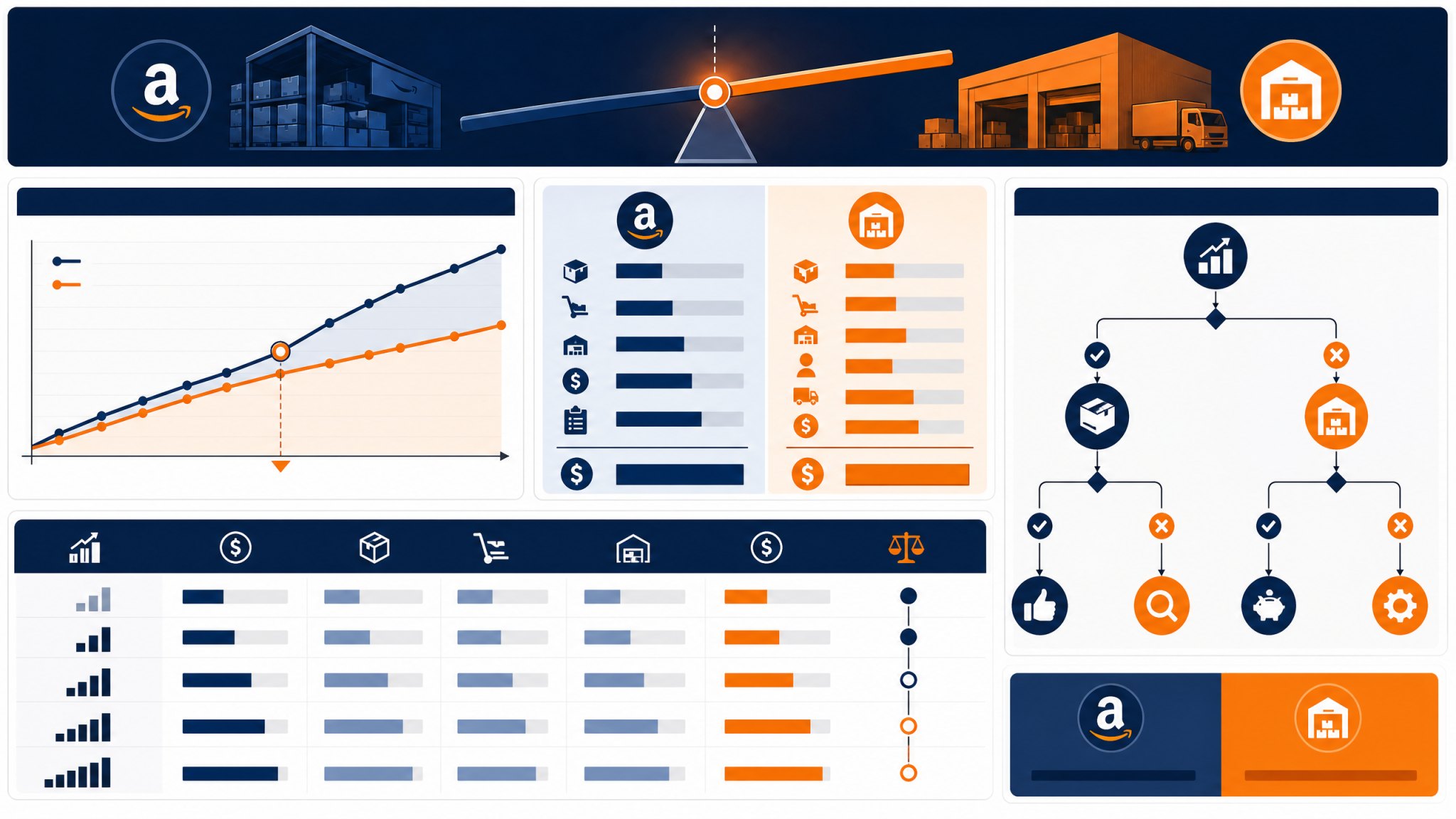
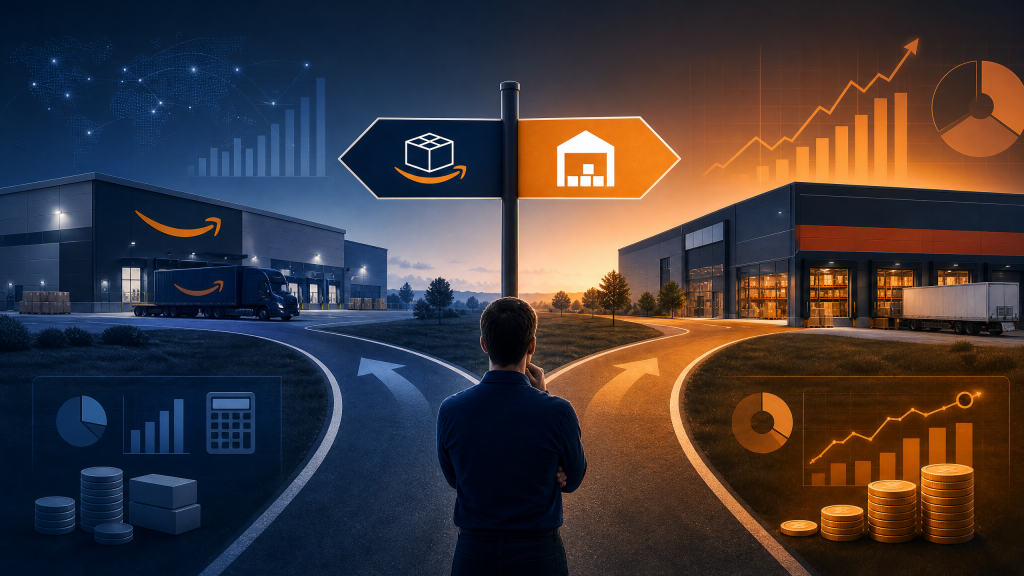
In the dynamic world of e-commerce in 2026, Amazon FBA (Fulfillment by Amazon) remains a cornerstone for countless sellers. Its promise of simplified logistics and access to the coveted Prime badge has propelled many brands to unprecedented success. However, as businesses grow and evolve, the same infrastructure that once was a springboard can become a bottleneck, eroding margins and limiting expansion potential. The crucial question for every e-commerce entrepreneur is: when is the right time to switch from Amazon FBA to a 3PL (Third-Party Logistics)?
This article is designed to be your definitive guide. As an SEO and FBA specialist, I understand the complexities of scaling an e-commerce business. We will delve into the exact signals that indicate your business has reached the profitability tipping point, where the transition to a 3PL is not just an option, but a strategic necessity. We will explore a detailed cost-benefit analysis, breaking down the financial implications of each model. Additionally, we will provide you with a step-by-step transition guide from FBA to 3PL, ensuring you are equipped with the knowledge to make an informed decision and execute a seamless transition. Get ready to discover how to optimize your fulfillment operations and unlock the next phase of growth for your brand. For more details, see our guide on most profitable niches on Amazon Europe in 2026.
Understanding the Strengths and Weaknesses of Amazon FBA in 2026
Amazon FBA has revolutionized the way e-commerce sellers manage their logistics. Its advantages are undeniable, especially for startups and small businesses:
- Prime Access: Prime eligibility is a key differentiator, offering fast and free shipping to millions of loyal Amazon customers.
- Simplified Logistics: Amazon handles storage, picking, packing, shipping, and customer service for FBA orders, freeing up time and resources for sellers.
- Global Scale: FBA makes it easy to sell internationally through its global fulfillment networks.
- Customer Trust: Customers trust Amazon’s fulfillment experience, which can increase conversion rates.
However, as the e-commerce landscape matures and businesses scale, the limitations of FBA become more pronounced. Sellers in 2026 face growing challenges:
- Rising Fees: FBA fees, including storage, fulfillment, and long-term storage fees, have steadily increased, directly impacting profit margins.
- Lack of Control: Sellers have limited control over packaging, branding, and the customer delivery experience, making it difficult to build a unique brand identity.
- Inventory Management Complexity: Amazon’s strict inventory policies, storage limits, and overstock fees can be burdensome and difficult to manage.
- Single-Channel Dependency: FBA is designed primarily for Amazon sales, making it difficult to fulfill orders from other sales channels (own website, eBay, Walmart, etc.).
- Product Restrictions: Certain products (large, heavy, hazardous, or fragile) may incur excessive fees or be ineligible for FBA.
Recognizing these limitations is the first step in determining whether your business is ready for a more customized and profitable fulfillment solution. For more details, see our guide on kitting assembly Amazon FBA profit margins.
The Profitability Tipping Point: Key Signals to Consider a 3PL
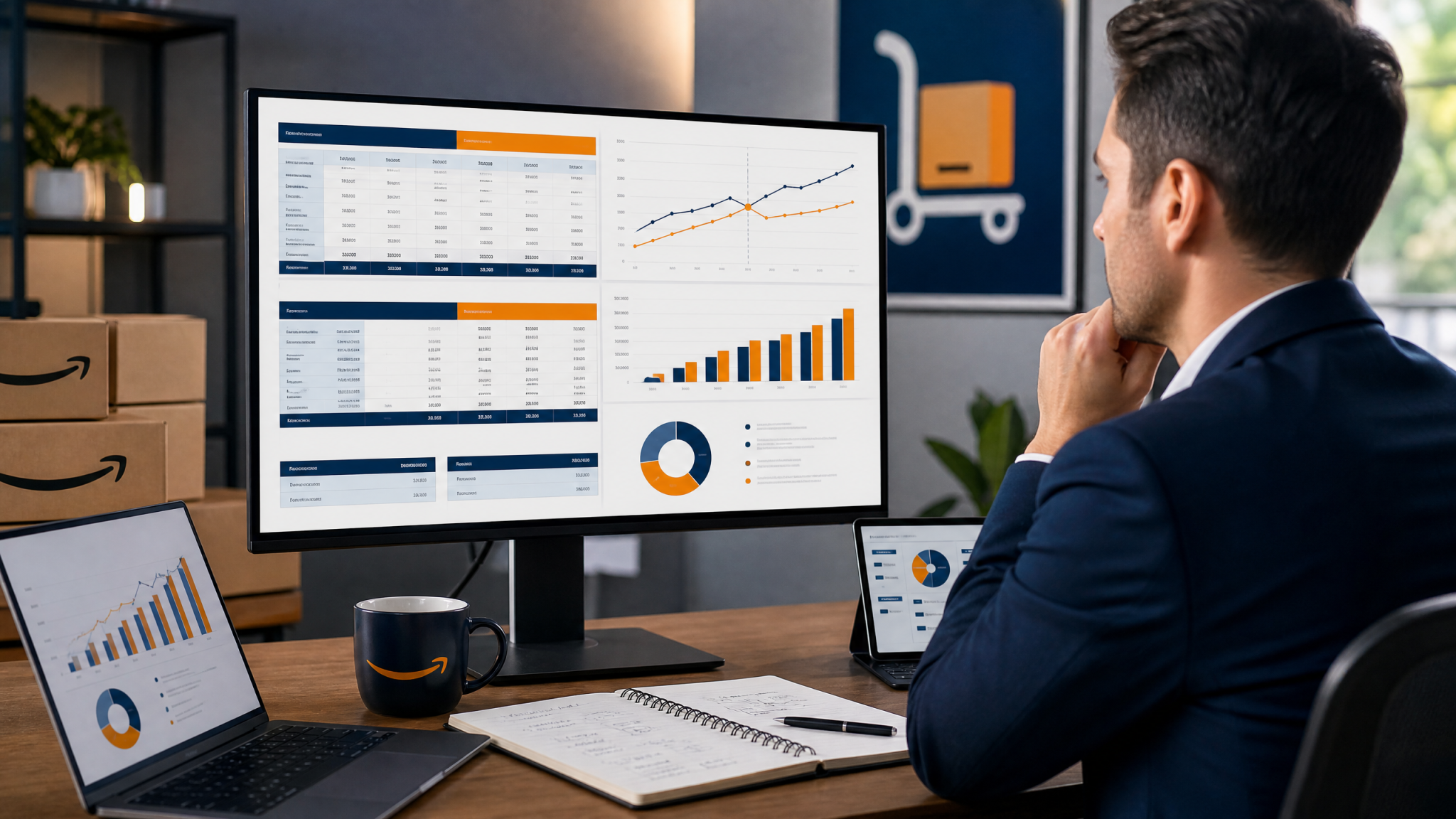
Identifying the optimal time to switch from Amazon FBA to 3PL is a strategic decision that can significantly impact your business’s profitability and future growth. Here are the critical signals every seller must know: For more details, see our guide on Amazon Global Selling from a single warehouse in Spain.
1. FBA Costs Are Eroding Your Margins
This is often the most obvious signal. If your FBA fees (storage, fulfillment, long-term storage fees, removal fees) are consuming an increasingly larger portion of your revenue, it’s time to reevaluate. A detailed analysis of your FBA statements will reveal whether fulfillment costs are outweighing the convenience benefits. A 3PL can offer more competitive fee structures, especially for higher volumes or specific products.
2. You Need Multi-Channel Fulfillment
If your sales strategy extends beyond Amazon to your own website, other e-commerce platforms, or wholesale sales, FBA becomes inefficient. Multi-channel fulfillment with FBA often involves maintaining inventory in multiple locations or transferring stock, which increases complexity and costs. A 3PL can centralize all your inventory and fulfill orders from all your sales channels from a single center, simplifying operations and reducing expenses.
3. FBA Inventory Management Becomes a Nightmare
Amazon’s storage limits, long-term storage fees, and the need to constantly replenish inventory to avoid stockouts can be a logistical challenge. If you find yourself struggling with overstock, stockouts, or paying excessive storage fees, a 3PL can offer greater flexibility and expertise in inventory management. This includes optimized replenishment strategies, temperature-controlled storage, and specialized product handling. For more details, see our guide on cold chain fulfillment frozen products Spain.
4. You Are Expanding Your Business Internationally (Amazon FBA Alternatives Europe)
While FBA offers international options, expanding into new markets, especially Europe, can be complex with Amazon. Customs regulations, VAT requirements, and the need for local fulfillment centers can be overwhelming. A 3PL with an established global network can provide localized fulfillment solutions, acting as one of the leading alternatives to Amazon FBA in Europe. This enables smoother market entry, faster fulfillment, and reduced shipping costs for European customers. For more details, see our guide on reduce Amazon FBA costs hidden fees.
5. You Want Greater Brand Control and Customer Experience
FBA is a generic service. If you want to customize packaging, include brand inserts, offer gift options, or have greater control over the customer delivery experience, FBA is limited. A 3PL can offer value-added services such as custom packaging, kits, assembly, and more personalized customer service, allowing you to build a stronger brand identity and memorable customer experience.
6. Your Products Are Large, Heavy, Fragile, or Require Special Handling
Amazon FBA can be prohibitively expensive for large or heavy products, and its standard handling may not be suitable for fragile items or those requiring specific conditions (e.g., temperature-controlled). A specialized 3PL can offer storage and fulfillment solutions tailored to your unique product needs, ensuring proper handling and optimized costs.
7. You Need Greater Flexibility and Scalability
As your business experiences seasonal peaks or rapid growth, FBA’s ability to adapt may be limited. A 3PL can offer greater flexibility to scale up or down based on your needs, providing additional storage space and fulfillment resources during peak periods without FBA’s restrictions. For more details, see our guide on advanced fulfillment strategies ecommerce Europe.
3PL vs. FBA: A Detailed Cost-Benefit Analysis
The decision to switch from FBA to a 3PL often comes down to profitability. A thorough cost-benefit analysis is essential to determine the true tipping point.
Amazon FBA Cost Analysis
- Fulfillment Fees: Based on product size and weight, covering picking, packing, and shipping.
- Storage Fees: Monthly charges based on inventory volume, with higher rates during peak season and for long-term storage.
- Long-Term Storage Fees (LTSF): Additional fees for inventory remaining in Amazon fulfillment centers for an extended period.
- Removal Fees: Cost for Amazon to return or dispose of unsellable inventory.
- Return Fees: Costs associated with processing customer returns.
- Inbound Fees: Costs for processing incoming inventory.
- Hidden Costs: Loss of brand control, reduced flexibility, single-channel dependency, potential sales loss due to inventory issues.
3PL Cost Analysis
- Storage Fees: Generally based on space used (pallet, shelf, square meter) or volume. Often more flexible than FBA.
- Pick and Pack Fees: Charges per item or per order, covering labor to prepare orders.
- Shipping Rates: Negotiated rates with carriers, often lower than Amazon’s retail rates for off-network shipments.
- Technology/Software Fees: Charges for using the 3PL’s warehouse management system (WMS) and integration.
- Value-Added Services Fees: Costs for custom packaging, kits, assembly, quality control, etc.
- Inbound/Receiving Fees: Costs for processing incoming inventory.
- Hidden Costs/Benefits: Greater brand control, multichannel fulfillment, improved scalability, optimized inventory management, error reduction, better customer service, access to logistics expertise.
“`html
When Does a 3PL Become More Profitable?
The profitability tipping point is unique to each business, but generally occurs when: For more details, see our guide on TikTok Shop fulfillment Spain requirements.
- High Order Volumes: As order volumes increase, 3PLs can offer economies of scale that FBA cannot match, especially for fulfillment outside of Amazon.
- Large/Heavy Products: 3PLs typically have more favorable fee structures for large or heavy items.
- Specialized Storage Needs: If your products require temperature-controlled storage, hazardous material handling, or additional security, a specialized 3PL will be more profitable than FBA’s premium rates.
- Multichannel Strategy: If a significant portion of your sales come from non-Amazon channels, a 3PL that consolidates fulfillment for all channels becomes financially superior.
- International Expansion: For global expansion, especially in regions like Europe, local 3PLs can offer a more cost-effective and efficient solution than the international FBA network.
Perform a detailed cost analysis comparing your current FBA expenses with quotes from multiple 3PLs. Consider not only direct costs, but also intangible benefits such as operational efficiency, brand control, and scalability capacity.
FBA to 3PL Transition Guide: A Step-by-Step Roadmap
Transitioning from FBA to a 3PL can seem daunting, but with careful planning, it can be a smooth and beneficial process. Here is a step-by-step guide: According to Amazon Seller Central guidelines, these strategies are increasingly important.
Phase 1: Evaluation and Planning
- Analyze Your Current Operations: Gather data on your order volumes, SKUs, FBA costs, return rates, packaging requirements, and customer locations.
- Define Your Fulfillment Needs: Determine what services you need from a 3PL (storage, pick and pack, shipping, value-added services, multichannel fulfillment, international fulfillment).
- Establish Your Budget: Determine how much you are willing to spend on fulfillment and what savings you expect to achieve.
- Create a Timeline: Establish a realistic timeline for the transition, considering seasonal peaks and lead times.
Phase 2: 3PL Selection
- Research and Vet Potential 3PLs: Look for 3PLs with experience in your industry, business size, and product requirements. Consider their location, technology, and reputation.
- Request for Proposals (RFP): Provide potential 3PLs with detailed information about your needs to obtain accurate quotes.
- Evaluate Proposals: Compare fee structures, services offered, technological capabilities, scalability, and customer service.
- Negotiate the Contract: Ensure the contract is clear on pricing, service levels (SLAs), responsibilities, and exit clauses.
Phase 3: Integration and Setup
- Systems Integration: Work with your 3PL to integrate your e-commerce systems (Shopify, Magento, etc.) with their WMS. This is crucial for inventory synchronization and order processing.
- Inventory Setup: Configure your SKUs, product information, and packing rules within the 3PL’s system.
- Testing: Conduct thorough integration testing to ensure orders are processed correctly and inventory syncs accurately.
Phase 4: Inventory Transition
- Plan Inventory Movement: Develop a detailed plan to transfer your inventory from Amazon fulfillment centers to the 3PL. This may involve creating FBA removal orders.
- Labeling and Packing: Ensure all inventory is properly labeled and packed for receipt at the 3PL.
- Monitoring: Closely monitor inventory movement to minimize sales disruptions.
Phase 5: Launch and Optimization
- Soft Launch: Start with a small volume of orders through the 3PL to identify and resolve any issues.
- Continuous Monitoring: Monitor the 3PL’s performance, including fulfillment speed, accuracy, and costs.
- Optimization: Work with your 3PL to continuously optimize processes, reduce costs, and improve efficiency.
Key Considerations for Transition Success
Beyond the steps, there are several critical factors that can determine the success of your FBA to 3PL transition: For more details, see our guide on Amazon MCF vs 3PL Shopify 2026. According to McKinsey operations research, these strategies are increasingly important.
Clear and Constant Communication
Maintain open lines of communication with your internal team, your 3PL, and if necessary, your customers. Transparency about changes can help manage expectations and avoid surprises.
Technology and Automation
A 3PL with robust technology and automation capabilities is invaluable. Look for a partner that offers seamless integrations with your e-commerce platforms, real-time inventory visibility, and advanced reporting tools. This will minimize manual errors and improve operational efficiency. For more details, see our guide on unit economics and real margins on Amazon FBA.
Risk Management
Identify potential risks associated with the transition, such as fulfillment disruptions, inventory issues, or integration problems. Develop contingency plans to mitigate these risks. Consider a phased transition to minimize impact on your operations.
Future Scalability
Choose a 3PL that not only meets your current needs but can also scale with your business. Consider your growth plans, product expansion, and entry into new markets. A 3PL that can adapt to your future needs will save you the headache of another transition down the road. For more details, see our guide on WMS warehouse management system ecommerce guide.
3PL Customer Service
Evaluate the quality of the 3PL’s customer service. A responsive and proactive partner can make a big difference, especially during the transition phase and in resolving any issues that may arise.
Conclusion: Making the Right Decision for Your Business’s Future
The decision of when to switch from Amazon FBA to a 3PL is one of the most strategic decisions an e-commerce entrepreneur can make. It’s not about abandoning FBA entirely, but recognizing the point at which its limitations begin to outweigh its benefits for your specific business model. By understanding the warning signs, conducting a thorough cost-benefit analysis, and following a structured transition guide, you can make an informed decision that optimizes your profitability and positions your business for sustainable growth in 2026 and beyond.
Remember, the ultimate goal is to build a fulfillment operation that is efficient, profitable, and scalable, allowing you to focus on what you do best: building your brand and delighting your customers. The profitability tipping point is not an ending, but a new beginning toward greater autonomy and success in e-commerce.