Introduction: Navigating Channel Conflict on Amazon
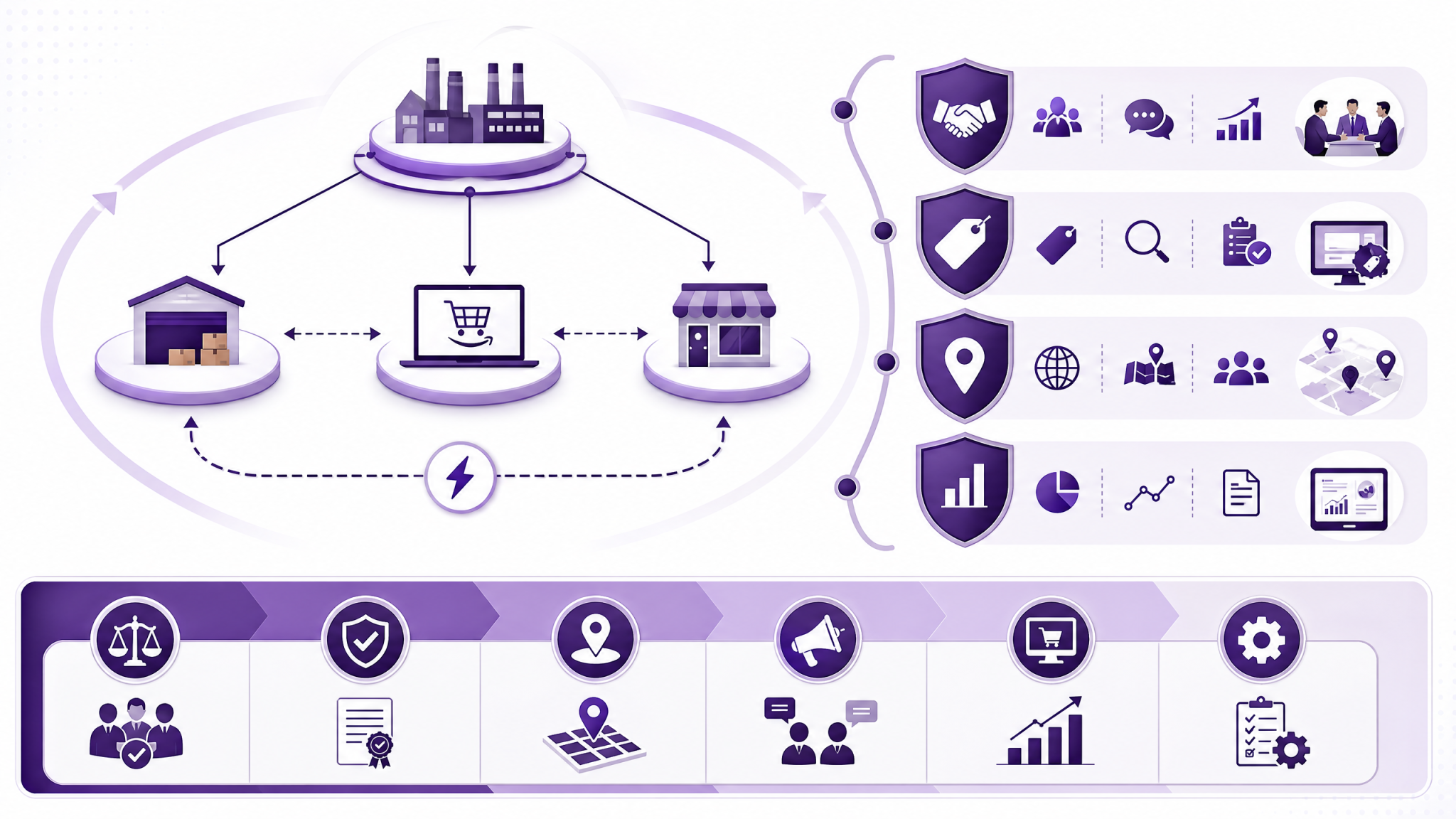
In the dynamic e-commerce landscape of 2026, brands face an increasingly common yet complex challenge: how to sell directly on Amazon without alienating their valuable distributors. This situation, known as channel conflict on Amazon, arises when a brand’s direct presence on the platform competes with its own distribution partners. For professional e-commerce entrepreneurs, managing this delicate balance is crucial for sustainable growth and brand protection.
This article delves into essential strategies for managing distributors while selling directly on Amazon, ensuring that unnecessary conflicts are avoided and solid relationships are maintained. We will explore how to establish clear pricing policies, optimize communication, and protect your brand’s integrity in such a competitive market. The goal is to provide an actionable guide for navigating this complex terrain, transforming what could be a source of friction into an opportunity to strengthen your market strategy.
Understanding the Roots of Channel Conflict on Amazon
Channel conflict on Amazon is not a new phenomenon, but its intensity has increased with the platform’s growing dominance. Brands that opt for a direct selling strategy on Amazon often find themselves in direct competition with their own distributors, which can generate significant tensions. For effective management of channel conflict on Amazon, it is fundamental to identify its underlying causes.
Direct Competition and Pricing
The most obvious cause is direct competition for the same customer. When a brand sells directly on Amazon, its products appear alongside those of its distributors. This often leads to price wars, where distributors may feel undermined by the brand’s direct prices or vice versa. The lack of a unified pricing policy or a Minimum Advertised Price (MAP) agreement can exacerbate this situation, creating an environment of distrust and resentment. According to McKinsey operations research, these strategies are increasingly important.
Inconsistency in Brand and Messaging
Another factor is inconsistency in brand presentation and messaging. Distributors may not adhere to brand guidelines in the same way the brand would directly, which can dilute the brand image and confuse consumers. This is particularly relevant for brand protection in Amazon’s channel strategy, as inconsistent presentation can damage the product’s reputation and perceived value. For more details, see our guide on Amazon Vendor Central vs Seller Central hybrid model guide.
Inventory Management and Fulfillment
Differences in inventory management and fulfillment capabilities can also generate friction. If the brand offers faster fulfillment or has more consistent inventory through FBA (Fulfillment by Amazon), distributors using other methods may feel at a disadvantage. This can lead distributors to perceive that the brand is prioritizing its own direct sales over theirs.
Lack of Communication and Transparency
Finally, poor communication is a primary catalyst for conflict. If distributors are not informed about the brand’s direct selling strategy on Amazon, or if they are not given the opportunity to discuss their concerns, problems are likely to arise. Transparency and open dialogue are essential for building and maintaining trust.
Key Strategies for Managing Channel Conflict on Amazon

To mitigate channel conflict on Amazon and foster productive coexistence between direct sales and distributor sales, brands must implement proactive and well-defined strategies. The key lies in establishing clear boundaries, communicating effectively, and offering value to all partners.
1. Implementation of a Minimum Advertised Price (MAP) Policy
A MAP policy is a fundamental tool for preventing price wars. By establishing a minimum price at which products can be advertised, brands can ensure that both their direct sales and those of their distributors operate on a more level playing field. It is vital that this policy is clear, fair, and applied consistently to all distributors. Active monitoring and enforcement of the MAP policy are crucial to its success.
2. Product Differentiation and Offerings
An effective strategy for managing channel conflict on Amazon is to differentiate product offerings. This can involve:
- Exclusive Products: Offering exclusive product versions or unique packages through your direct Amazon channel, or through specific distributors.
- Kits and Bundles: Creating product kits or packages that are only available through one channel, adding value and avoiding direct SKU competition.
- Value-Added Services: Providing additional services, such as premium support or extended warranties, to customers who purchase directly, which justifies a potentially higher price.
3. Transparent Communication and Collaboration
Open and honest communication is the cornerstone of any successful relationship. Brands should: For more details, see our guide on Amazon Vendor Central vs Seller Central 2026 hybrid. For more details, see our guide on Vendor Central profitability Amazon forced discounts margins.
- Inform Distributors: Clearly explain the direct selling strategy on Amazon and its objectives.
- Set Expectations: Define expectations for both channels, including how pricing, inventory, and marketing will be handled.
- Create a Dialogue Forum: Establish regular communication channels for distributors to express their concerns and suggestions.
- Collaborate on Marketing: Seek opportunities to collaborate on marketing campaigns, where both the brand and distributors can benefit from Amazon’s reach.
4. Brand Protection in Amazon’s Channel Strategy
Brand protection is paramount. This involves:
- Amazon Brand Registry: Use Amazon’s Brand Registry program to protect your intellectual property, monitor listings, and remove unauthorized sellers.
- Content Control: Ensure that all product content (images, descriptions, A+ Content) is consistent and high quality across all listings, regardless of who sells it.
- Active Monitoring: Implement tools and processes to actively monitor product listings on Amazon for brand infringements, unauthorized pricing, or counterfeit products.
Distributors vs. Direct Sales on Amazon: Finding the Balance
The decision of whether to prioritize distributors or direct sales on Amazon is not a binary choice, but an exercise in strategic balance. The key to a successful Amazon channel strategy is to integrate both approaches in a way that complements, rather than destructively competes with, each other.
Advantages of Direct Sales
- Greater Control: Direct sales offer complete control over the brand, pricing, marketing, and customer experience.
- Profit Margins: Eliminating intermediaries can result in higher profit margins.
- Customer Data: Direct access to valuable customer data, enabling better market understanding and product development.
- Agility: Ability to quickly respond to market trends and adjust strategies.
Advantages of Working with Distributors
- Market Reach: Distributors can provide access to new geographic markets or customer segments that the brand could not reach on its own.
- Logistics and Storage: They can handle logistics, storage, and distribution, reducing the operational burden on the brand.
- Established Relationships: Distributors often have existing relationships with retailers and other sales channels, which can accelerate market penetration.
- Focus on Core Business: Allows the brand to focus on product development and innovation.
Creating a Coherent Hybrid Strategy
The ideal solution for many is a hybrid strategy that leverages the strengths of both models. This requires careful planning and disciplined execution. Brands must clearly define the roles and responsibilities of each channel, establishing distinct zones of operation when possible. For example, distributors could focus on international markets or traditional retail channels, while the brand focuses on direct sales on Amazon in its primary market.
Implementing a Distributor Relationship Management (DRM) system or partner portal can facilitate communication, resource sharing, and conflict resolution. Ultimately, the goal is to build an ecosystem where all partners feel valued and contribute to the brand’s overall success. For more details, see our guide on how to get Amazon Vendor Central invitation. For more details, see our guide on pricing strategies for professional Amazon sellers.
Advanced Tactics for Brand Protection on Amazon
“`html
Beyond MAP policies and Brand Registry, there are advanced tactics that e-commerce entrepreneurs can employ for solid brand protection in Amazon’s channel strategy.
Proactive Monitoring and Enforcement
Having policies is not enough; it is crucial to actively monitor the market. Use third-party tools to track your product prices on Amazon, identify unauthorized sellers, and detect potential brand infringements. Once identified, act quickly to enforce your policies, either through Amazon infringement notices or by contacting sellers directly.
Supply Chain Control
To prevent products from reaching unauthorized sellers, it is essential to have strict control over your supply chain. This includes:
- Clear Distribution Agreements: Ensure that your agreements with distributors explicitly prohibit resale on Amazon without authorization.
- Product Traceability: Implement systems to track where your products are being sold, which can help identify the source of unauthorized sales.
- Regular Audits: Conduct periodic audits of your distributors to ensure compliance with agreement terms.
Distributor Education and Empowerment
Instead of viewing distributors as a threat, consider them as allies in protecting your brand. Educate your distributors about the importance of maintaining brand integrity and how their actions on Amazon can affect everyone. Provide resources and training on Amazon best practices, and even consider offering incentives for compliance with brand policies. For more details, see our guide on advanced growth strategies for established Amazon sellers. According to Gartner supply chain insights, these strategies are increasingly important.
Exclusive Content Strategies for Amazon
Develop exclusive A+ Content and Brand Storefronts for Amazon. This not only improves customer experience and conversion rates, but also reinforces your brand identity and makes it harder for unauthorized sellers to replicate your official presence. This premium content is a vital part of brand protection in Amazon’s channel strategy.
Conclusion: Building Bridges, Not Burning Them
Managing channel conflict on Amazon while selling directly is an inherent challenge in modern e-commerce. However, by adopting a strategic and proactive approach, brands can not only mitigate these conflicts, but also strengthen their relationships with distributors and protect their valuable brand. The key lies in transparency, communication, offer differentiation, and rigorous policy enforcement. For more details, see our guide on definitive guide to international expansion for Amazon sellers.
For e-commerce entrepreneurs in 2026, the ability to successfully navigate the delicate balance between direct sales and collaboration with distributors on Amazon is not just a competitive advantage, but an operational necessity. By implementing the strategies discussed, brands can ensure that their sales channels work in harmony, driving growth and building a sustainable future in the world’s largest marketplace. Remember, the goal is not to burn bridges, but to build a support network that benefits everyone involved.