
Introduction
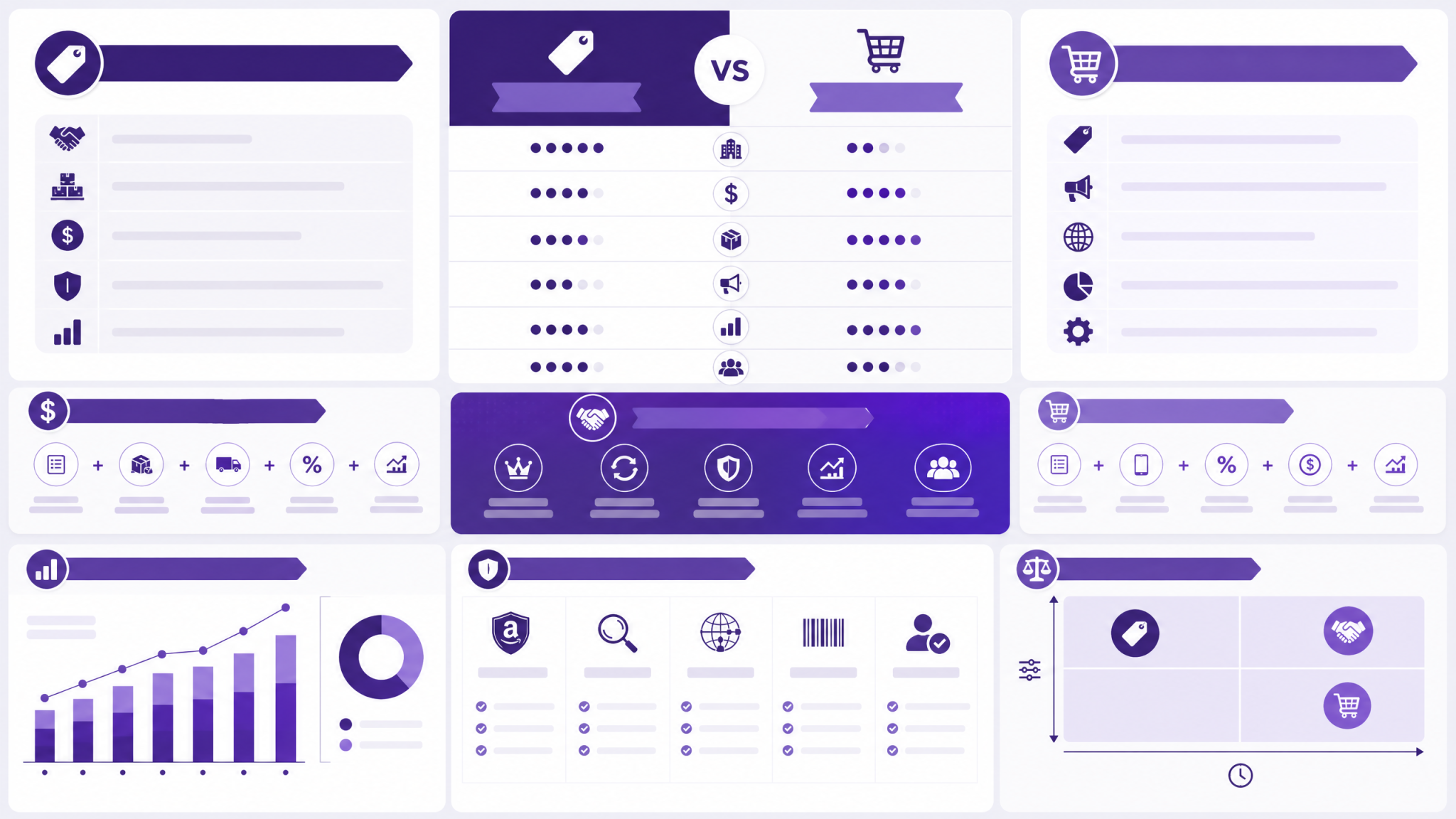
The Amazon marketplace, a dynamic and ever-evolving ecosystem, continues to be a cornerstone for e-commerce businesses globally. As we navigate through 2026, the strategies that once guaranteed success are undergoing significant transformations. Brands are increasingly realizing that a singular approach to selling on Amazon—be it through Vendor Central (1P) or Seller Central (3P)—may no longer suffice in capturing the full spectrum of market opportunities. This realization has propelled the Amazon Vendor Central vs Seller Central 2026 hybrid model into the forefront, emerging as the strategic imperative for brands aiming for sustained growth and market dominance.
Historically, businesses have often chosen between operating as a first-party (1P) vendor, selling directly to Amazon, or as a third-party (3P) seller, selling directly to consumers via Amazon’s platform. Each model presents its own set of advantages and disadvantages. However, the complexities of the 2026 e-commerce landscape, characterized by heightened competition, evolving consumer behaviors, and Amazon’s continuous platform updates, necessitate a more nuanced approach. This article will delve into why successful brands are increasingly adopting the Amazon hybrid selling model, exploring its benefits, implementation strategies, and how it is outperforming pure 1P or 3P strategies. According to McKinsey operations research, these strategies are increasingly important.
Understanding Amazon Vendor Central (1P)
Amazon Vendor Central represents a first-party relationship where a brand acts as a wholesale supplier to Amazon. In this model, Amazon purchases products directly from the brand and then resells them to customers under its own name. This means Amazon handles pricing, inventory management, shipping, and customer service. For many brands, the allure of Vendor Central lies in its perceived simplicity and the potential for larger order volumes, often associated with the ‘Sold by Amazon’ badge, which can instill greater consumer trust.
Advantages of the 1P Model:
- Operational Simplicity: Brands primarily focus on fulfilling wholesale orders to Amazon, reducing the complexities of direct-to-consumer sales, such as individual order fulfillment and customer service.
- Larger Order Volumes: Amazon often places substantial purchase orders, providing a predictable revenue stream and potentially higher sales volumes, especially for established brands.
- Access to Premium Programs: Vendor Central grants access to exclusive programs like Amazon Vine, A+ Content, and Amazon Retail Analytics (ARA) Premium, which can significantly enhance product visibility and conversion rates.
- Enhanced Consumer Trust: Products sold directly by Amazon often carry a higher level of consumer trust due to the ‘Sold by Amazon’ label, potentially leading to increased sales.
Disadvantages of the 1P Model:
- Less Control Over Pricing: Amazon dictates the retail price, which can lead to price erosion and impact brand profitability.
- Slower Payment Terms: Payment cycles can be extended, affecting a brand’s cash flow.
- Chargebacks and Fees: Vendors are often subject to various chargebacks and fees for issues like packaging non-compliance or late shipments.
- Limited Data Access: Compared to Seller Central, vendors have less direct access to granular sales data and customer insights, hindering strategic decision-making.
The 1P vs 3P Amazon comparison 2026 reveals that while 1P offers a streamlined operational experience, it often comes at the cost of control and direct customer engagement.
Understanding Amazon Seller Central (3P)

Amazon Seller Central facilitates a third-party relationship where brands sell directly to consumers on the Amazon marketplace. Sellers maintain full control over their product listings, pricing, inventory, and customer service. This model offers greater flexibility and direct engagement with the end-consumer, making it an attractive option for brands seeking to build a strong brand presence and maximize profitability. For more details, see our guide on definitive guide to international expansion for Amazon sellers.
Advantages of the 3P Model:
- Greater Control Over Pricing and Inventory: Sellers can dynamically adjust prices and manage inventory levels to respond to market demands and optimize profitability.
- Faster Payments: Payment disbursements are generally quicker, improving cash flow for businesses.
- Direct Customer Interaction: Sellers can engage directly with customers, gather feedback, and build brand loyalty.
- More Data Insights: Access to detailed sales reports, customer demographics, and performance metrics empowers sellers to make data-driven decisions.
Disadvantages of the 3P Model:
- Higher Operational Complexity: Managing individual orders, shipping, returns, and customer service can be resource-intensive.
- Increased Competition: The 3P marketplace is highly competitive, requiring robust marketing and differentiation strategies.
- Marketing Costs: Sellers are responsible for their own advertising and promotional efforts to drive traffic and sales.
The choice between Vendor vs Seller Central 2026 is no longer a binary one, as the limitations of each pure model become more apparent in the current market. For more details, see our guide on channel conflict Amazon distributors selling directly.
The Rise of the Hybrid Model in 2026
In 2026, the landscape of Amazon selling has shifted dramatically. The days when a pure 1P or 3P strategy could guarantee optimal performance are largely behind us. Brands operating solely as vendors often find themselves constrained by Amazon’s pricing decisions and limited data access, while pure 3P sellers grapple with intense competition and the operational overhead of managing every aspect of the sales cycle. This evolution has paved the way for the Amazon hybrid selling model, a sophisticated strategy that leverages the distinct advantages of both Vendor Central and Seller Central to create a synergistic approach. For more details, see our guide on advanced growth strategies for established Amazon sellers.
Why Pure 1P or 3P Strategies Are Becoming Less Effective:
- Market Volatility: Rapid shifts in consumer demand and economic conditions make it challenging for a single model to adapt quickly.
- Amazon’s Evolving Algorithms: Amazon’s continuous updates to its search and ranking algorithms favor brands that demonstrate strong performance across various metrics, which can be optimized through a hybrid approach.
- Increased Competition: Both 1P and 3P spaces are saturated, demanding a more agile and diversified strategy to stand out.
Definition of the Amazon Hybrid Selling Model:
The hybrid model involves strategically utilizing both Vendor Central and Seller Central simultaneously for different product lines, market segments, or even different stages of a product’s lifecycle. For instance, a brand might use Vendor Central for its high-volume, established products where Amazon’s logistical capabilities are beneficial, while using Seller Central for new product launches, niche items, or products requiring more direct brand control and higher margins.
Benefits of the Hybrid Model:
- Optimized Profitability: By allocating products to the most suitable channel, brands can maximize margins and reduce costs. High-margin products can be sold via 3P, while high-volume, lower-margin products can leverage 1P.
- Enhanced Brand Control: The 3P channel provides direct control over pricing, branding, and customer experience, while the 1P channel offers the prestige of being ‘Sold by Amazon’.
- Diversified Risk: Relying on a single channel exposes a brand to significant risks. The hybrid model mitigates this by spreading sales across two distinct channels, reducing dependence on either.
- Improved Data Utilization: Combining data insights from both platforms offers a more comprehensive view of market performance, consumer behavior, and competitive landscapes, enabling more informed strategic decisions.
Numerous successful brands are already demonstrating the efficacy of the Amazon hybrid selling model. For example, a consumer electronics brand might sell its flagship products through Vendor Central to benefit from Amazon’s marketing muscle and reach, while using Seller Central for accessories and new, innovative gadgets to maintain pricing control and gather direct customer feedback. This strategic allocation allows them to capitalize on the strengths of both worlds. For more details, see our guide on how to get Amazon Vendor Central invitation.
Implementing a Successful Hybrid Strategy
Adopting a hybrid model requires careful planning and execution. It’s not simply about having accounts on both platforms, but about strategically integrating them to achieve overarching business objectives. The key lies in understanding which products or categories are best suited for each channel and how to manage the operational complexities that arise from a dual-channel approach.
Key Considerations for Choosing Products for 1P vs 3P:
- Product Lifecycle: New products or those requiring rapid iteration and direct customer feedback might be better suited for 3P. Mature, high-volume products could thrive in the 1P environment.
- Profit Margins: Products with higher inherent margins might be reserved for 3P to maximize profitability, while lower-margin, high-turnover items could be offered to Amazon via 1P.
- Brand Control Needs: If maintaining strict control over pricing, branding, and customer experience is paramount for a specific product, 3P is the preferred route.
- Logistical Capabilities: Brands with robust in-house fulfillment capabilities might lean more towards 3P, while those preferring to offload logistics to Amazon might favor 1P for certain products.
Operational Challenges and Solutions:
- Inventory Management: A unified inventory management system is crucial to prevent stockouts or overstocking across both channels. Implementing advanced forecasting tools and integrating inventory data from both Vendor and Seller Central can streamline this process.
- Logistics: Brands must optimize their supply chain to efficiently handle both wholesale shipments to Amazon (1P) and direct-to-consumer fulfillment (3P, often via FBA or FBM).
- Accounting and Reconciliation: Managing financials for two distinct sales channels requires robust accounting practices to track revenue, costs, and profitability accurately.
Marketing and Advertising Strategies for a Hybrid Approach:
A hybrid model allows for a more diversified and effective advertising strategy. Brands can leverage Amazon’s internal advertising platforms (Sponsored Products, Sponsored Brands, Sponsored Display) across both channels, tailoring campaigns to the specific goals of each. For 1P products, the focus might be on driving traffic to Amazon’s listing, while for 3P products, campaigns can be more directly aimed at conversion and brand building. External marketing efforts can also be coordinated to support both channels simultaneously.
Negotiating with Amazon (Vendor Central Terms):
For the 1P component of the hybrid model, effective negotiation with Amazon is paramount. This includes discussions around payment terms, co-op fees, marketing allowances, and chargeback policies. A strong understanding of Amazon’s vendor agreements and a clear articulation of your brand’s value proposition can lead to more favorable terms. For more details, see our guide on Amazon Vendor Central vs Seller Central hybrid model guide. According to Gartner supply chain insights, these strategies are increasingly important.
Leveraging Data from Both Platforms:
The true power of the hybrid model lies in its ability to synthesize data from both Vendor Central (via ARA Premium) and Seller Central (via Business Reports and Brand Analytics). This combined data provides a holistic view of product performance, customer demographics, search trends, and competitive insights, enabling brands to refine their strategies continuously.
Overcoming Challenges in the Hybrid Model
While the hybrid model offers significant advantages, it is not without its challenges. Brands must proactively address potential pitfalls to ensure a seamless and profitable operation. For more details, see our guide on pricing strategies for professional Amazon sellers.
Managing Channel Conflict:
One of the primary concerns is channel conflict, where the same product might be offered through both 1P and 3P, potentially leading to internal competition and pricing discrepancies. Strategies to mitigate this include:
- Product Segmentation: Offering distinct product variations or bundles exclusively through one channel.
- Geographic Segmentation: Selling through 1P in some regions and 3P in others.
- Strategic Pricing: Carefully managing pricing across both channels to avoid undercutting or creating confusion.
Streamlining Operations and Technology:
The complexity of managing two distinct Amazon accounts necessitates robust operational processes and integrated technology solutions. Investing in Enterprise Resource Planning (ERP) systems, Product Information Management (PIM) tools, and specialized Amazon management software can help automate tasks, synchronize data, and improve overall efficiency.
Staying Updated with Amazon’s Evolving Policies:
Amazon’s policies and algorithms are constantly changing. Brands employing a hybrid model must dedicate resources to staying informed about these updates and adapting their strategies accordingly to avoid penalties and maintain compliance. For more details, see our guide on Vendor Central profitability Amazon forced discounts margins.
The Future of Amazon Selling: Beyond 2026
Looking beyond 2026, the trend towards hybrid selling models on Amazon is expected to accelerate. The marketplace will likely become even more sophisticated, with Amazon continuing to introduce new tools and programs that blur the lines between 1P and 3P. Brands that embrace adaptability and a data-driven approach will be best positioned for long-term success.
Predictions for the Evolution of Amazon’s Platforms:
- Increased Integration: Amazon may further integrate Vendor and Seller Central functionalities, making it easier for brands to manage both channels from a unified interface.
- AI-Powered Insights: Enhanced AI and machine learning tools will provide even deeper insights into consumer behavior and market trends, empowering brands to make more precise strategic decisions.
- Sustainability Focus: Amazon’s increasing emphasis on sustainability will likely influence product sourcing, packaging, and logistics across both 1P and 3P channels.
The Continued Importance of Adaptability and a Hybrid Mindset:
The most successful Amazon brands in the future will be those that remain agile, continuously analyze their performance across both channels, and are willing to pivot their strategies as market conditions and Amazon’s ecosystem evolve. The hybrid mindset is not just a strategy; it’s a philosophy of continuous optimization and strategic diversification.
Conclusion
In 2026, the strategic choice for successful brands on Amazon is unequivocally the hybrid model. By intelligently combining the strengths of Vendor Central and Seller Central, businesses can achieve optimized profitability, enhanced brand control, diversified risk, and superior data utilization. While implementing a hybrid strategy requires careful planning and ongoing management, the rewards far outweigh the complexities. As the Amazon marketplace continues its rapid evolution, embracing a flexible, dual-channel approach is not just an advantage—it’s a necessity for brands aiming to thrive and lead in the competitive e-commerce landscape.